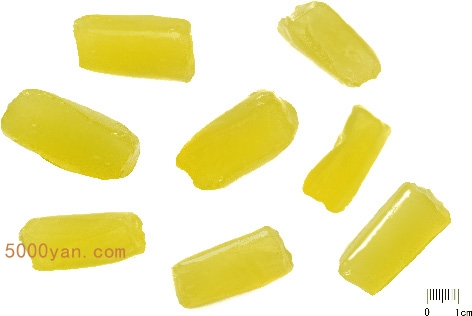
Pinyin: Yitang
Aliases
Jiaoyi, Ruan Tang, Xing Tang, Tang Xi
Source
A food product made from starchy grains such as sorghum, rice, barley, wheat, millet, and corn as raw materials, produced through fermentation and saccharification.
Chemical Constituents
This product mainly contains maltose, protein, fat, and vitamin B.2vitamin C, niacin, and other components.
Properties and Channel Entry
Sweet, warm. Enters the Spleen, Stomach, and Lung channels.
Functions and Indications
Relieves the middle, tonifies deficiency, generates body fluids, and moistens dryness
Dosage and Administration
Oral administration: dissolve by melting and mix into a decoction, 30-60 g; or prepare as a paste or pill form.
Precautions and Contraindications
Contraindicated for those with internal depression of damp-heat causing epigastric fullness and vomiting with retching.
Prescriptions
1. For sudden cough: Yitang (maltose) 180 g, Ganjiang (dried ginger) 180 g (ground to powder), Chi (fermented soybean) 60 g. First, boil Chi in 1 liter of water for three boils, remove the residue, add Yitang until dissolved, then add Ganjiang. Divide into three doses. (From *Buque Zhouhou Fang*) 2. For severe cough due to febrile disease: Boil Yitang in water with turnip and scallion juice for one boil, take it all at once. (From *Shiliao Bencao*) 3. For incessant whooping cough in adults and children: Take one bowl of freshly squeezed white radish juice, add Yitang 15 g. Steam until dissolved, then sip slowly while warm. (From *Bencao Huiyan*) 4. For asthmatic cough with salty phlegm: Mix Yitang with a small amount of Qingfen (calomel), fry until charred, form into pills, and hold in the mouth to dissolve slowly. (From *Bencao Fengyuan*) 5. For fish bones stuck in the throat: Take an appropriate amount of Yitang, form into pills the size of a chicken yolk, swallow one; then gradually make larger pills and swallow again. (From *Shengji Zonglu*, Yitang Wan).