Pinyin: Ercha
Aliases
Haiercha, Xixie, Erchagao, Heiercha
Source
Fabaceae plant CatechuAcacia catechu(L.f.) Willd. of the peeled branches and stems of dried decoction.
Botanical Description
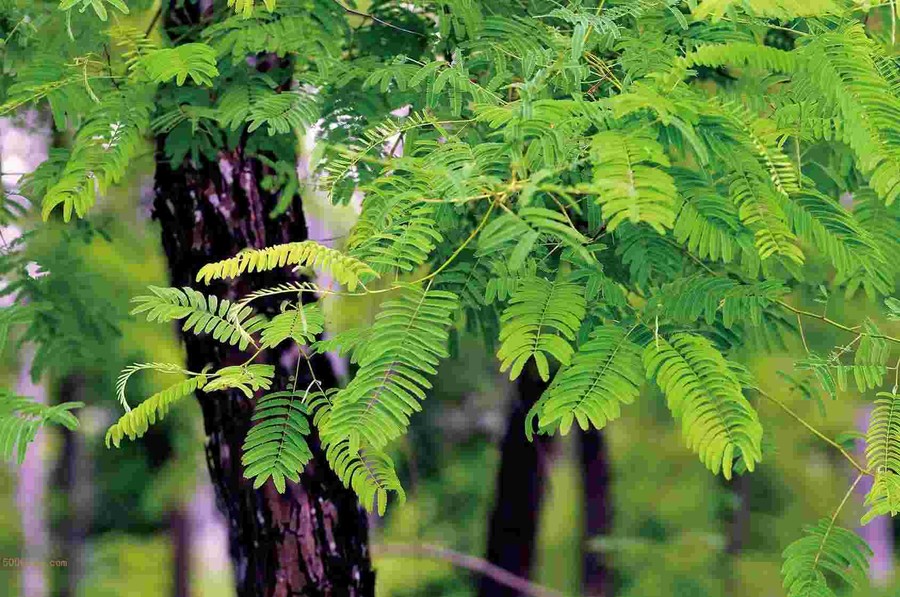
Deciduous small tree, 6-13 m tall. Bark brown, often cracking into thin strips but not shedding; branchlets pubescent. Leaves bipinnately compound, alternate; stipules often with a pair of flattened, brown, hooked spines or absent; glands present near the base of the common petiole and between the uppermost pairs of pinnae on the rachis; rachis villous; pinnae 10-30 pairs; leaflets 20-50 pairs, linear, margin sparsely hairy. Racemes axillary; calyx tubular, 5-lobed at apex, sparsely hairy; petals 5, yellow or white, lanceolate or oblanceolate, 2-3 times as long as the calyx, sparsely hairy; stamens numerous, filaments free, exserted beyond the corolla; pistil 1, ovary superior, oblong-ovoid, style slender. Legume band-shaped, brown, glossy, dehiscent, stipe 3-7 mm long, apex beaked, purple-brown. Seeds 3-10. Flowering April to August, fruiting September to January of the following year.
Habitat and Distribution
Distributed in Zhejiang, Taiwan, Guangdong, Guangxi, and Yunnan, with wild populations found only in Yunnan (Xishuangbanna and Lincang areas), while all other regions have introduced cultivation.
Harvesting and Processing
Harvest branches and stems in winter, remove the outer bark, cut into large pieces, add water to decoct, concentrate, and dry.
Medicinal Properties
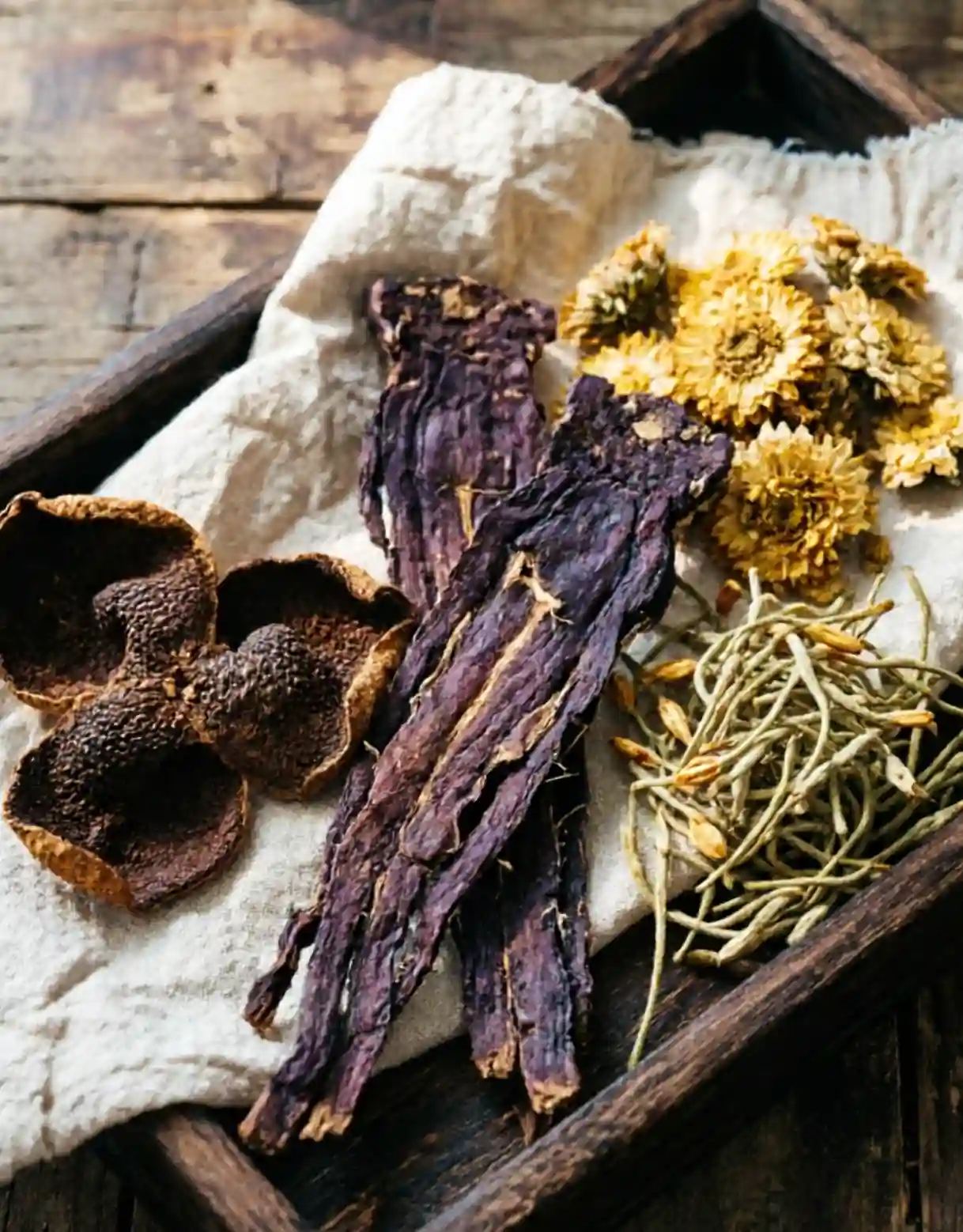
This product appears as square or irregular lumps of varying sizes. The surface is brown or blackish-brown, smooth and slightly lustrous. The texture is hard and brittle, with an uneven, glossy fracture surface containing fine pores, and becomes sticky when exposed to moisture. Odor: faint; Taste: astringent and bitter, with a slight residual sweetness.
Chemical Constituents
This product primarily contains components such as catechu tannic acid, uncarine, dihydrocorynantheine, (+)-afzelechin, dihydrokaempferol, proanthocyanidin dimer, (-)-catechin, (±)-catechin, and catechu red.
Pharmacology
It has hepatoprotective and choleretic effects, regulates immune system function, resists pathogenic microorganisms, lowers blood glucose, inhibits gastrointestinal motility, has anti-diarrheal effects; resists platelet aggregation and thrombosis formation, reduces serum cholesterol levels, decreases tissue oxygen consumption, especially myocardial oxygen consumption, lowers blood pressure, and regulates cardiovascular system function; Catechin has certain analgesic, anti-radiation, leukocyte-elevating, and anti-tumor effects, and can prevent tumor cell spread by inhibiting the adhesion between tumor cells and fibrin.
Properties and Channel Entry
Bitter, astringent, and slightly cold. Enters the Lung and Heart channels.
Functions and Indications
Activates Blood, alleviates pain, stops bleeding, generates tissue, astringes Dampness, heals sores, clears the Lungs, and transforms Phlegm. Used for traumatic pain from falls and contusions, external bleeding, hematemesis and epistaxis, non-healing sores, eczema, damp sores, and cough due to Lung Heat.
Dosage and Administration
Internal: decoct in water, 0.9-3 g; or made into pills or powder. External: apply an appropriate amount, ground into powder for sprinkling or mixing for topical application.
Prescriptions
1. For infantile gingivitis and oral ulcers: Ercha (Catechu) and Pengsha (Borax) in equal parts, grind into powder and apply to the affected area. (Compendium of Materia Medica) 2. For noma (cancrum oris): Ercha (Catechu), Xionghuang (Realgar), and Beimu (Fritillaria) in equal parts. Grind into powder, rinse the mouth with rice water, then apply the powder. (Compendium of Materia Medica, citing Jidetang Empirical Prescriptions) 3. For nasal discharge (sinusitis): Blow Ercha (Catechu) powder into the nose. (Compendium of Materia Medica, citing Bencao Quandu) 4. For chancre and genital sores: Ercha (Catechu) 3 g, Zhenzhu (Pearl) 0.3 g, Piannao (Borneol) 0.15 g. Grind into powder and apply externally. (Compendium of Materia Medica, citing Zuanyao Qifang) 5. For hemorrhoids: Qingfen (Calomel), Bingpian (Borneol), and Ercha (Catechu) in equal amounts, mix with 10 times the amount of sesame oil to form an emulsion. Store in a bottle for use. When applying, soak a cotton swab in the preparation and insert into the anal canal. (Heilongjiang Medical Journal, 1972, Issue 2: Qingbing Emulsion) 6. For cough: Ercha (Catechu) 60 g, Xixin (Asarum) 12 g, and 1 pig gallbladder. Grind the first two ingredients into powder, cook the pig bile until done, then combine all three to form pills, each weighing 3 g. Take 1 pill 4 times daily, dissolve in the mouth on an empty stomach. (Selected Materials from the National Exhibition of New Chinese Herbal Medicine Therapies) 7. For skin eczema, ulcers, and excessive secretions: Ercha (Catechu) 9 g, Qingfen (Calomel) 6 g, Bingpian (Borneol) 0.9 g, Longgu (Dragon Bone) 9 g. Grind into powder, mix with water, and apply externally. (Clinical Application of Chinese Herbs: Erqing Powder)