
The Heilongjiang River basin has been Chinese territory since ancient times, with successive dynasties from the Tang to the Ming establishing administrative institutions there to govern it. Starting in the 1580s, Tsarist Russia gradually rose to power and continuously expanded outward, repeatedly invading the Heilongjiang River basin, occupying Yaksa and Nerchinsk, and using these as strongholds to engage in relentless burning, killing, and looting, thereby expanding its sphere of influence.
Facing the incursions of Tsarist Russia, the Qing government repeatedly demanded that the Russian invaders withdraw from Chinese territory. However, the Russian government completely ignored the Qing's warnings, continuously sending troops to Yaksa with the intention of continuing to occupy the land in the Heilongjiang River basin.
After pacifying the Rebellion of the Three Feudatories, Emperor Kangxi decided to use military force to drive away the Russian invaders. In 1682, Kangxi personally traveled to the Northeast and sent Peng Chun and Lang Tan, under the pretext of hunting, to infiltrate the Yaksa region and gather detailed intelligence on the Russian invaders. Subsequently, Kangxi mobilized troops and transferred the formidable rattan shield army from Fujian to the Northeast, determined to deliver a heavy blow to the Russian invaders.
In 1685, Emperor Kangxi ordered generals such as Peng Chun to lead three thousand troops, equipped with red-clad cannons, to Aigun, where they joined forces with Heilongjiang General Sabusu's army to advance on Yaksa. After Peng Chun's forces arrived at Yaksa, they issued an ultimatum to the Russian governor Tolbuzin stationed there, demanding his withdrawal from Chinese territory. In the surrender letter, Peng Chun wrote: "If you wish for peaceful coexistence, immediately retreat to Yakutsk, using it as the boundary, and cease encroaching on our territory... If you still insist on not withdrawing, then once the imperial army breaches Yaksa, you will have no place to bury your remains."
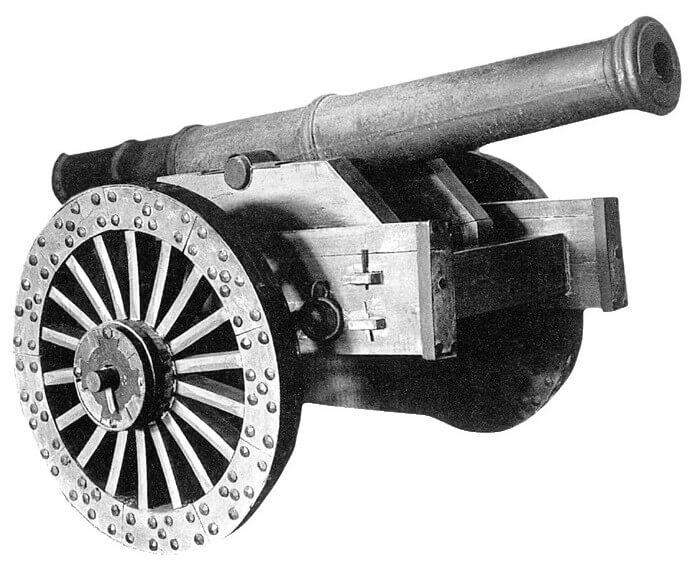
Tolbuchin had 450 soldiers, 300 muskets, and three cannons under his command. Believing that the Yaksa fortress was impregnable and that the Qing army could never breach it, he ignored Peng Chun's warning. Seeing Tolbuchin's stubborn refusal, Peng Chun ordered his troops to form battle positions, pile firewood beneath the walls of Yaksa, and aim the red-clad cannons at the fortress. At the same time, Peng Chun deployed warships on the river outside Yaksa, cutting off the enemy's escape route. Once everything was ready, Peng Chun gave the order to open fire. As the cannons roared continuously, the Russian soldiers, trapped inside Yaksa, could only endure the bombardment with no means to fight back. Soon, the Russian forces suffered heavy casualties. Realizing that continuing this way would lead to total annihilation, Tolbuchin sent an envoy to Peng Chun, requesting permission to withdraw from Yaksa with their weapons. Peng Chun, showing magnanimity, granted Tolbuchin's request. Thus, several hundred Russian soldiers retreated in disgrace to Nerchinsk (present-day Nerchensk), and the Qing army reclaimed Yaksa, which had been forcibly occupied by Russian invaders for over twenty years. The Qing forces destroyed the fortress and, without leaving any garrison, returned to Aigun.
After Tolbuchin's retreat, he was extremely unwilling to accept defeat and hoped to continue occupying Yaksa once reinforcements arrived. In the autumn of 1685, the Russian Tsar sent troops to Nerchinsk for reinforcement. Upon learning that the Qing army had withdrawn from Yaksa, Tolbuchin led the reinforcement forces to reoccupy Yaksa. Subsequently, Tolbuchin ordered the reconstruction of fortifications and defensive works within Yaksa city, intending to occupy it long-term.
Upon learning that the Russian invaders had once again occupied Yaksa, Emperor Kangxi immediately ordered Heilongjiang General Sabusu to lead two thousand troops to drive them out again. Sabusu led his forces to Yaksa, surrounded the city tightly, and demanded that Tolbuzin surrender. Having barely managed to return to Yaksa, Tolbuzin was hardly willing to give up easily. With no other choice, Sabusu used cannons to attack the city. Tolbuzin was hit and lost his life. Afterwards, Huaidun took over command from Tolbuzin and continued to resist the Qing army.
Sabusu believed that continuing to assault the city would cause losses to his own forces, while the Russian troops inside Yakesa (Albazin) could not escape and could only wait for reinforcements; as long as the connection between the enemy's outer forces and those inside Yakesa was cut off, the city would fall without a direct attack. Therefore, he ordered trenches to be dug around Yakesa and deployed warships to blockade the water routes west of the city. Six months later, the Russian troops inside Yakesa had run out of ammunition and food, and were on the verge of being completely annihilated.
At this moment, Princess Sophia, the regent of Tsarist Russia (the elder sister of Peter the Great), sent envoys to Beijing to request a ceasefire. Emperor Kangxi agreed to Russia's request for peace and withdrew the troops besieging the city of Yaksa, allowing the remaining Russian soldiers inside the city to return.
In 1689, representatives of China and Russia negotiated in Nerchinsk and signed the Treaty of Nerchinsk, establishing the boundary between the two countries along the Stanovoy Range to the Argun River and the Gorbitsa River, with the area south of the Stanovoy Range, north of the Heilongjiang River, and east of the Ussuri River recognized as Chinese territory.
The Battle of Yaksa was a self-defense counterattack launched by the Qing government to oppose Russian aggression; the victory in this war safeguarded China's sovereignty, dealt a blow to the arrogance of the Russian invaders, and laid the foundation for the signing of the Treaty of Nerchinsk between China and Russia.