
The "Xinyou Coup" refers to a palace coup launched in 1861 by Empress Dowager Cixi in alliance with Prince Gong (Yixin) after the death of the Xianfeng Emperor in Rehe. Because the coup occurred during the Xinyou year in the Chinese sexagenary cycle, it is called the "Xinyou Coup"; however, some also refer to it as the "Beijing Coup" based on the location where it took place.
After the outbreak of the Second Opium War, the Anglo-French Allied forces advanced north to attack Tianjin, directly threatening the capital. The reigning Xianfeng Emperor, upon hearing the news, was greatly alarmed and hastily fled to Rehe, accompanied by the future Empress Dowager Cixi, who was then known as Consort Yi.
On August 17 of the following year, the Xianfeng Emperor died of illness in his temporary palace in Rehe. Prior to this, Prince Gong, Yixin, who had remained in Beijing, accepted all the conditions of Britain, France, and Russia under the emperor's direction and signed the humiliating Treaty of Beijing. After the treaty was signed, the Anglo-French forces withdrew from Beijing.
On his deathbed, Emperor Xianfeng appointed his only son, Zaichun, as the crown prince. Since Zaichun was only six years old and completely incapable of managing state affairs, the emperor selected eight regent ministers to assist in governance. At the same time, Xianfeng granted Zaichun the "Hall of Shared Way" seal, temporarily placed under the care of his biological mother, Empress Dowager Cixi, and bestowed the "Imperial Appreciation" seal upon the empress, later known as Empress Dowager Ci'an. He also decreed that any edict drafted by the regent ministers would require the consent of both Cixi and Ci'an, with the seals "Hall of Shared Way" and "Imperial Appreciation" affixed to take effect. Emperor Xianfeng's final orders undoubtedly laid a significant foundation for the future power struggle between the two empress dowagers and the eight regent ministers.
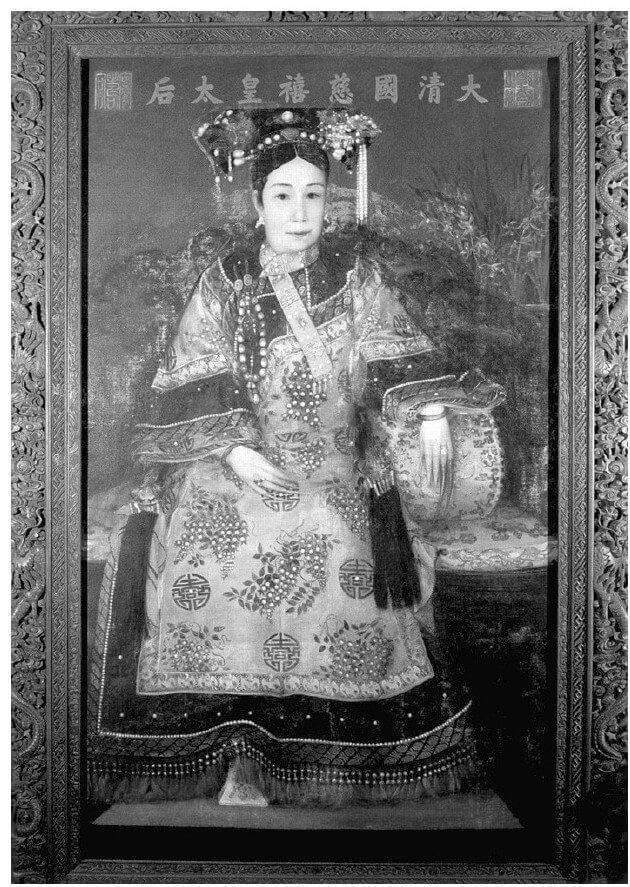
After Emperor Xianfeng passed away, the crown prince Zaichun ascended the throne, becoming Emperor Tongzhi. Tongzhi's mother, Empress Dowager Cixi, was an extremely ambitious woman. Shortly after Tongzhi became emperor, she proposed to the regent ministers that she should "listen to state affairs from behind a screen," a traditional practice for a regent empress. The eight regent ministers saw through her ambition to seize control of the court and rejected her request, citing that the dynasty had no precedent of an empress dowager ruling from behind the screen. Despite this initial setback, Cixi did not give up. In fact, she had long realized that her current power was insufficient to confront the eight ministers directly. Therefore, she decided to seek external support, and the "ally" she chose was Prince Gong, Yixin.
Compared to Emperor Xianfeng, his younger brother Yi was far more talented, which led to Xianfeng's jealousy and Yi's repeated marginalization in the court. The eight regent ministers trusted by Xianfeng had long-standing conflicts with Yi. When Xianfeng fled to Rehe, Yi was left in the capital to negotiate with the invaders, a result of the ministers' scheming. Under these circumstances, once a power struggle erupted at court, Yi naturally chose to side with Empress Dowager Cixi. Additionally, Cixi played the sympathy card of being a helpless widow and orphan, making Yi's decision even more inevitable. Thus, while the two empresses dowager and the eight regent ministers stayed in Rehe to mourn Xianfeng, Prince Gong Yi requested to attend the funeral. After multiple requests, Yi finally gained permission from the eight ministers to travel from the capital to Rehe. However, mourning was clearly not his main purpose; in fact, after receiving a secret letter sent by Cixi through a trusted confidant, he resolved to make the trip to Rehe no matter what.
After Emperor Xianfeng's death, the eight regent ministers grew increasingly arrogant day by day, to the point that even Empress Dowager Ci'an, who had originally held no interest in power, developed a strong resentment toward them and naturally joined forces with Empress Dowager Cixi. During his mourning visit to Rehe, Prince Yi secretly met with the two empress dowagers behind the backs of the eight regent ministers. They discussed matters for about two hours and ultimately reached a consensus, deciding to launch a preemptive coup upon their return to Beijing.
Afterwards, Yixin returned to the capital first to prepare for the impending coup. At that time, military power in both the capital and Tianjin was held by Shengbao, the Vice Minister of War. Upon returning to Beijing, Yixin first persuaded Shengbao to join his side. Subsequently, Shengbao, under the pretext of attending Emperor Xianfeng's funeral, led his troops northward and pledged allegiance to Empress Dowager Cixi. The strength of the two empress dowagers was thus greatly bolstered.
During the journey escorting Emperor Xianfeng's coffin back to the capital, Empress Dowager Cixi used the excuse that the young Tongzhi Emperor was too frail to endure the full escort, and thus requested to travel ahead. This pretext seemed perfectly reasonable, leaving the eight regent ministers with no grounds to object, so they allowed Cixi and her party to take a shortcut back to the capital. Upon arriving in Beijing, Cixi immediately met with Prince Gong (Yixin) to finalize a specific plan of action. The next morning, Prince Gong, holding the imperial decree and the imperial seal, dismissed and imprisoned the eight regent ministers, including Sushun, pending investigation and punishment.
Six days later, Empress Dowager Cixi ordered the execution of the three regent ministers, Sushun, Zaiyuan, and Duanhua, while the remaining five were either reduced to commoners or exiled to military service. After this, no one could oppose the two empress dowagers' regency from behind the curtain, and Cixi thus began her forty-seven-year rule over the Qing Dynasty. This is the full story of the "Xinyou Coup." For his great contributions during the coup, Prince Gong, Yixin, was appointed as the Prince Regent, while other meritorious officials like Shengbao received their own rewards. After the coup ended, Empress Dowager Cixi announced that the following year would be renamed the first year of the Tongzhi era, with "Tongzhi" meaning the joint governance of the court by the two empress dowagers, Cixi and Ci'an.