
In 1644, Li Zicheng established a regime in Xi'an, naming his dynasty the Great Shun. Soon after, Li Zicheng personally led a rebel army of one million across the Yellow River, splitting his forces into two routes to attack Beijing. Both armies advanced with unstoppable momentum, and by March of that year, they had joined forces outside the city walls of Beijing. The three elite battalions of the Ming army stationed outside Beijing all surrendered.
The rebel army fiercely attacked Beijing.
On the second night, Emperor Chongzhen climbed Coal Hill (behind the imperial palace, present-day Jingshan in Beijing) and hanged himself from a locust tree near the Shouhuang Pavilion, bringing an end to the Ming Dynasty, which had ruled China for 277 years.
The Dashun regime, on one hand, posted proclamations to reassure the people, and on the other hand, punished the imperial relatives, corrupt officials, and greedy bureaucrats of the Ming Dynasty. Li Zicheng dispatched Liu Zongmin and Li Guo to order those powerful nobles and officials to hand over the ill-gotten wealth they had extorted from the common people, which would then be used as military funds for the rebel army.
A high-ranking official named Wu Xiang had his property confiscated by Liu Zongmin. Someone told Li Zicheng that Wu Xiang's son, Wu Sangui, was the Ming Dynasty's commander of Shanhai Pass, commanding hundreds of thousands of troops. If Wu Sangui could be persuaded to surrender, it would remove a major threat to the Dashun regime.
Wu Sangui was originally sent by the Ming Dynasty to resist the Qing forces outside the Shanhai Pass, stationed in the Ningyuan area for defense. After receiving a letter from his father Wu Xiang urging him to surrender, he decided to go to Beijing to assess the situation before making a decision.
When Wu Sangui led his troops to Luanzhou, he encountered some people who had fled from Beijing. Upon questioning them, he learned that his father Wu Xiang had been captured and his family property confiscated, which immediately filled him with resentment. Later, he also heard that his most beloved concubine, Chen Yuanyuan, had been taken away by the rebel army. Enraged, he immediately ordered his entire army to retreat to Shanhai Pass.
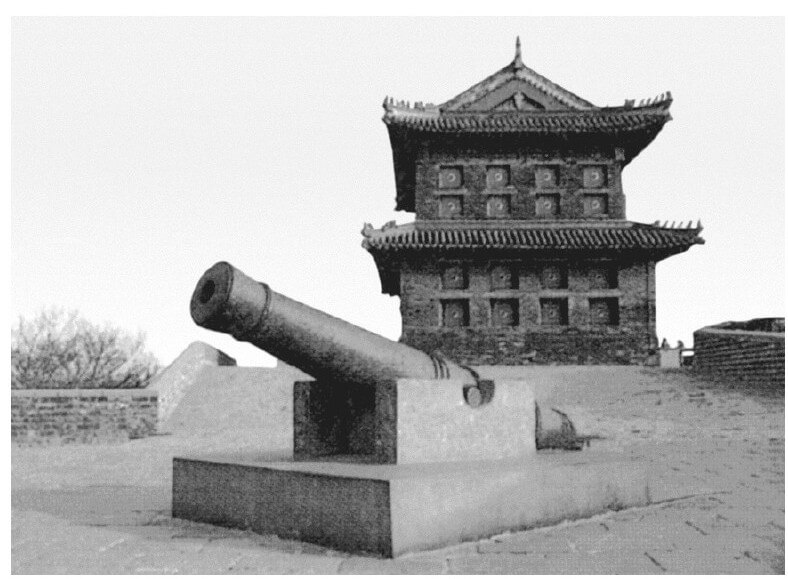
Upon learning that Wu Sangui had refused to surrender, Li Zicheng personally led an army of over 200,000 troops to attack Shanhai Pass. When Wu Sangui heard this news, he was panic-stricken. Casting aside any sense of national integrity, he immediately wrote a letter to the Qing Dynasty begging for help.
Prince Dorgon, the regent of the Qing Dynasty, received the letter and saw it as an opportunity. He immediately replied, agreeing to help Wu Sangui. Then, leading over a hundred thousand Qing troops, he rushed nonstop toward Shanhai Pass. Li Zicheng's army advanced from the south to the edge of Shanhai Pass and engaged in fierce battle with Wu Sangui's forces. Riding his horse, Li Zicheng ascended West Mountain to direct the battle. As soon as Wu Sangui led his troops out of the city, they were surrounded and attacked from both flanks by the rebel army. The Ming soldiers dashed east and west but could not break through the encirclement; every rebel soldier fought bravely, their battle cries shaking the heavens and the earth.
At this moment, Dorgon seized the opportunity and ordered tens of thousands of Qing troops hidden in ambush behind the formation to charge out together, launching a sudden attack on the rebel army. Caught off guard and unable to figure out where the enemy had come from, the rebels panicked, and their battle formation fell into chaos.
Li Zicheng discovered from the Western Mountains that Qing troops had already entered the pass, and before he could stabilize his position, it was too late, so he had to order a retreat. Dorgon and Wu Sangui's forces attacked from both inside and outside, leading to a disastrous defeat for the rebel army. Li Zicheng led his soldiers in a fighting retreat, while Wu Sangui, relying on the strength of the Qing forces, pursued them closely from behind. By the time the rebels retreated to Beijing, their military strength had been greatly weakened.
After Li Zicheng returned to Beijing, he held his coronation ceremony in the main hall of the imperial palace, receiving homage from officials. Early the next morning, he led his rebel army and hastily departed Beijing, retreating toward Xi'an.
In October 1644, Dorgon brought the Shunzhi Emperor from Shenyang to Beijing, making Beijing the capital of the Qing Dynasty. From that point on, the Qing Dynasty began its rule over China.
The following year, the Qing army split into two routes to attack Xi'an. One route was led by Ajige, Wu Sangui, and Shang Kexi; the other was led by Dodo and Kong Youde. Li Zicheng was forced to abandon Xi'an and retreat to Xiangyang. A few months later, the peasant army was ambushed by local landlord militias in Tongshan County, Hubei, where Li Zicheng was defeated and killed.
After Li Zicheng withdrew from Beijing, Zhang Xianzhong proclaimed himself emperor in Sichuan, establishing the Great Western Kingdom. By 1647, Qing forces advanced into Sichuan, and Zhang Xianzhong was struck by an arrow and killed in a battle at Phoenix Mountain in Xichong, northern Sichuan. At this point, both major rebel armies of the late Ming Dynasty had been defeated.