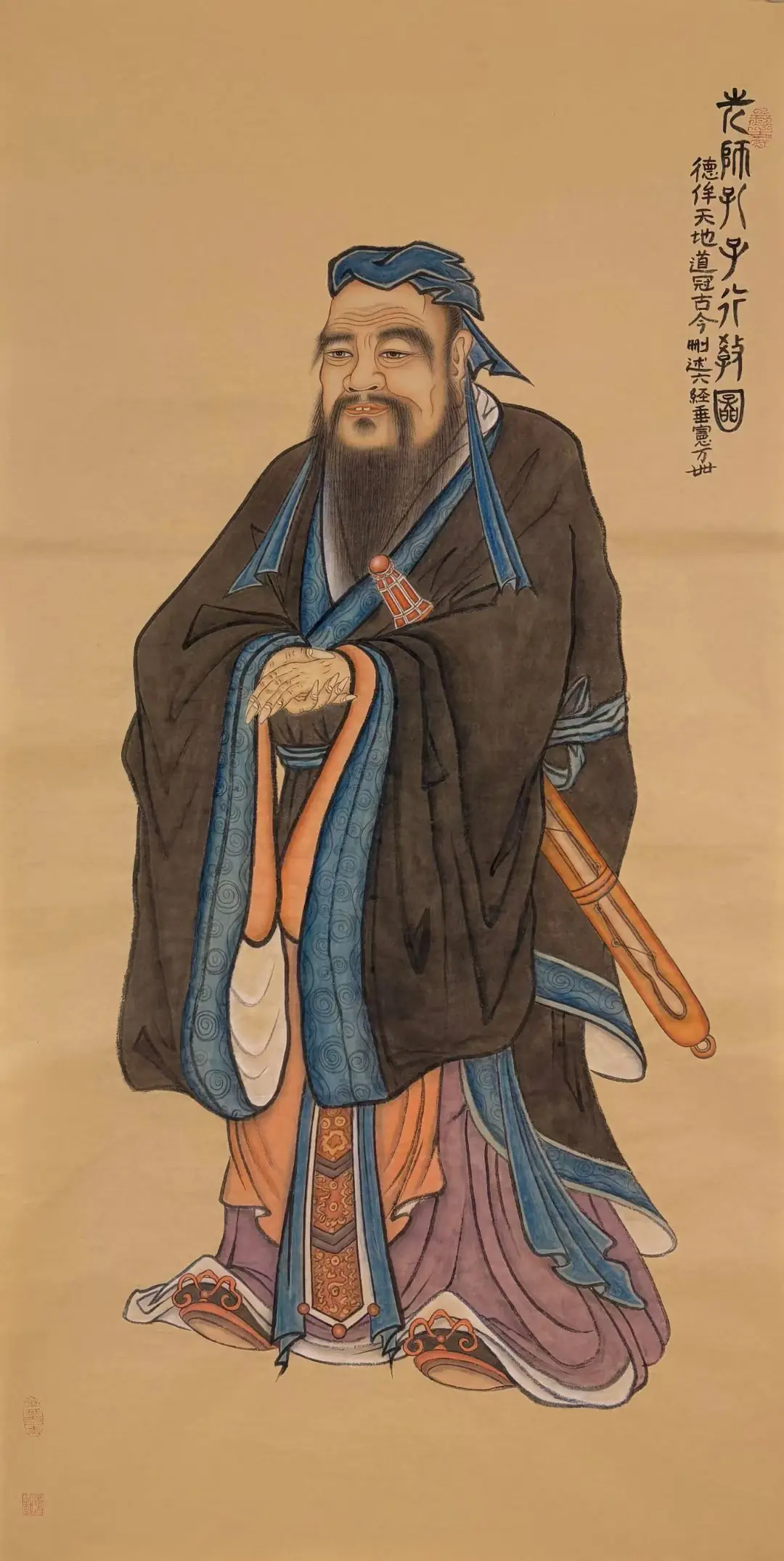
The Original Quote:
子入太庙,每事问。或曰:“孰谓鄹人之子知礼乎?入太庙,每事问。”子闻之,曰:“是礼也。”
Zǐ rù tàimiào, měi shì wèn. Huò yuē: “Shú wèi Zōu rén zhī zǐ zhī lǐ hū? Rù tàimiào, měi shì wèn.” Zǐ wén zhī, yuē: “Shì lǐ yě.”
English Translation:
The Master entered the Grand Temple and inquired about every matter. Some said, “Who says that the son of the man from Zou knows ritual? He enters the Grand Temple and asks about everything.” The Master, hearing this, said, “This very act is ritual.”
Key Concepts Explained:
- Ritual (lǐ 礼): Not mere formality, but a profound expression of reverence, humility, and propriety. Confucius reframes questioning as an essential component of ritual, showing that true ritual involves a sincere, learning-oriented attitude rather than rote performance.
- Virtue (dé 德): Moral power cultivated through humble practice. Here, Confucius demonstrates that virtue is not innate knowledge but is attained through continuous, earnest inquiry.
- Learning (xué 学): The lifelong process of self-cultivation. Confucius’ “every matter” questioning embodies the ideal of relentless learning, even for a master of tradition.
Cultural Context:
This passage from The Analects (Book 3, Chapter 15) captures Confucius’ visit to the Grand Temple of the Duke of Zhou, a sacred site of ritual governance. Critics saw his constant questioning as ignorance, but Confucius inverted this perception: humility before tradition is itself the highest form of ritual. In ancient China, ritual (lǐ) was the cornerstone of social harmony and moral order. By modeling inquiry as an act of reverence, Confucius teaches that true wisdom begins with acknowledging one’s own limitations—a timeless lesson for learners in any culture.