The Original Quote:
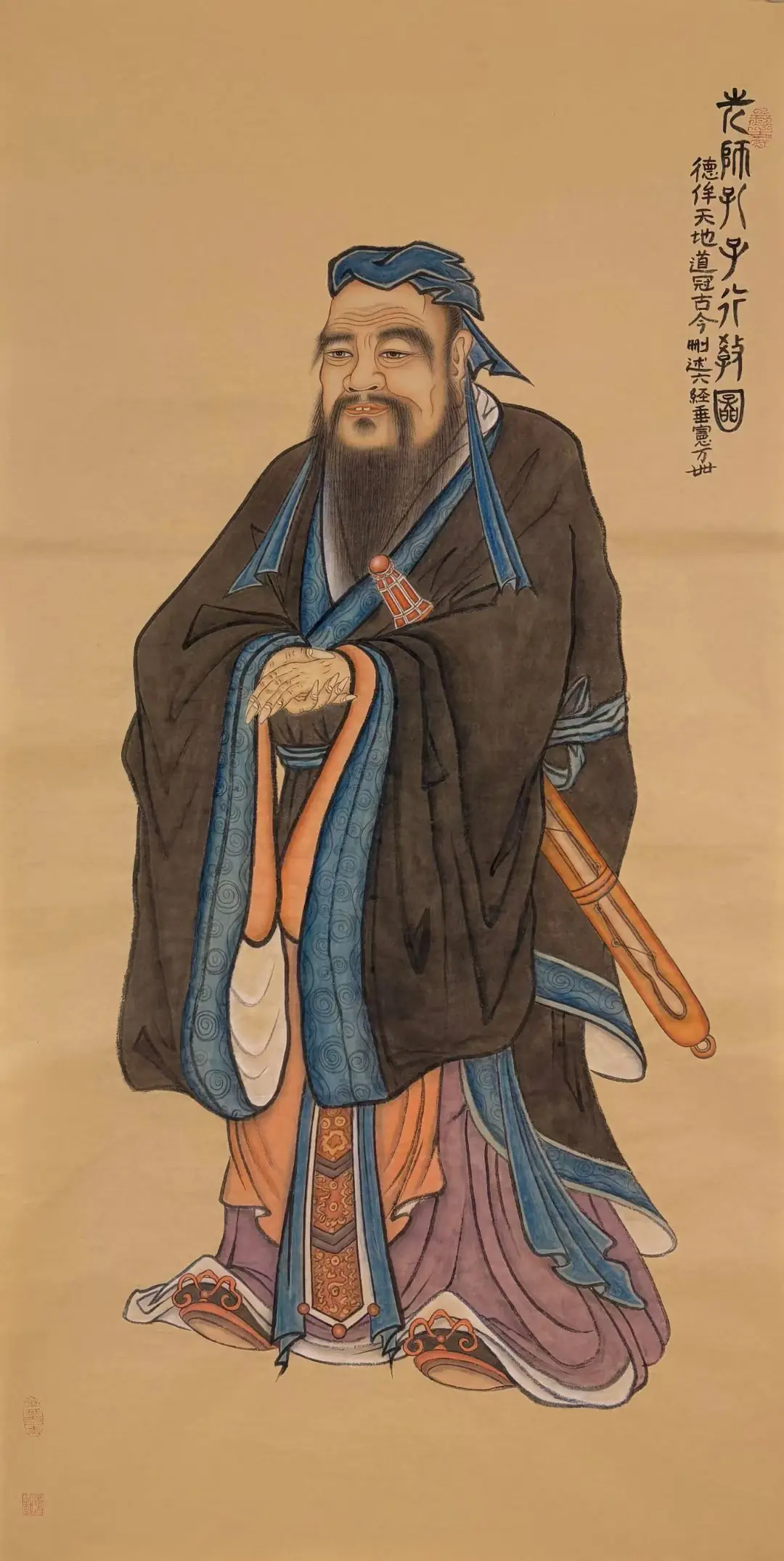
子夏问曰:“‘巧笑倩兮,美目盼兮,素以为绚兮’何谓也?”子曰:“绘事后素。”曰:“礼后乎?”子曰:“起予者商也,始可与言《诗》已矣。”
Zǐ Xià wèn yuē: “‘Qiǎo xiào qiàn xī, měi mù pàn xī, sù yǐ wéi xuàn xī’ hé wèi yě?” Zǐ yuē: “Huì shì hòu sù.” Yuē: “Lǐ hòu hū?” Zǐ yuē: “Qǐ yǔ zhě Shāng yě, shǐ kě yǔ yán 《Shī》 yǐ yǐ.”
English Translation:
Zi Xia inquired, saying: “‘Her artful smile, how charming! Her beautiful eyes, how bright! The plain ground lends itself to brilliant colors’—what is the meaning of these lines?” The Master replied: “The art of painting comes after the plain ground.” Zi Xia then said: “Thus, does ritual propriety come after humaneness?” The Master responded: “He who inspires me is Shang! Now I can begin to discuss the Odes with you.”
Key Concepts Explained:
- Ritual Propriety (礼, Lǐ): The outward forms, ceremonies, and social norms that structure human conduct. In this passage, it is understood as secondary to—and dependent upon—inner moral character.
- Humaneness (仁, Rén): The core Confucian virtue of benevolence, compassion, and moral goodness. It is the inner foundation upon which all proper external conduct (Lǐ) must rest.
- Plain Ground/Substance (素, Sù): A metaphor for the unadorned, genuine inner quality (such as Rén) that serves as the necessary foundation for external embellishment (such as Lǐ).
- Fate/Mandate (命, Mìng): While not directly in this passage, it is an underlying theme—the acceptance of one’s innate moral nature as a given foundation, much like the “plain ground” that precedes all painting.
Cultural Context:
This dialogue from the Analects (Lúnyǔ, 论语) illustrates a foundational principle of Confucian ethics: the priority of inner moral substance over external form. Zi Xia’s insight—that ritual (Lǐ) must be preceded by humaneness (Rén)—reveals a profound shift from mere ceremonialism to authentic moral cultivation. Confucius’s praise of Zi Xia as one who “inspires” him shows the dynamic, Socratic nature of Confucian teaching, where the student’s own reasoning is valued. Historically, this passage has been used to argue against empty formalism, emphasizing that rites and social customs are meaningful only when rooted in genuine virtue—a lesson that remains central to Chinese educational and cultural identity.