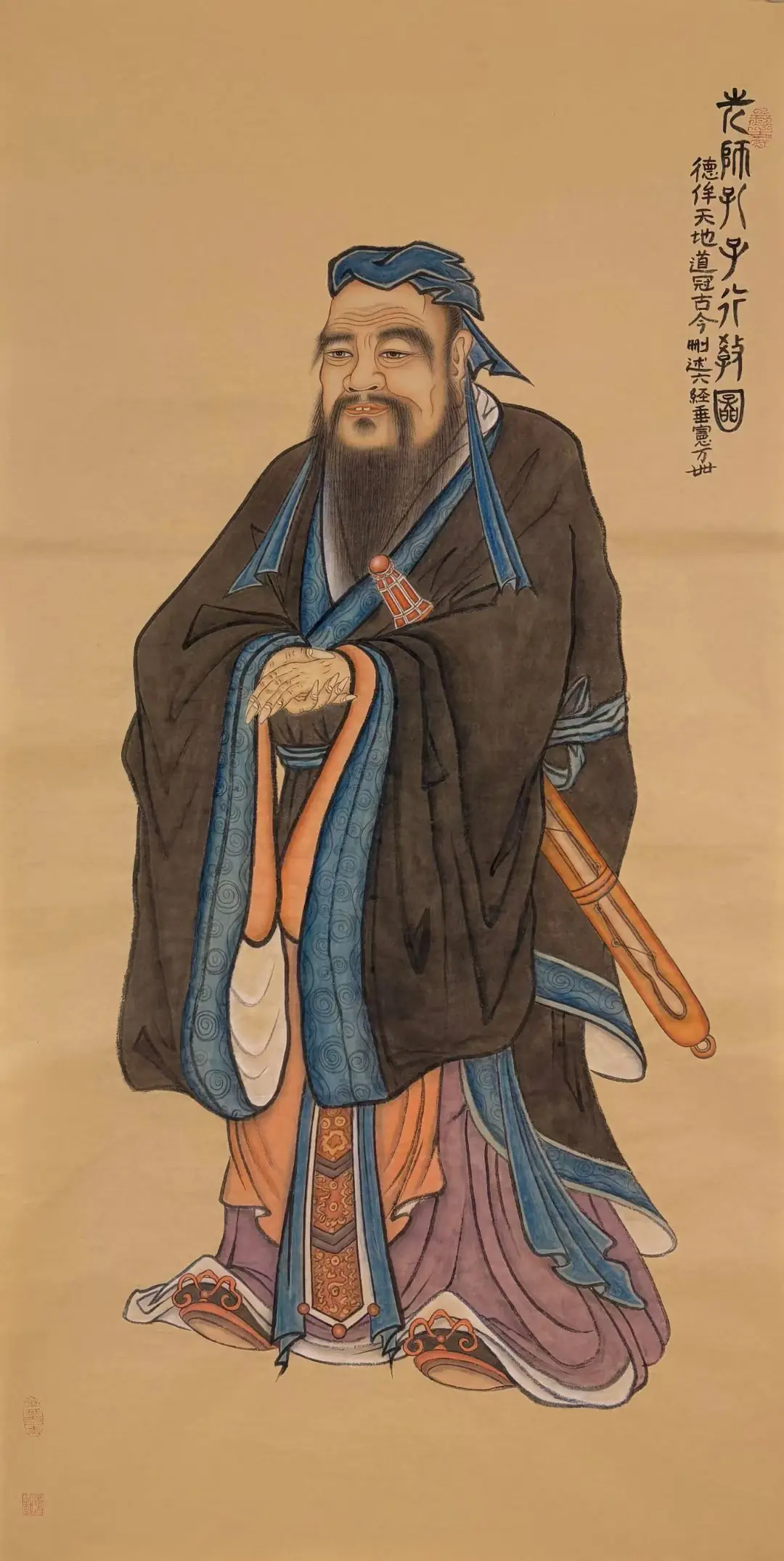
The Original Quote:
子曰:“参乎!吾道一以贯之。”曾子曰:“唯。”子出,门人问曰:“何谓也?”曾子曰:“夫子之道,忠恕而已矣。”
Zǐ yuē: “Cān hū! Wú dào yī yǐ guàn zhī.” Zēngzǐ yuē: “Wéi.” Zǐ chū, mén rén wèn yuē: “Hé wèi yě?” Zēngzǐ yuē: “Fūzǐ zhī dào, zhōng shù éryǐ yǐ.”
English Translation:
The Master said, “Shen! My Way is threaded through by a single principle.” Zengzi replied, “Indeed.” After the Master departed, the other disciples asked, “What does this mean?” Zengzi said, “The Way of the Master is nothing more than loyalty (zhōng) and empathy (shù).”
Key Concepts Explained:
- Dào (道): The Way; a fundamental path or doctrine that guides moral conduct and cosmic order, central to Confucian thought.
- Zhōng (忠): Loyalty or conscientiousness; inner sincerity and devotion to one’s duties, whether to family, friends, or vocation, rooted in self-cultivation.
- Shù (恕): Empathy or reciprocity; the ethical principle of treating others as oneself, epitomized in the Golden Rule: “Do not impose on others what you yourself do not desire.”
- Rén (仁): Benevolence or humaneness; the supreme Confucian virtue, realized through the practice of zhōng and shù in daily life.
Cultural Context:
This passage from the Analects (Lúnyǔ, 论语) captures a pivotal moment where Confucius’ disciple Zengzi distills the Master’s entire philosophy into the dual virtues of zhōng and shù. In the Warring States period (475–221 BCE), such ethical principles offered a moral compass amid political turmoil, emphasizing inner integrity and relational harmony over rigid laws. The concept of shù, often linked to the Confucian Golden Rule, has profoundly shaped East Asian social ethics, promoting mutual understanding and restraint. Historically, zhōng was later broadened from personal fidelity to include loyalty to the state, but its core remains authentic self-reflection. This teaching continues to resonate in modern cross-cultural dialogues, advocating for empathy as a foundation for peaceful coexistence.