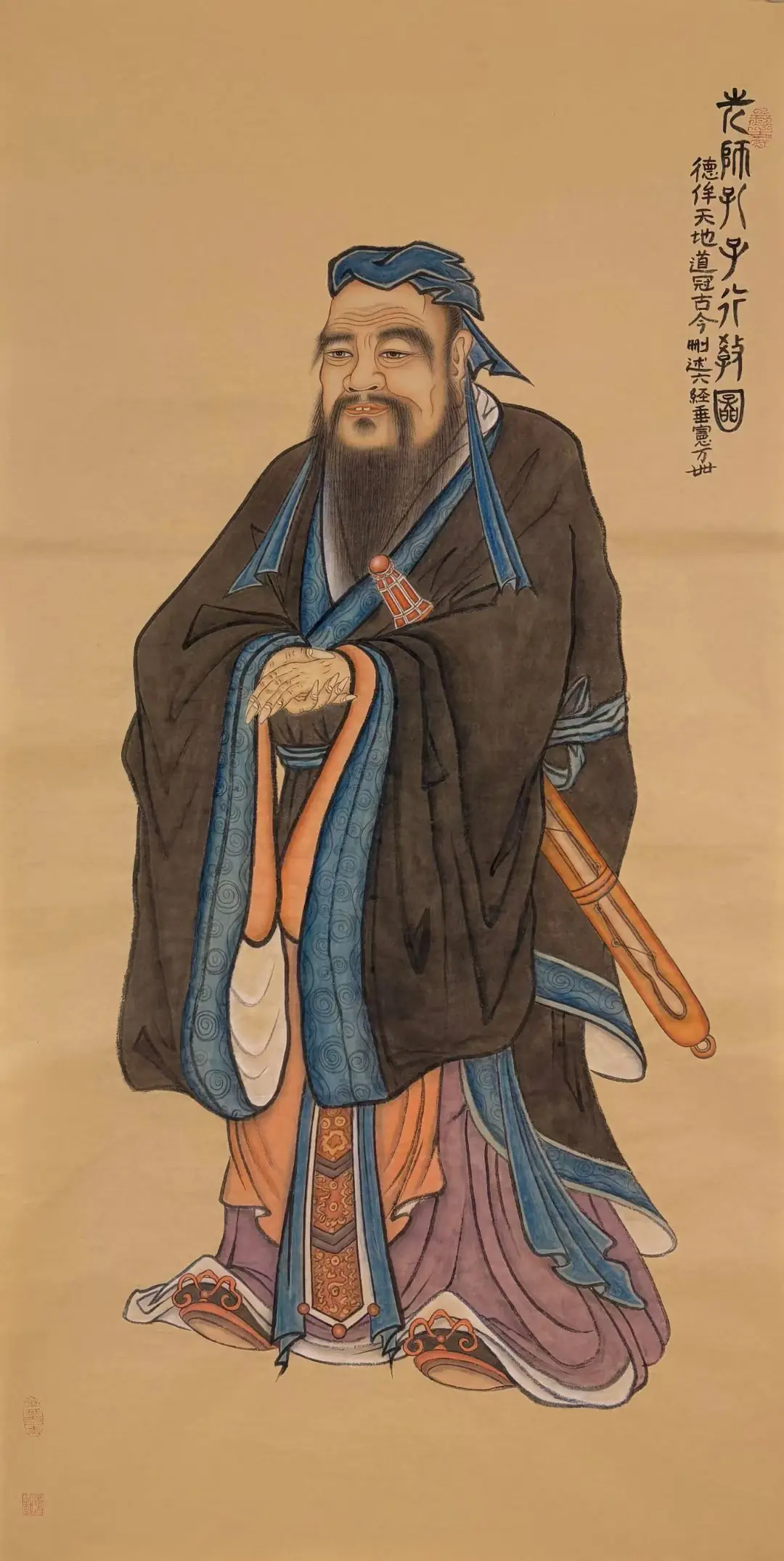
The Original Quote:
或谓孔子曰:“子奚不为政?”子曰:“《书》云:‘孝乎惟孝,友于兄弟,施于有政。’是亦为政,奚其为为政?”
Huò wèi Kǒngzǐ yuē: “Zǐ xī bù wéi zhèng?” Zǐ yuē: “Shū yún: ‘Xiào hū wéi xiào, yǒu yú xiōngdì, shī yú yǒu zhèng.’ Shì yì wéi zhèng, xī qí wéi wéi zhèng?”
English Translation:
Someone asked Confucius, “Why do you not engage in governance?” The Master replied, “The Book of Documents says: ‘Be filial, truly filial, and friendly to one’s brothers; this extends to governance.’ Thus, to practice these virtues is itself to govern. What need is there to hold office to be considered governing?”
Key Concepts Explained:
- 孝 (Xiào): Filial piety—a foundational virtue in Confucianism, denoting respect, care, and obedience toward one’s parents, which serves as the root of moral cultivation and social order.
- 友 (Yǒu): Fraternal affection—the loving bond between siblings, extending from family harmony to broader human relationships, reflecting the principle of reciprocity.
- 政 (Zhèng): Governance or government—in Confucian thought, not limited to official administration but encompassing any action that rectifies behavior and promotes moral order in society.
- 德 (Dé): Virtue or moral power—the inner quality cultivated through self-discipline and ritual practice, which radiates outward to influence others and maintain social harmony.
- 仁 (Rén): Benevolence or humaneness—the highest Confucian virtue, embodying compassion, love for humanity, and the ethical foundation of all relationships and governance.
Cultural Context:
This passage, recorded in the Analects (Lúnyǔ 2.21), addresses a question likely posed during a period when Confucius, though renowned for his wisdom, held no official office due to political turmoil in the State of Lǔ. By citing the Shūjīng (Book of Documents), Confucius articulates a radical vision: that moral cultivation within the family—through xiào (filial piety) and yǒu (fraternal love)—is not merely private but inherently political, as it establishes the ethical foundation for a harmonious state. This idea aligns with the later Confucian doctrine in the Dàxué (Great Learning) that “to govern the state, one must first regulate the family.” Confucius here defends his own indirect influence, suggesting that virtuous living itself constitutes governance, and that true political reform begins with personal moral rectitude. Historically, this teaching underscores the Confucian belief that political authority derives from moral example, not mere office, and that every individual, through ethical conduct, participates in the cosmic order of society.