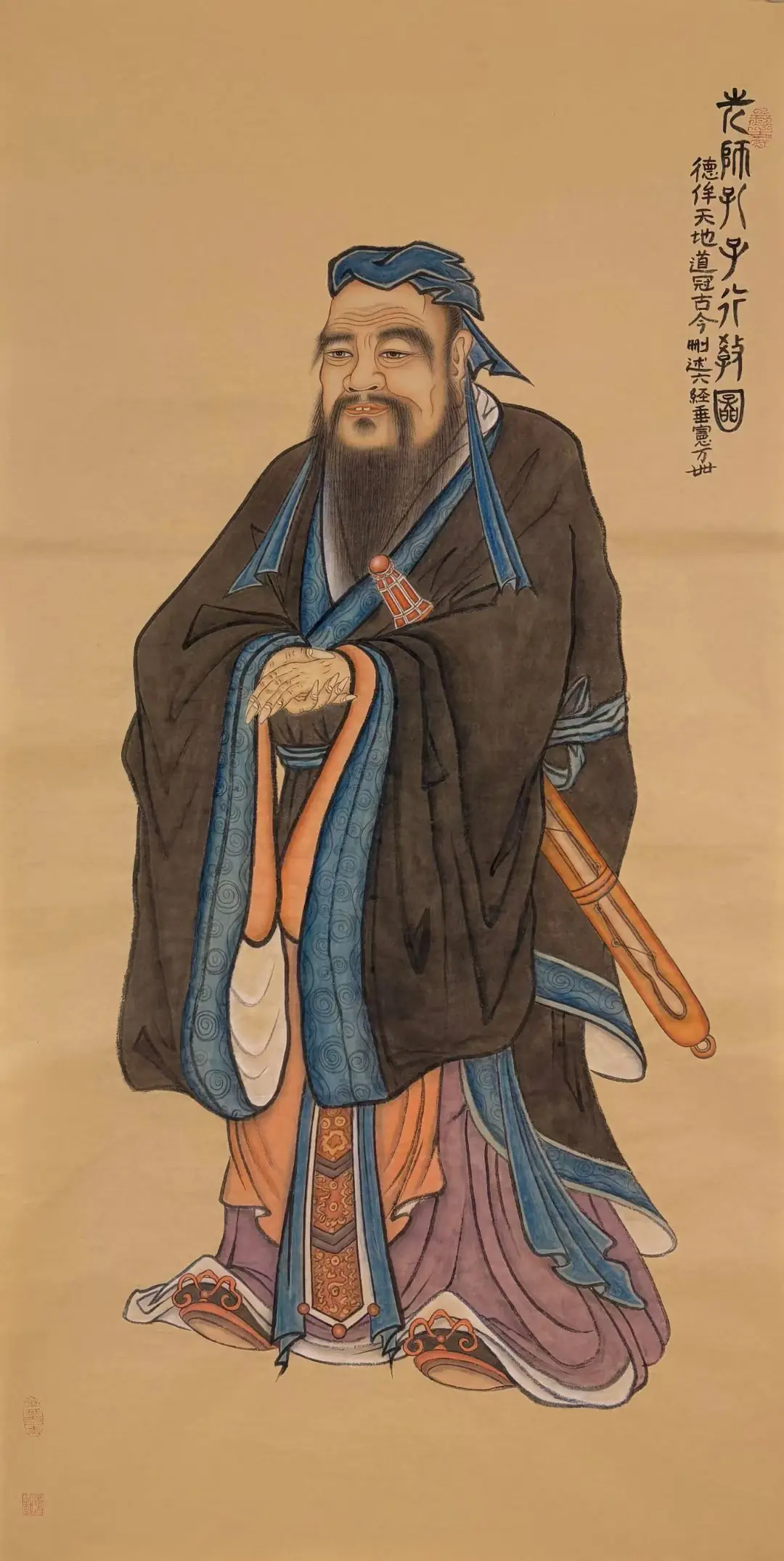
The Original Quote:
孟懿子问孝,子曰:“无违。”樊迟御,子告之曰:“孟孙问孝于我,我对曰‘无违’。”樊迟曰:“何谓也?”子曰:“生,事之以礼;死,葬之以礼,祭之以礼。”
Mèng Yìzǐ wèn xiào, zǐ yuē: “Wú wéi.” Fán Chí yù, zǐ gào zhī yuē: “Mèng Sūn wèn xiào yú wǒ, wǒ duì yuē ‘wú wéi’.” Fán Chí yuē: “Hé wèi yě?” Zǐ yuē: “Shēng, shì zhī yǐ lǐ; sǐ, zàng zhī yǐ lǐ, jì zhī yǐ lǐ.”
English Translation:
Meng Yizi inquired concerning filial piety. The Master said, “Transgress not.” As Fan Chi was driving his chariot, the Master told him, “Meng Sun asked me about filial piety, and I answered him, ‘Transgress not.’” Fan Chi said, “What does this mean?” The Master said, “While they live, serve them according to the rites of propriety; when they die, bury them according to the rites of propriety, and sacrifice to them according to the rites of propriety.”
Key Concepts Explained:
- lǐ (礼): Often translated as "ritual propriety" or "rites," lǐ encompasses the entire body of social norms, ceremonies, and ethical codes that structure harmonious relationships. In this passage, lǐ serves as the essential framework through which genuine filial piety (xiào) is expressed, ensuring that love and duty align with cosmic and social order.
- xiào (孝): "Filial piety," the cardinal virtue of family reverence, demanding care, obedience, and ritual observance toward one's parents both in life and death. Confucius elevates it from mere affection to a disciplined practice bound by lǐ.
- wú wéi (无违): "Without transgression" or "do not violate"—a concise command not to deviate from the established norms of lǐ, emphasizing that true filial piety requires adherence to proper conduct rather than arbitrary personal expression.
Cultural Context:
This dialogue from the Analects (Lúnyǔ, 论语) reflects Confucius’s effort to redefine filial piety within the framework of ritual propriety during the Spring and Autumn period (770–476 BCE), a time of social fragmentation when noble families often overstepped traditional boundaries. By instructing the powerful Meng Yizi, a member of the influential Three Huan clans, Confucius subtly critiques the erosion of hierarchical order. The teaching underscores that filial piety is not a private sentiment but a public virtue governed by lǐ, linking family ethics to political stability. This passage remains foundational in East Asian Confucian cultures, where ritual observance in ancestral rites continues to embody respect for lineage and social harmony.