The Original Quote:
入公门,鞠躬如也,如不容。立不中门,行不履阈。过位,色勃如也,足躩如也,其言似不足者。摄齐升堂,鞠躬如也,屏气似不息者。出,降一等,逞颜色,怡怡如也;没阶,趋进,翼如也;复其位,踧踖如也。
Rù gōng mén, jūgōng rú yě, rú bù róng. Lì bù zhōng mén, xíng bù lǚ yù. Guò wèi, sè bó rú yě, zú jué rú yě, qí yán sì bùzú zhě. Shè qí shēng táng, jūgōng rú yě, bǐngqì sì bù xī zhě. Chū, jiàng yī děng, chěng yánsè, yíyí rú yě; mò jiē, qū jìn, yì rú yě; fù qí wèi, cùjí rú yě.
English Translation:
Upon entering the ducal court, he bowed low as if the space could scarce contain him. He stood not at the threshold's center, nor did his step cross its sill. Passing the ruler's seat, his countenance grew solemn, his gait hastened, and his speech seemed as if words were wanting. Lifting the hem of his robe to ascend the hall, he bowed low, holding his breath as if it might cease. Descending by one step, his face relaxed into a gentle ease; at the bottom, he advanced swiftly with an air like wings unfurled; returning to his place, he stood with reverent deference.
Key Concepts Explained:
- Lǐ (礼): Ritual propriety—the outer expression of inner virtue through prescribed conduct, here manifest in every gesture from entry to exit, reflecting cosmic and social order.
- Jìng (敬): Reverence—a core Confucian attitude of serious respect toward roles, spaces, and persons, seen in the controlled breath and measured steps.
- Rén (仁): Benevolence—the inner moral quality that animates ritual; even in courtly formality, it is the heart's sincerity that gives life to these actions.
- Zhōng yōng (中庸): The Doctrine of the Mean—balance between solemnity and ease, as Confucius transitions from rigid formality to joyful composure after leaving the ruler's presence.
Cultural Context:
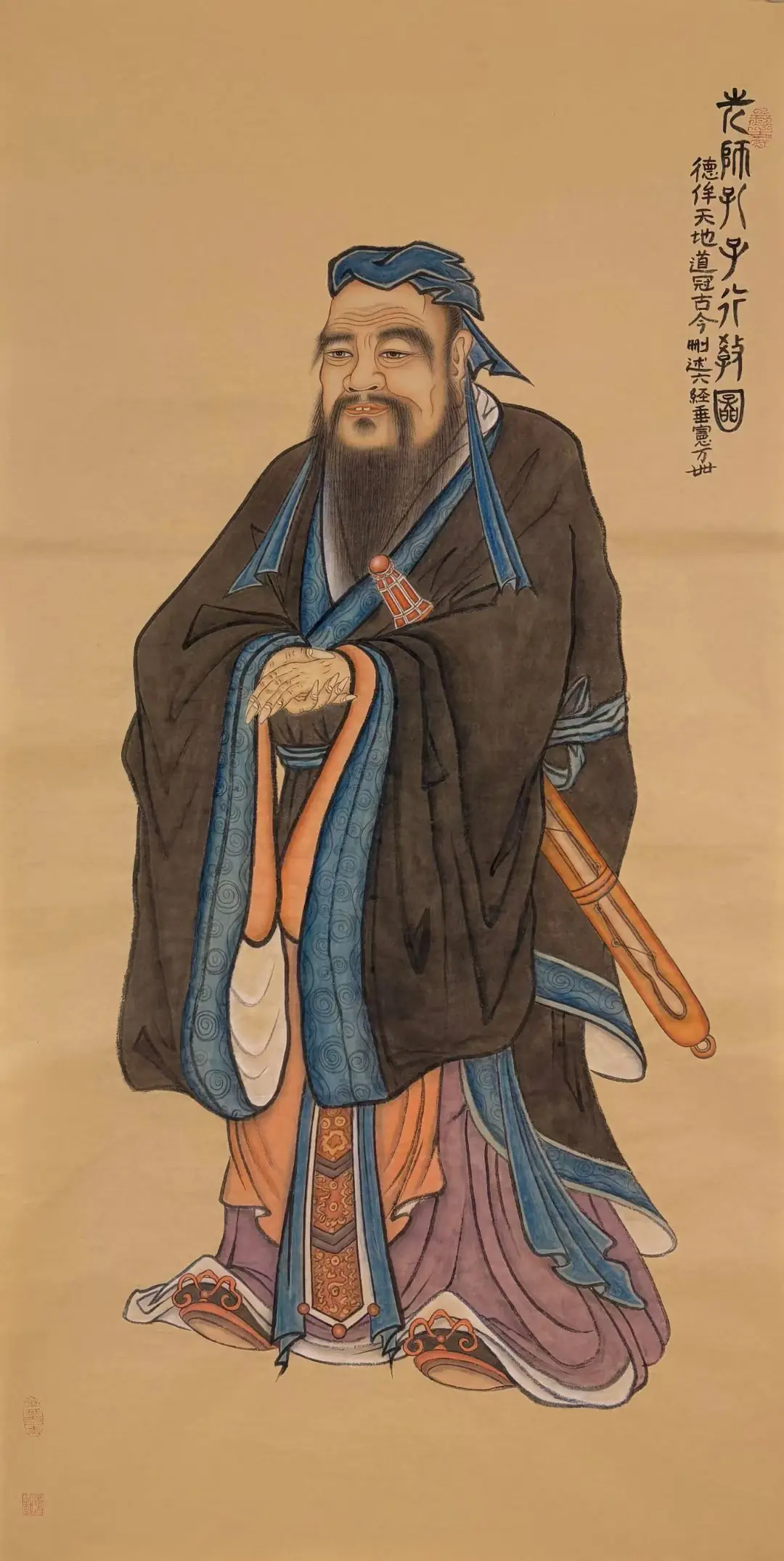
This passage from The Analects (Book 10, Chapter 4) captures Confucius (Kǒngzǐ, 孔子) participating in the court rituals of the State of Lǔ during the Spring and Autumn period (771–476 BCE). The detailed choreography—avoiding the gate's center, not stepping on the threshold, modulating breath and speech—reflects the ancient lǐ system that governed all state ceremonies. Such rites were not mere formality; they were seen as cultivating moral character and harmonizing human relationships. For Confucius, the physical body becomes a vessel for virtue: every bow, pause, and glance communicates respect for authority, humility before order, and the integration of inner sincerity (rén) with outer form (lǐ). Though the feudal court has vanished, this passage remains a timeless lesson in how mindful conduct in formal settings—whether a modern office or conference—can embody dignity, attentiveness, and the spirit of jìng (reverence).