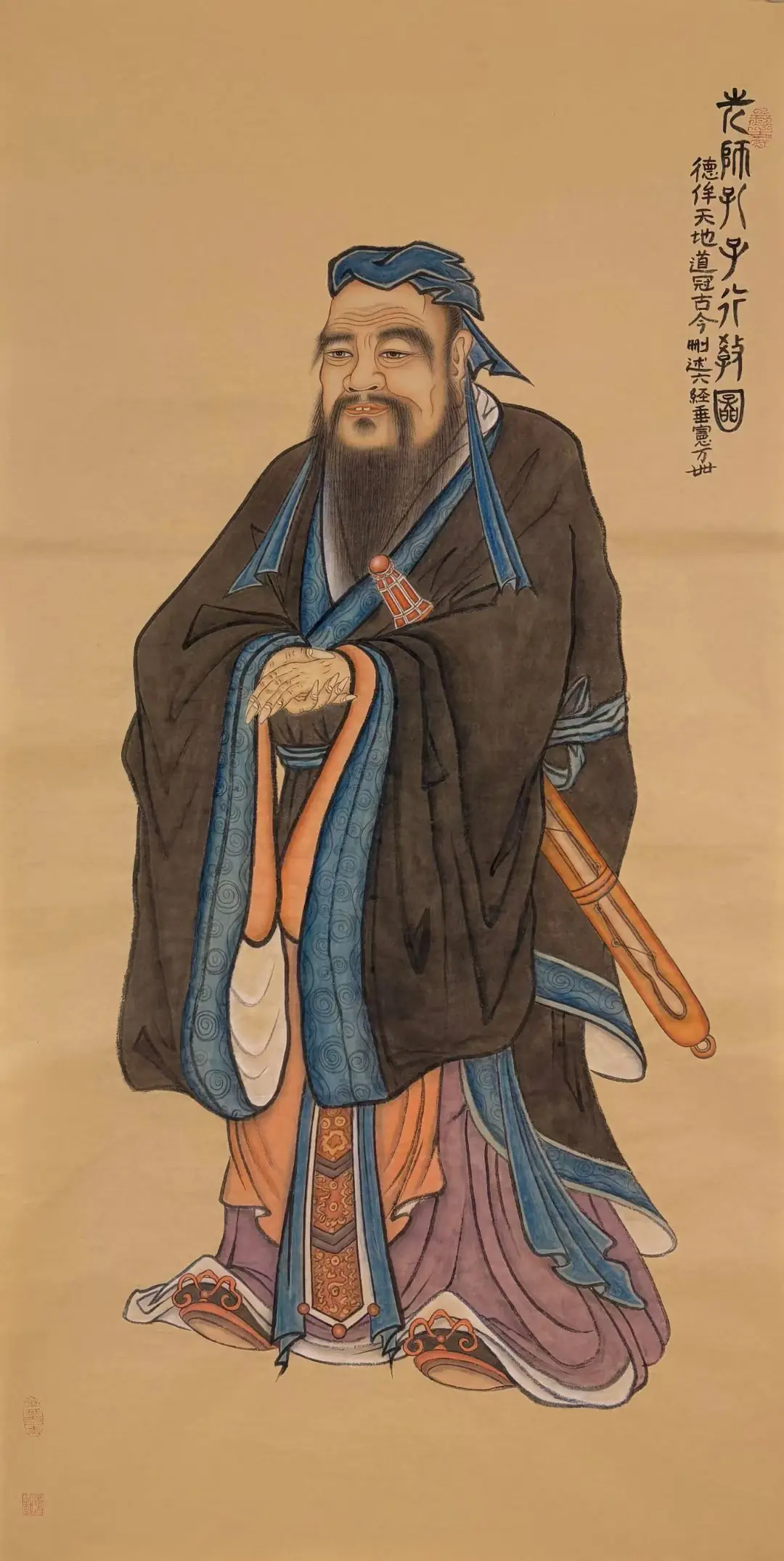
The Original Quote:
疾,君视之,东首,加朝服,拖绅。
Jí, jūn shì zhī, dōng shǒu, jiā cháo fú, tuō shēn.
English Translation:
When Confucius was ill and his lord came to visit him, he lay with his head facing east, draped his court robe over himself, and let the sash trail loosely.
Key Concepts Explained:
- Li (礼): Ritual propriety—the outward expression of inner virtue through prescribed conduct, even in states of physical weakness.
- Ren (仁): Benevolence or humaneness—the core virtue that motivates respectful action toward authority and others.
- Yi (义): Righteousness—the moral disposition to do what is proper in each circumstance, here manifest as maintaining dignity before a ruler.
Cultural Context:
This passage from the Analects (Book 10, Chapter 19) illustrates the Confucian ideal that ritual propriety (li) must be upheld even in the most vulnerable moments of life. In ancient China, facing east was associated with the direction of the ruler and the rising sun, symbolizing respect. By donning his court robe and adjusting his sash, Confucius demonstrates that true virtue (ren) is not abandoned in sickness—it becomes the very measure of one's character. This anecdote served as a moral exemplar for centuries, teaching that personal integrity and social harmony are inseparable, and that ritual is not mere formality but the living fabric of ethical conduct.