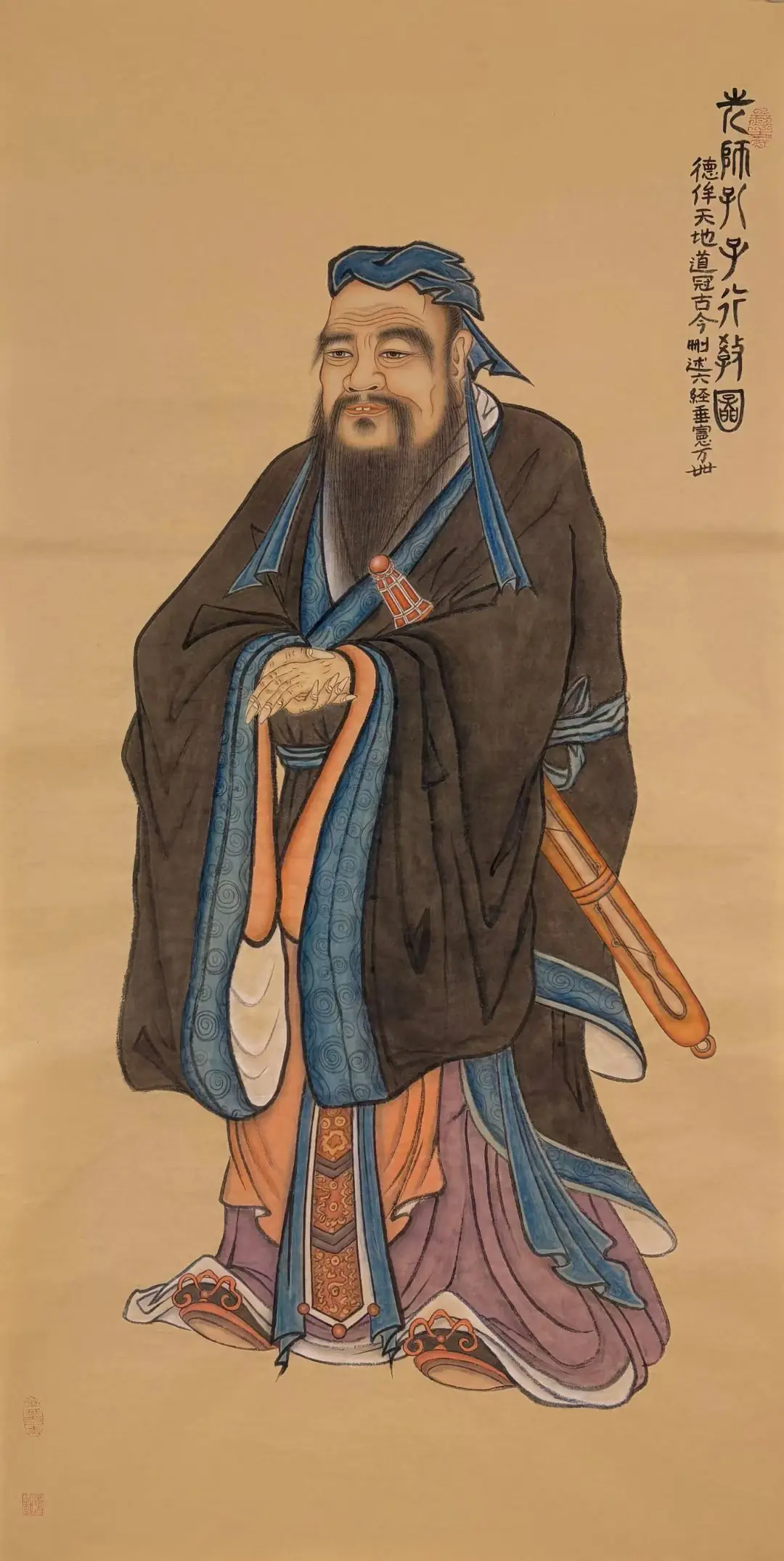
The Original Quote:
乡人傩,朝服而立于阼阶。
Xiāng rén nuó, cháo fú ér lì yú zuò jiē.
English Translation:
When the villagers performed the Nuo exorcism ritual to expel pestilence, the Master, donning his court robes, stood solemnly upon the eastern steps, thereby honoring their custom without participation.
Key Concepts Explained:
- Ritual Propriety (礼, Lǐ): The outward expression of inner respect through prescribed forms, such as wearing court robes to acknowledge a local ceremony.
- Benevolence (仁, Rén): The core virtue of human-heartedness, manifest here as empathetic respect for others' beliefs without judgment.
- Reverent Distance (敬而远之, Jìng ér yuǎn zhī): A Confucian attitude of maintaining respectful detachment toward matters one does not personally endorse, like spirits or unfamiliar rites.
- Magnanimity (宽, Kuān): The tolerant recognition that all customs and ideas possess intrinsic value, deserving of dignified acknowledgment.
Cultural Context:
In ancient China, the Nuo ritual was a folk practice aimed at driving away evil spirits and disease, often viewed by the elite as superstitious. Confucius (551–479 BCE), though famously agnostic about spirits, did not dismiss such customs. Instead, his act of donning formal court attire and standing on the eastern steps—the place of honor in a traditional hall—demonstrated a profound cultural diplomacy. This gesture teaches that true respect does not require shared belief, but rather the humility to honor others' traditions as expressions of their humanity. It reflects the Confucian ideal of harmonious coexistence (和, Hé) through mutual reverence, a principle that resonates across cultures as a foundation for ethical pluralism.