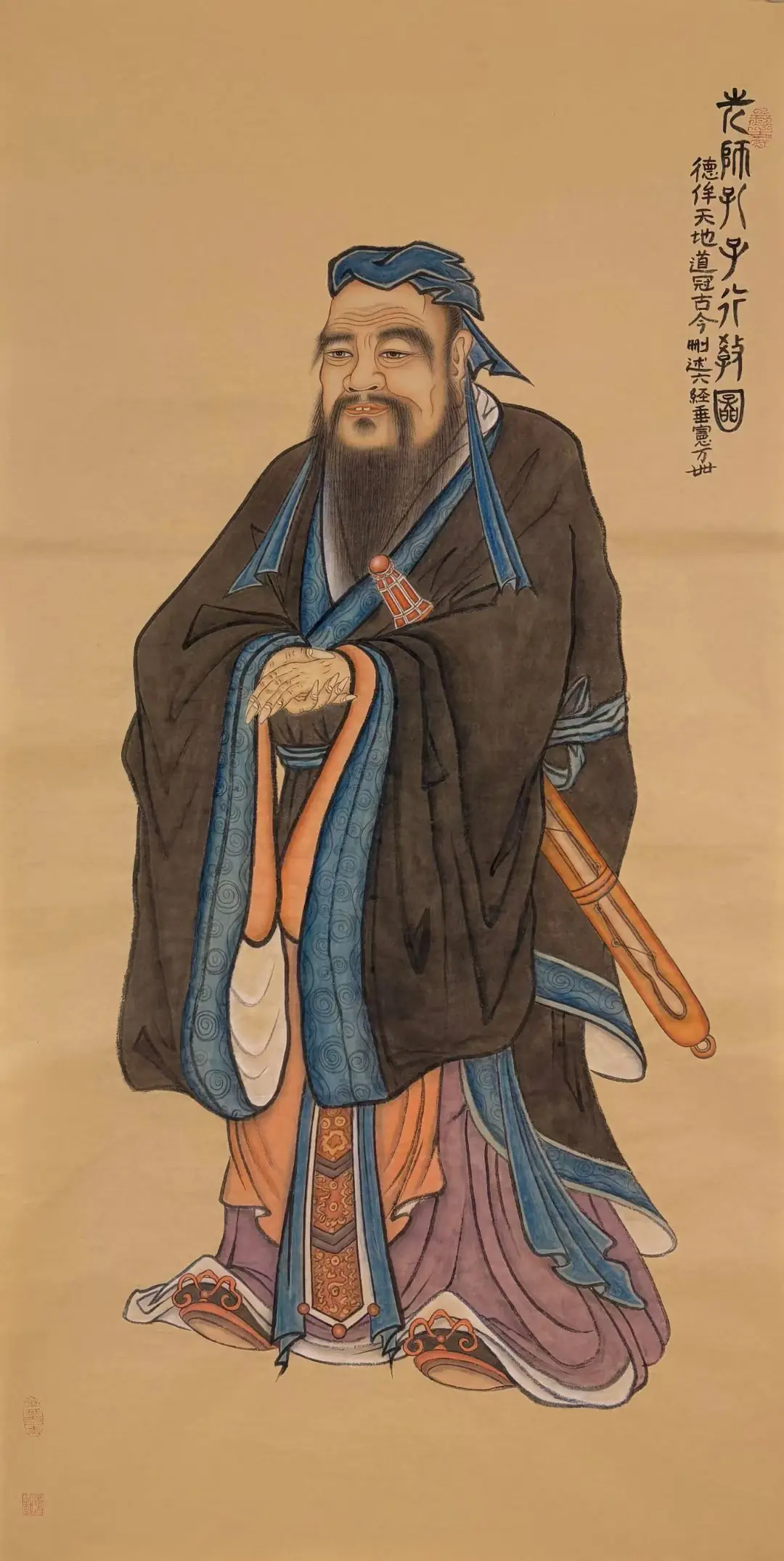
The Original Quote:
齐景公问政于孔子,孔子对曰:“君君,臣臣,父父,子子。”公曰:“善哉!信如君不君、臣不臣、父不父、子不子,虽有粟,吾得而食诸?”
Qí Jǐnggōng wèn zhèng yú Kǒngzǐ, Kǒngzǐ duì yuē: "Jūn jūn, chén chén, fù fù, zǐ zǐ." Gōng yuē: "Shàn zāi! Xìn rú jūn bù jūn, chén bù chén, fù bù fù, zǐ bù zǐ, suī yǒu sù, wú dé ér shí zhū?"
English Translation:
Duke Jing of Qi inquired of Confucius concerning governance. Confucius replied, "Let the ruler be a ruler, the minister a minister, the father a father, and the son a son." The Duke said, "Excellent! Truly, if the ruler is not a ruler, the minister not a minister, the father not a father, and the son not a son, though grain be abundant, how could I partake of it?"
Key Concepts Explained:
- Rectification of Names (zhèng míng 正名): The Confucian doctrine that each person must fulfill the duties and virtues inherent in their social role, ensuring harmony through proper naming and action.
- Ritual Propriety (lǐ 礼): The system of rites and norms that maintain social order, here seen as the foundation for mutual obligations between ruler and subject, parent and child.
- Benevolence (rén 仁): The core virtue of humaneness, which in this context implies that all roles—from ruler to father—are defined by reciprocal care and moral responsibility, not mere authority.
- Mandate (mìng 命): The moral decree or fate that binds individuals to their duties, as failure in one's role disrupts the cosmic and social order.
Cultural Context:
This dialogue, set in the Spring and Autumn period (770–476 BCE), reflects Confucius’s response to the collapse of Zhou dynasty hierarchies. Duke Jing’s praise for "rectifying names" reveals his awareness of political decay, yet his failure to appoint an heir led to the Chen clan’s usurpation. Confucius’s teaching emphasizes mutual obligations—contra later "Three Bonds" (sān gāng 三纲) dogma—as scholar Liang Qichao noted: it is a "gentleman’s equality" (jūnzǐ zhī píngděng 君子之平等), where all persons, regardless of rank, must embody virtue in their roles to sustain society.