
The State of Zheng was a newly emerged vassal state during the late Western Zhou Dynasty, founded by Duke Huan of Zheng, Ji You. Duke Huan of Zheng was the youngest son of King Li of Zhou, the brother of King Xuan of Zhou, and the uncle of King You of Zhou, maintaining close ties with the Zhou royal family and serving as a high minister in the Zhou court. After receiving his fiefdom, he followed the advice of Grand Historian Bo and, leveraging his prestige and reputation, led his clan and some remnants of the Shang people to relocate all of Zheng's property, tribes, and populace from the Guanzhong region to Xinzheng (near present-day Xinzheng, Henan), situated between the states of Eastern Guo and Kuai. Located in the heart of the Central Plains with convenient access in all directions, Zheng developed rapidly and soon became a significant power among the vassal states.
During the reign of King You of Zhou, Duke Huan of Zheng died while resisting an invasion by the Western Rong tribes. His son, Duke Wu of Zheng, succeeded him and became the first feudal lord to lead troops in driving out the Rong, supporting and escorting King Ping of Zhou in his eastward relocation to Luoyang. As a result, he was highly trusted by the Zhou royal court, succeeded his father as a high-ranking minister, and took charge of the central government of the Zhou dynasty.
With the fall of the Western Zhou Dynasty, King Ping was forced to abandon Haojing and, relying on the support of feudal lords, moved the capital east to Luoyi, causing the royal house's status to plummet and leaving it with only the empty title of nominal ruler of all under heaven. In reality, the royal domain shrank steadily, its military power weakened to the point where it could no longer command the lords. The State of Zheng, long a meritorious servant of the royal house, held the position of chief minister in the Zhou court for nearly a hundred years across three generations, wielding real power, and with Luoyi adjacent to Zheng's capital Xinzheng, it could easily control the court. Leveraging these advantages, in the early Spring and Autumn period, Zheng used the king's authority to command the lords, annexed several small neighboring states, and emerged as the most powerful and prestigious among the feudal states. After Duke Zhuang of Zheng succeeded to the throne, he capitalized on the state's strength and his position as a Zhou court minister to expand territory, ally with major states like Qi and Lu to attack and weaken Wei, Song, Chen, and Cai, and eliminate the State of Xu, establishing a situation known as the "Spring and Autumn Minor Hegemon." As his political and military power grew, Duke Zhuang increasingly showed disrespect toward the Zhou royal house, completely disregarding the authority of the Son of Heaven.
Duke Zhuang of Zheng seized control of the court's power, acting arrogantly and tyrannically, showing haughty disrespect toward the royal house. King Ping of Zhou was deeply displeased by this, fearing that Duke Zhuang might threaten the royal family's position, so he planned to divide authority with Duke Ji of Guo to weaken Duke Zhuang's power. When Duke Zhuang learned of this, he was furious and harbored deep resentment toward King Ping. Fearing that Duke Zhuang might harm the royal house, King Ping flatly denied the matter, but Duke Zhuang did not believe him. To ease the tension between them, the two sides agreed to exchange hostages. King Ping of Zhou, swallowing his pride, sent the crown prince to the State of Zheng, while Duke Zhuang of Zheng also sent his son, Prince Hu, to Luoyi. This became known as the Zheng-Zhou hostage exchange incident. That a Son of Heaven had to defer to a feudal lord's whims shows just how precarious the royal house's position had become.
In the twenty-fourth year of Duke Zhuang of Zheng (720 BCE), King Ping of Zhou passed away, and King Huan of Zhou, Ji Lin, ascended the throne. The young King Huan was eager to make his mark, hoping to reverse the Zhou dynasty's long decline and restore its dominance, so he aggressively suppressed the powerful state of Zheng. He did not want Duke Zhuang of Zheng to monopolize court affairs and planned to hand over authority to the Duke of Guo, Lin Fu. Upon learning this, Duke Zhuang of Zheng immediately retaliated by sending troops twice to seize the crops from the royal lands of Wen (present-day Wen County, Henan) and Chengzhou (east of present-day Luoyang, Henan) as a show of force. Duke Zhuang's open defiance of the Son of Heaven enraged King Huan. Later, when Duke Zhuang visited the Zhou court, King Huan deliberately treated him rudely to retaliate for his arrogance, deepening the conflict between Zhou and Zheng. Subsequently, King Huan formally appointed the Duke of Guo as the Right Minister of Zhou, dividing Duke Zhuang's power. Duke Zhuang of Zheng, a deeply calculating and strategic ruler, realized that open confrontation with the royal house was not beneficial for Zheng, so he decided to adopt a conciliatory stance toward Zhou while actively expanding his territory and strengthening his power. Later, internal strife broke out in Zheng when Duke Zhuang's younger brother, Shu Duan, plotted to usurp the throne. As Duke Zhuang focused on handling this crisis, King Huan took the opportunity to dismiss him from his position as Chief Minister and, using royal prerogative, exchanged twelve parcels of land belonging to the Su clan—which were not actually the king's to give—for ten parcels of Zheng's land, resulting in Zheng effectively losing four parcels of territory.
Not long after, Duke Zhuang successfully resolved the issue with Shu Duan. He was extremely angered by King Huan's actions and began to demonstrate his defiance, declaring that he would no longer pay court to King Huan of Zhou. After his last audience with King Huan, on his way back to the State of Zheng, Duke Zhuang deliberately used the banner of the Son of Heaven to launch campaigns against those feudal lords who had conflicts with Zheng.
Due to Duke Zhuang of Zheng's extreme disrespect and insubordination, King Huan of Zhou finally reached his limit and decided to personally lead an expedition against Zheng to uphold royal authority. In the autumn of 707 BCE, King Huan commanded the full elite forces of the Zhou royal house and mobilized allied troops from the states of Chen, Cai, Wei, and Guo to jointly attack Zheng. Among them, Guo was the king's trusted ally, while Wei, Cai, and Chen had long-standing conflicts with Zheng and frequently engaged in warfare. King Huan divided the Zhou coalition into three armies—right, center, and left—to advance on Zheng. The right army, along with the attached Cai and Wei forces, was commanded by the high minister Lin Fu of Guo; the left army, with the attached Chen forces, was led by Zhou Gong Hei Jian; and King Huan himself commanded the main Zhou forces forming the center army, also serving as the supreme commander of the entire coalition.
Upon learning that the King of Zhou was leading a large army to attack, Duke Zhuang of Zheng personally took command of the resistance forces, appointing Ziyuan, Jizu, Gao Qumi, Xiashuying, Yuanfan, Manbo, and Zhudan as generals. They arrayed their troops at Ge (north of present-day Changge, Henan Province) to confront the enemy, prepared to fight a decisive battle against the Zhou army.
To counter the Zhou army's three divisions, Duke Zhuang of Zheng also organized his Zheng forces into three parts: the central army, the left formation (square formation), and the right formation. Grand Minister Man Bo (Prince Hu) commanded the right formation to attack the Zhou army's left flank; Grand Minister Ji Zu commanded the left formation to attack the Zhou army's right flank; Grand Ministers Yuan Fan and Gao Qumi jointly commanded the central army, following Duke Zhuang of Zheng, coordinating with the two formations and striking opportunistically.
During the Western Zhou period, a fixed system of "military rites" governed warfare, with ritual and morality as the fundamental guiding principles of battle. At that time, merely destroying the enemy's main forces was not considered a true victory; genuine victory meant prevailing over the opponent both morally and militarily. Traditional combat methods involved the three armies arrayed against each other, with the central army advancing first, followed by the left and right armies. Before the battle, Zheng nobleman Gongzi Yuan conducted a precise and in-depth analysis of the Zhou royal coalition's composition. Combining this with traditional tactics, he pointed out that the central army led by the Zhou king was a well-trained elite force with strong combat capability, while the left and right armies were coalitions of various states, lacking unity and essentially a motley crowd. In particular, the state of Chen had just experienced internal turmoil, making its troops unstable, demoralized, and weak in combat. Therefore, he suggested that during the battle, the Zheng central army should remain steady and not engage first, but instead strike the Zhou left army where the Chen forces were stationed, predicting that the Chen army would quickly collapse. Then, they should attack the right army composed of Cai and Wei troops, who already had little fighting spirit and, influenced by the left army's collapse, would be unable to resist and would retreat. If the left and right armies were routed, it would inevitably affect the morale of the central army, allowing the Zheng forces to concentrate their strength and launch a combined assault on the Zhou central army, leading to a major defeat for the Zhou forces.
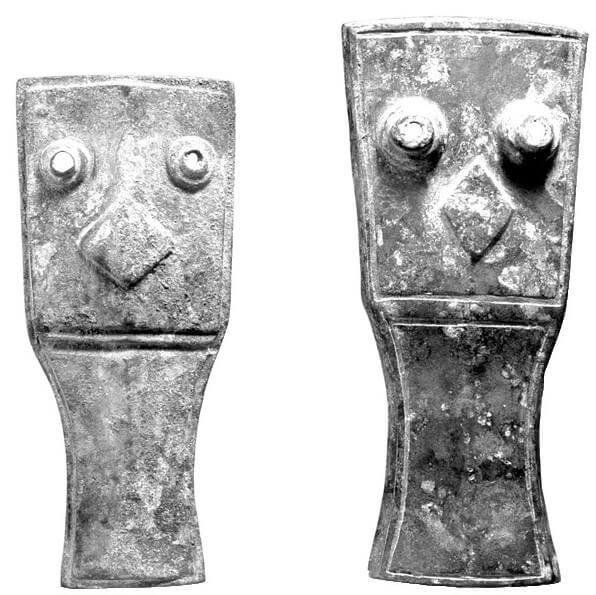
His analysis and suggestions were very reasonable, and Duke Zhuang of Zheng gladly accepted them. At that time, battles between feudal lords primarily relied on chariots: during combat, three armored soldiers commanded the chariot, seven fought on foot beside it, and the remaining infantry advanced ahead. In battle, the infantry always went first, with chariots following behind. Previously, when allied feudal lords fought against the Northern Di tribes, once the front infantry was broken through, the chariots lost their cover and became ineffective, leading to consecutive defeats. Based on this lesson, Gao Qumi, a general of the Zheng army, proposed changing the traditional clumsy chariot battle formation. He suggested placing chariots in front, with infantry organized in squads of five spreading out on both sides and behind the chariots to fill the gaps between them, enabling coordinated action between chariots and infantry. This formed a flexible and unified formation that could both attack and defend; because it resembled a fish shape, it was called the "Fish Scale Formation." Duke Zhuang of Zheng, proving himself a bold ruler, daringly adopted this novel combat model in a battle that determined life and death.
When the battle began, King Huan of Zhou led the central army, beating drums and challenging Zheng's central forces, but the Zheng central army did not respond. The Zhou troops were puzzled by this, when suddenly, Zheng's left and right armies charged out in a fish-scale formation. In the battle, generals used flags and drums as signals to command the formation. Zheng's nobleman Man Bo led the right wing of Zheng's army to first attack the left flank of the Zhou coalition forces, the Chen army. The Chen army, indeed unable to withstand the assault, immediately scattered and fled the battlefield, causing the Zhou coalition to lose its left wing. At the same time as the Zhou left wing collapsed, Ji Zu also commanded Zheng's left wing to attack the right flank of the Zhou coalition, the Cai and Wei armies. Like the Chen army, the Cai and Wei troops, once engaged, quickly retreated in defeat and fell into disarray.
The central army led by King Huan of Zhou was immediately isolated, and under the influence of the defeated troops from both flanks, its formation fell into chaos. Seeing this, Duke Zhuang of Zheng immediately waved his flag to command, committing the Zheng central army into battle, coordinating with the left and right wings commanded by Jizu and Manbo to launch a pincer attack on the wavering Zhou central army. The Zhou central army, already in disarray and unable to withstand the spirited combined assault of the three Zheng armies, was ultimately defeated and retreated in a great rout.
During the retreat of King Huan of Zhou, he was struck in the shoulder by an arrow from Zhu Dan, a general of the Zheng state, but he endured the pain and barely managed to lead his troops out of the encirclement. Seeing the Zhou army routed, Zhu Dan and others suggested pursuing the victory to capture King Huan alive and expand their gains. However, Duke Zhuang of Zheng, considering that although the Zhou Son of Heaven's status had long declined, he was still the nominal sovereign of all under heaven, and pressing him too hard would provoke dissatisfaction among other feudal lords, leading to political and moral disadvantage, stopped Zhu Dan, saying, "Morally, we are acting in self-defense, merely to avoid the destruction of our state. Driving a man to desperation is not the conduct of a gentleman, especially when that man is the Son of Heaven."
After the battle, to demonstrate his respect for the king, Duke Zhuang of Zheng specially sent his high minister Zhai Zu to console the injured King Huan of Zhou and his generals, expressing a willingness to reconcile with the royal house and ease the sharp conflict between the two states. King Huan of Zhou's dream of restoring the Zhou dynasty was completely shattered, and seeing that Zheng had offered a way out, he accepted the defeat at the Battle of Ge and took the opportunity to make peace with Zheng.
The Battle of Ge greatly boosted Duke Zhuang of Zheng's prestige, bringing the state of Zheng's hegemony to its peak. Former adversaries such as Song, Wei, and Chen all sought peace with Zheng and formed alliances, making Zheng the most powerful state in the Central Plains at the time, effectively the overlord of the region. Although Zheng was established relatively late and had less favorable natural conditions, through nearly a century of effort spanning three generations, it rose to become the first hegemonic power of the Spring and Autumn period, arguably the most glorious state in the early years of that era. The Zheng army pioneered the flexible and dense "Fish Scale Formation" in military tactics and was the first to adopt the strategy of attacking the weak before the strong, significantly advancing the innovation and evolution of ancient warfare. However, perhaps because Duke Zhuang of Zheng was the first to challenge royal authority, later historians did not highly regard his achievements, merely calling him a "minor hegemon."
The Battle of Ge resulted in a devastating defeat for the royal army, completely wiping away the last shred of the Zhou Son of Heaven's authority and definitively signaling the decline of the Zhou royal house. The tradition of "rites and military campaigns issuing from the Son of Heaven" vanished from that point onward, and the Zhou court could no longer "assist and govern the four corners of the realm." Although the Zhou king still held the nominal title of Son of Heaven, he lacked the power to punish the warring feudal lords, rendering his position virtually meaningless. The feudal states no longer obeyed the king's commands, and powerful states swallowed up weaker ones through sheer strength, bullying the small—this became one of the most prominent features of the military landscape during this period. Following the State of Zheng, major powers such as Qi, Jin, Chu, and Qin rose in succession, thus beginning the era of Spring and Autumn period hegemonic struggles among the feudal lords.