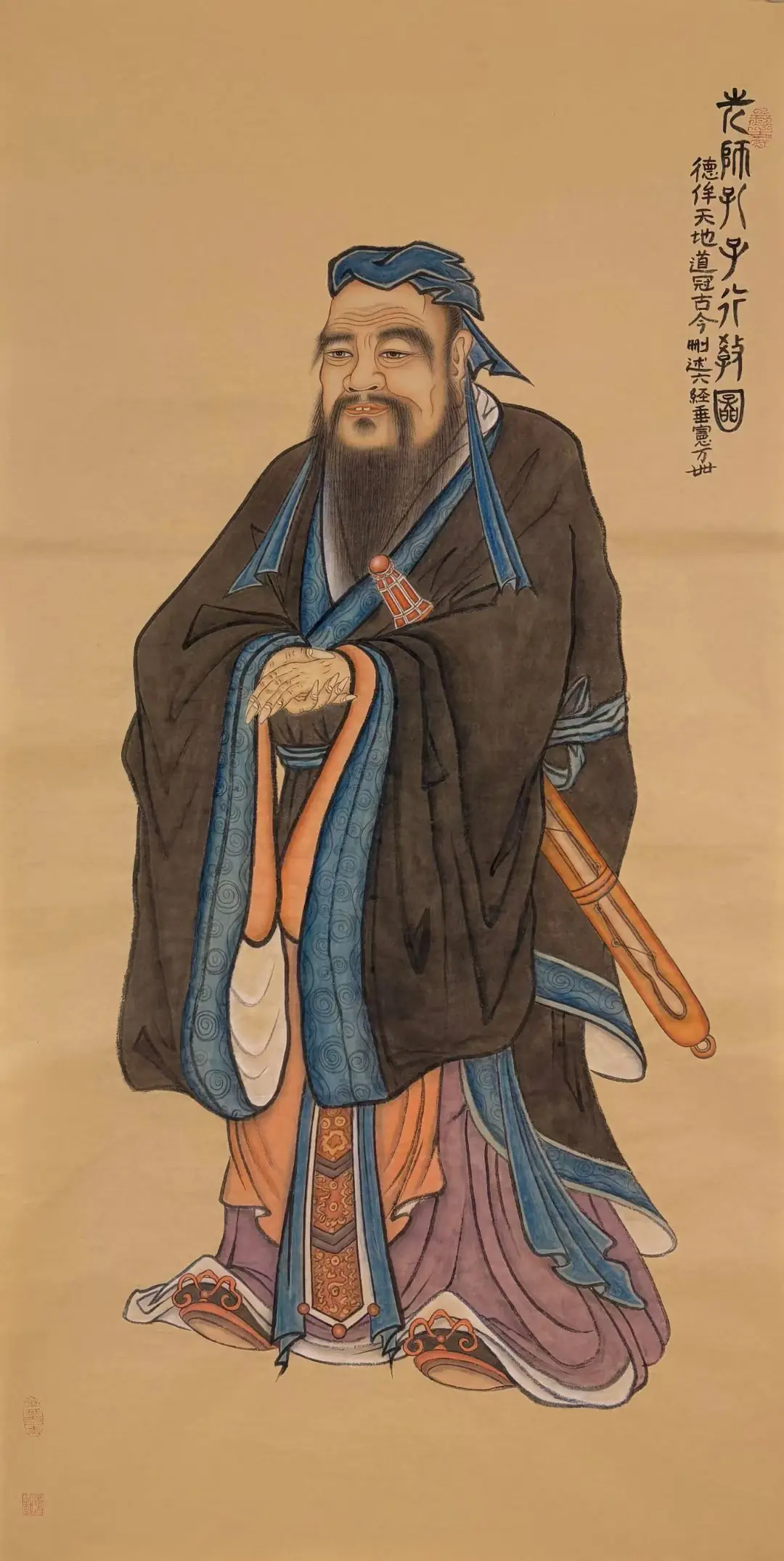
The Original Quote:
子曰:“贤者辟世,其次辟地,其次辟色,其次辟言。”子曰:“作者七人矣。”
Zǐ yuē: “Xián zhě bì shì, qí cì bì dì, qí cì bì sè, qí cì bì yán.” Zǐ yuē: “Zuò zhě qī rén yǐ.”
English Translation:
The Master said: “The worthy withdraw from a chaotic age; the next best withdraw from a corrupt land; the next best withdraw from an ungracious countenance; the next best withdraw from harsh words.” The Master added: “There have been seven men who did thus.”
Key Concepts Explained:
- 贤者 (Xián zhě): “The worthy” or “the virtuous”—those who embody moral excellence (德, dé) and discernment, acting in harmony with the Way (道, dào).
- 辟 (bì): “To withdraw” or “avoid”—a deliberate act of self-preservation and moral integrity, not mere cowardice, but a strategic retreat to preserve one’s virtue (仁, rén) in a corrupt environment.
- 命 (mìng): “Mandate” or “fate”—the cosmic order that governs timing and circumstance; here, it implies that the worthy recognize when the times are out of joint and act accordingly, aligning with heaven’s decree (天命, tiān mìng).
- 礼 (lǐ): “Ritual propriety”—the framework of social harmony; withdrawal is a form of ritualized response to disorder, maintaining personal dignity when outward observance becomes impossible.
Cultural Context:
This passage from the Analects (论语, Lúnyǔ) reflects Confucius’s pragmatic counsel on survival amidst political decay during the Spring and Autumn period (770–476 BCE). The “seven men” are legendary recluses—such as Boyi and Shuqi—who chose exile over complicity with tyranny. Confucius here balances his core advocacy of active service (仕, shì) with a realistic ethic of withdrawal, teaching that preserving one’s inner integrity (仁, rén) may require strategic retreat. This principle later influenced Chinese literati, who often oscillated between official duty and reclusive life, viewing withdrawal as a noble act of resistance against moral decay, not a failure of duty.