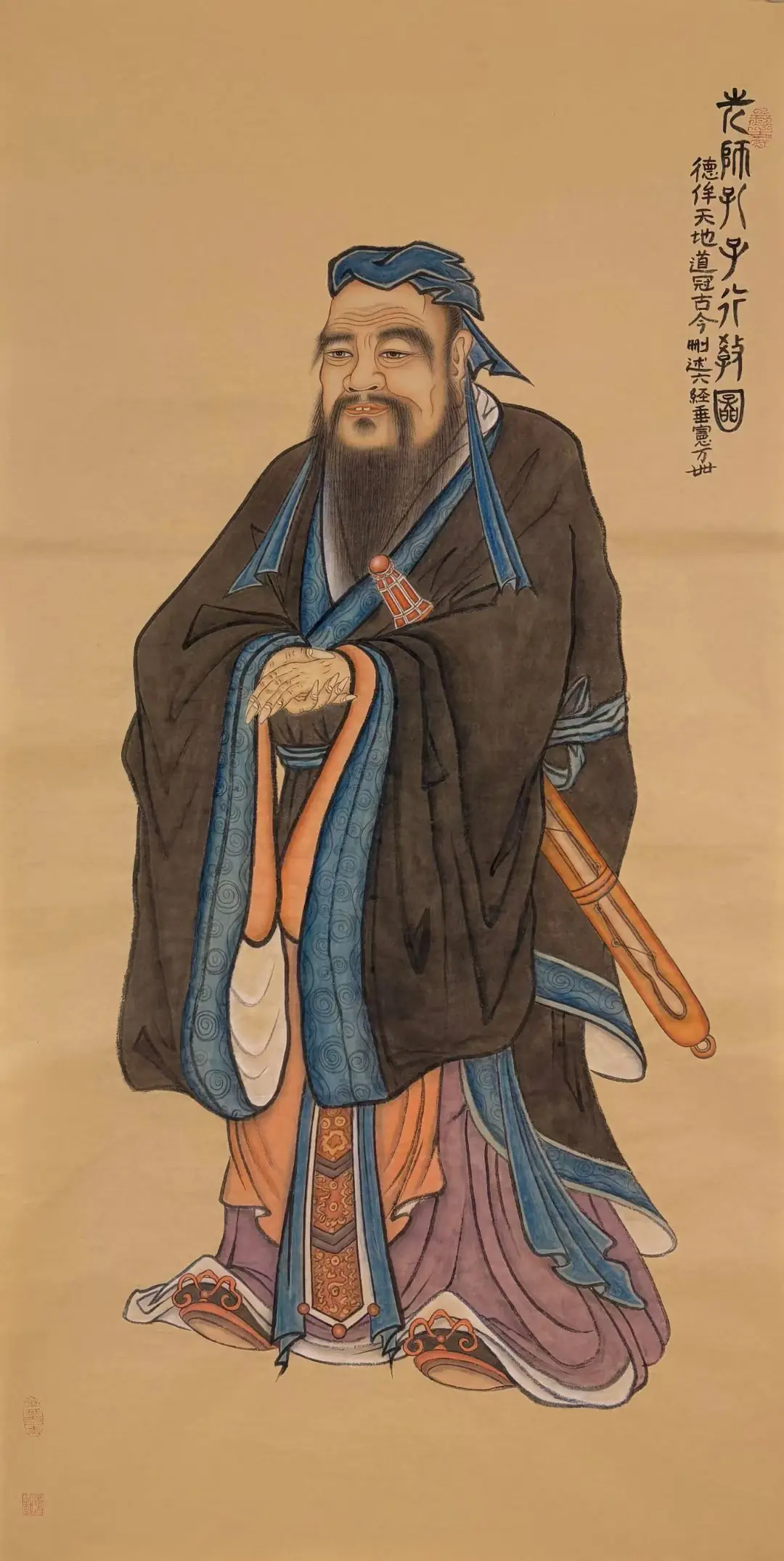
The Original Quote:
子路问成人,子曰:“若臧武仲之知、公绰之不欲、卞庄子之勇、冉求之艺,文之以礼乐,亦可以为成人矣。”曰:“今之成人者何必然?见利思义,见危授命,久要不忘平生之言,亦可以为成人矣。”
Zǐlù wèn chéngrén, zǐ yuē: “Ruò Zāng Wǔzhòng zhī zhì, Gōngchuò zhī bù yù, Biàn Zhuāngzǐ zhī yǒng, Rǎn Qiú zhī yì, wén zhī yǐ lǐ yuè, yì kě yǐ wéi chéngrén yǐ.” Yuē: “Jīn zhī chéngrén zhě hé bì rán? Jiàn lì sī yì, jiàn wēi shòu mìng, jiǔ yào bù wàng píngshēng zhī yán, yì kě yǐ wéi chéngrén yǐ.”
English Translation:
Zilu asked about the complete person. The Master said: "One who possesses the wisdom of Zang Wuzhong, the freedom from desire of Meng Gongchuo, the courage of Bian Zhuangzi, and the talents of Ran Qiu, and who is further adorned with ritual and music—such a one may be deemed a complete person." He added: "But must the complete person of today be so? One who, upon seeing gain, thinks of righteousness (yì); upon facing danger, is willing to offer up his life (mìng); and, even in prolonged hardship, does not forget the promises of ordinary times—such a one may also be deemed a complete person."
Key Concepts Explained:
- 命 (Mìng): Often translated as "fate" or "mandate," here it means "life" or "mission." In "见危授命" (jiàn wēi shòu mìng), it refers to offering one's life in times of danger, reflecting a commitment to duty beyond personal survival.
- 礼 (Lǐ): Ritual propriety or social norms. In Confucian thought, lǐ is the external expression of inner virtue (rén), shaping conduct through ceremonies, manners, and moral order to harmonize society.
- 仁 (Rén): Benevolence or humaneness, the core Confucian virtue. While not explicit here, it underlies the ideal of the "complete person" (chéngrén), as wisdom, courage, and righteousness are manifestations of rén.
- 义 (Yì): Righteousness or moral duty. "见利思义" (jiàn lì sī yì) means to think of righteousness when seeing profit, prioritizing ethical principles over material gain—a key Confucian teaching.
Cultural Context:
This passage from the Analects (Lúnyǔ) reflects Confucius's pragmatic approach to moral education. The "complete person" (chéngrén) originally demanded a rare combination of wisdom, desirelessness, courage, and talent, polished by ritual (lǐ) and music (yuè)—an ideal for the nobleman (jūnzǐ). However, Confucius offered a more attainable standard for his time: ethical conduct in daily life. The phrase "见利思义" (see profit, think of righteousness) became a foundational principle in Chinese ethics, influencing later Confucian scholars like Mencius and shaping governance and personal morality. This teaching emphasizes that moral maturity is not about perfection but about consistent, principled action in the face of temptation and danger.