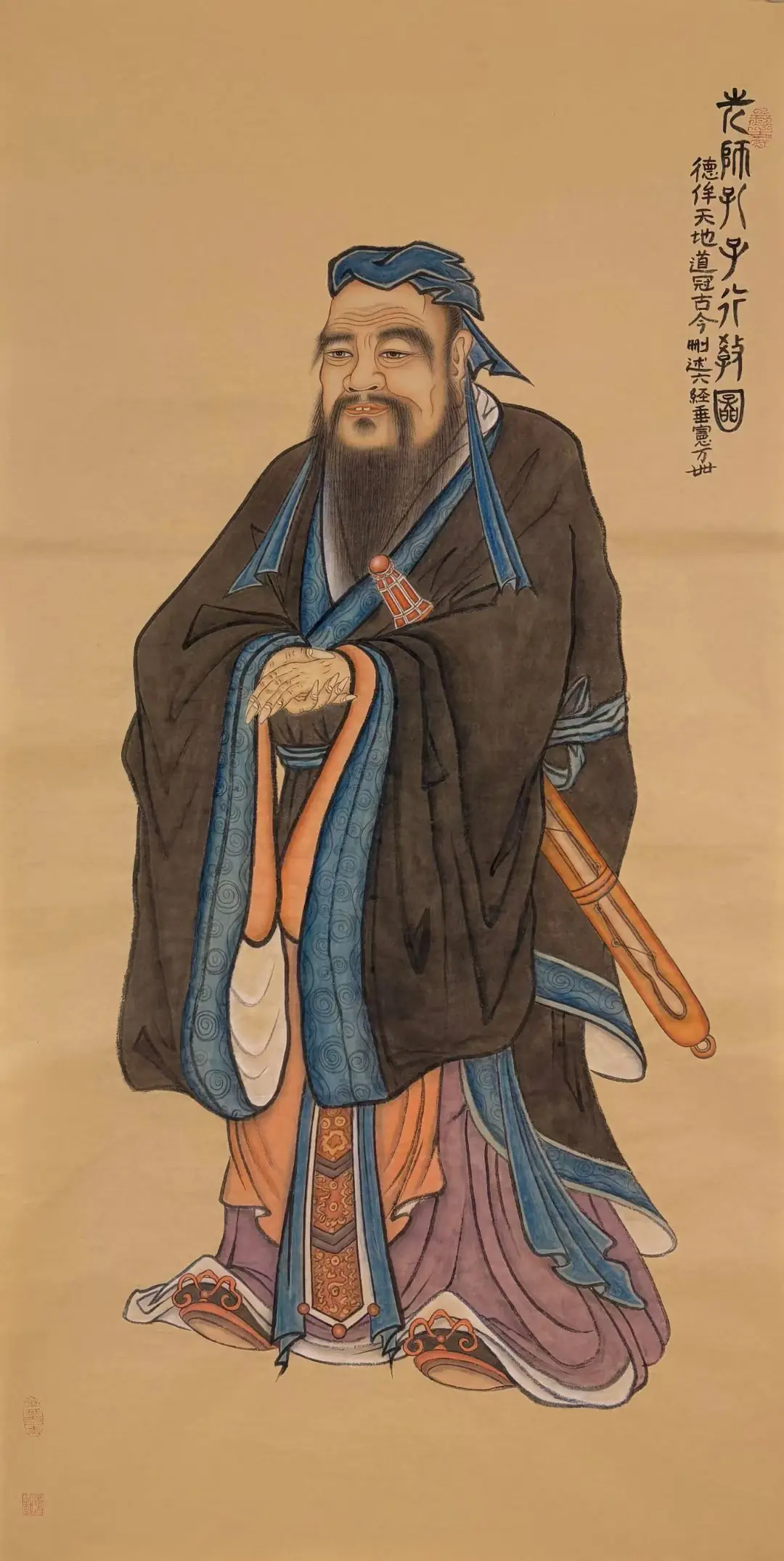
The Original Quote:
陈成子弑简公,孔子沐浴而朝,告于哀公曰:“陈恒弑其君,请讨之。”公曰:“告夫三子。”,孔子曰:“以吾从大夫之后,不敢不告也,君曰‘告夫三子’者!”之三子告,不可。孔子曰:“以吾从大夫之后,不敢不告也。”
Chén Chéngzǐ shì Jiǎn Gōng, Kǒngzǐ mùyù ér cháo, gào yú Āi Gōng yuē: “Chén Héng shì qí jūn, qǐng tǎo zhī.” Gōng yuē: “Gào fū sān zǐ.” Kǒngzǐ yuē: “Yǐ wú cóng dàfū zhī hòu, bù gǎn bù gào yě, jūn yuē ‘gào fū sān zǐ’ zhě!” Zhī sān zǐ gào, bù kě. Kǒngzǐ yuē: “Yǐ wú cóng dàfū zhī hòu, bù gǎn bù gào yě.”
English Translation:
When Chen Chengzi slew Duke Jian of Qi, Confucius, after bathing and purifying himself, hastened to court and reported to Duke Ai of Lu, saying: "Chen Heng hath slain his sovereign; I beseech thee to raise an army and punish him." The Duke replied: "Go, tell this to the three noble families." Confucius then said: "Because I once followed in the ranks of the great officers, I dared not fail to report this; yet the sovereign hath said, 'Go tell the three nobles.'" He went and informed them, but they refused. Confucius said: "Because I once followed in the ranks of the great officers, I dared not fail to report this."
Key Concepts Explained:
- 礼 (Lǐ): Ritual propriety, the fundamental social and moral order that governs relationships and conduct, seen as the bedrock of a stable state.
- 义 (Yì): Righteousness or moral duty, the inner commitment to act according to what is just and proper, even when futile.
- 君君臣臣 (Jūn jūn chén chén): The rectification of names—that a ruler must act as a ruler, and a minister as a minister, upholding hierarchical duties to prevent chaos.
- 命 (Mìng): Fate or mandate, the recognition of limits within human action, yet the insistence on fulfilling one's moral obligations regardless of outcome.
- 仁 (Rén): Benevolence or humaneness, the core virtue driving Confucius's concern for order and the well-being of the state.
Cultural Context:
This passage from the Analects (14.21) captures a pivotal moment in the Spring and Autumn period, when the powerful minister Chen Heng (Chen Chengzi) assassinated Duke Jian of Qi, a grave violation of the feudal hierarchy. Confucius, though retired from office, felt compelled by his duty as a former minister to urge Duke Ai of Lu to intervene. However, Duke Ai was a figurehead, his power usurped by the "Three Huan" families (Jisun, Mengsun, and Shusun). Confucius's fruitless appeal to these nobles highlights his unwavering commitment to the principle of zhèngmíng (rectification of names)—the belief that moral order must be upheld through proper conduct, even when political reality offers no hope. His actions serve as a timeless lesson: the duty to uphold fundamental principles transcends personal success or failure, echoing the spirit of figures like Boyi and Shuqi, who starved rather than betray their integrity.