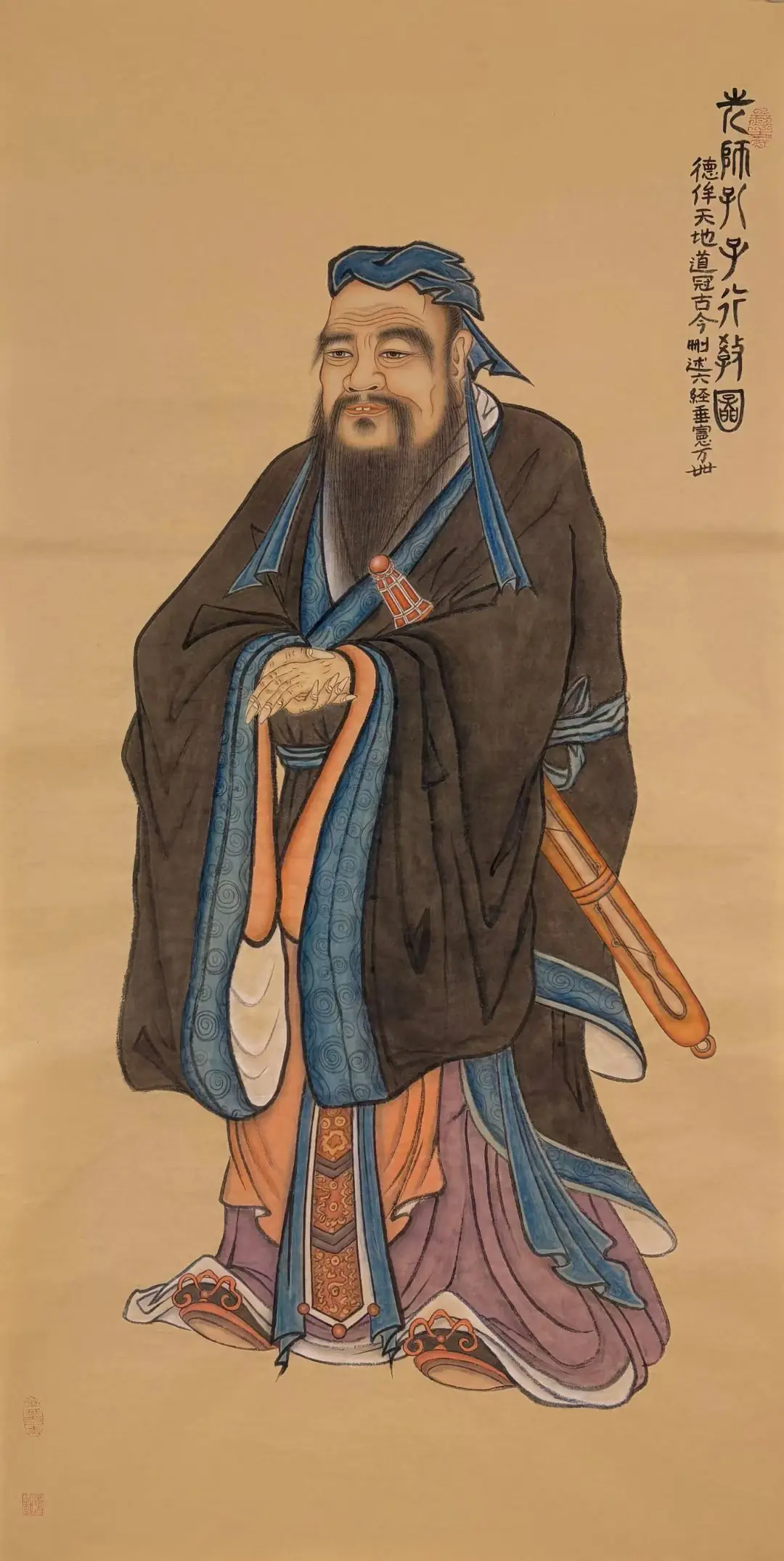
The Original Quote:
原思为之宰,与之粟九百,辞。子曰:“毋以与尔邻里乡党乎!”
Yuán Sī wéi zhī zǎi, yǔ zhī sù jiǔ bǎi, cí. Zǐ yuē: “Wú yǐ yǔ ěr lín lǐ xiāng dǎng hū!”
English Translation:
When Yuan Si served as steward, the Master offered him nine hundred measures of grain, but he declined. The Master said, "Do not refuse! If you have surplus, share it with your neighbors and fellow villagers."
Key Concepts Explained:
- 仁 (rén): Benevolence or humaneness, the core Confucian virtue of compassionate action toward others, here reflected in the act of sharing.
- 义 (yì): Righteousness or moral duty, guiding one to accept what is proper and distribute excess justly, not from personal greed.
- 礼 (lǐ): Ritual propriety, which includes the social custom of supporting one's community, especially kin and neighbors (邻里乡党).
Cultural Context:
This passage from the Analects (Lunyu 6.5) illustrates Confucius’s teaching on wealth and social responsibility. In ancient China, officials and stewards received grain as salary. When his disciple Yuan Si—a man of simple living—refused his due, Confucius did not insist on personal retention but redirected the excess toward communal welfare. This reflects the Confucian ideal of 兼善天下 (jiān shàn tiān xià): after cultivating oneself (独善其身), one should extend goodness to others. The term 邻里乡党 refers to the five administrative units of village and neighborhood, emphasizing that charity begins at home, within one’s immediate social fabric. Confucius here models a balanced approach: not rejecting legitimate compensation, but using it to fulfill the moral duty of generosity, thus weaving economic practice with ethical cultivation.