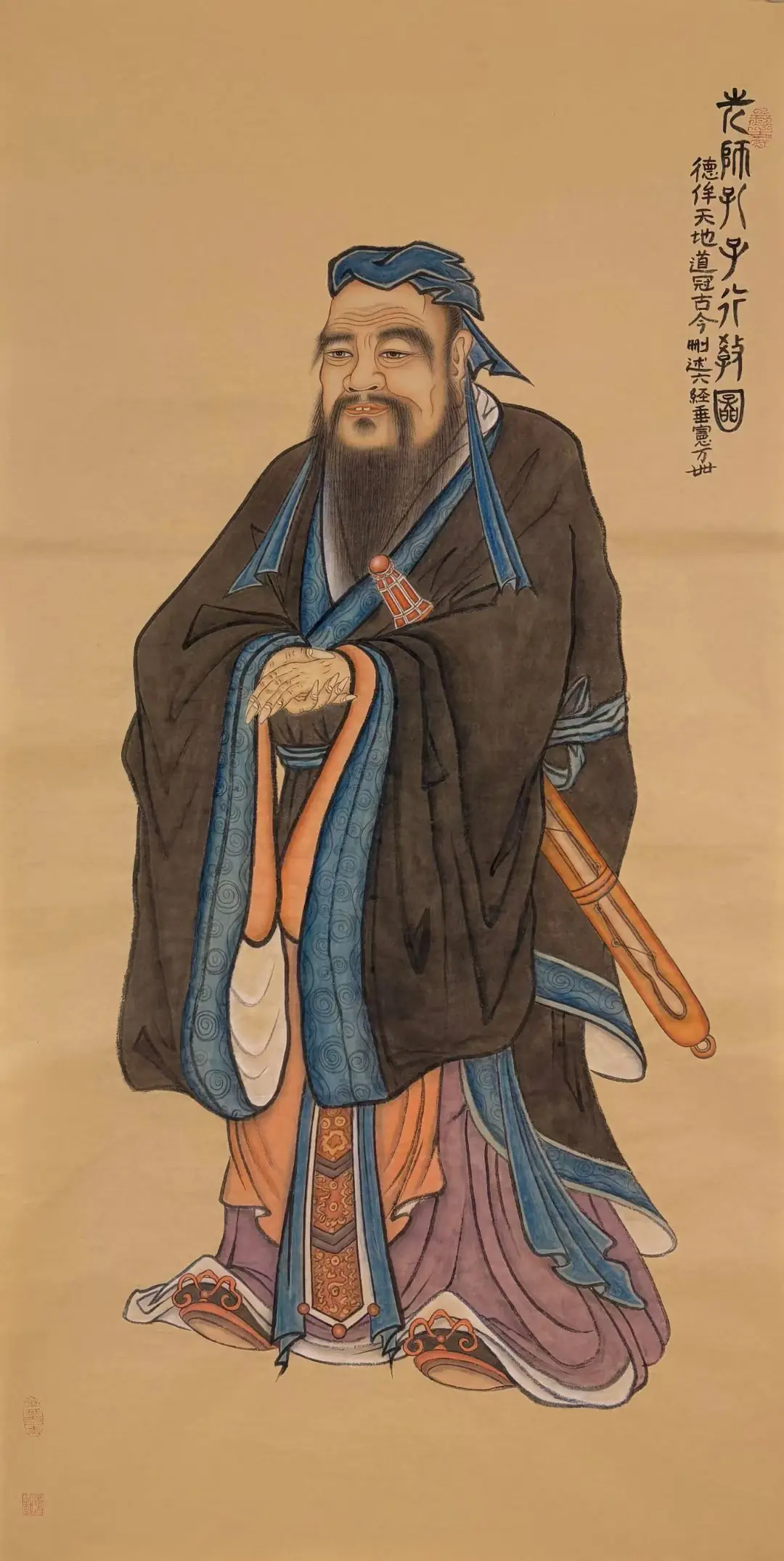
The Original Quote:
子曰:“回也,其心三月不违仁,其余则日月至焉而已矣。”
Zǐ yuē: “Huí yě, qí xīn sān yuè bù wéi rén, qí yú zé rì yuè zhì yān éryǐ yǐ.”
English Translation:
“Hui (Yan Yuan) is such that his heart-mind abides in ren (仁, humaneness) for three months without deviation; as for the others, they attain it only occasionally, as the sun or moon appear and then pass.”
Key Concepts Explained:
- Ren (仁): The cardinal virtue of humaneness or benevolence, encompassing empathy, love for others, and moral perfection. It is the core of Confucian ethics, achieved through self-cultivation and li (礼, ritual propriety).
- Xin (心): The heart-mind, the seat of emotions, thoughts, and moral intention. In Confucianism, it is the locus of self-cultivation, requiring constant vigilance to align with ren.
- Li (礼): Ritual propriety, the normative framework of social conduct and inner discipline, essential for manifesting ren in daily life.
- Ming (命): The mandate of heaven or fate, representing the cosmic order that virtuous individuals accept and harmonize with through persistent moral effort.
Cultural Context:
This passage from the Analects (Lunyu, 6.7) highlights Confucius’s praise for his disciple Yan Hui, celebrated for his unwavering dedication to ren (仁, humaneness). In the Warring States period (c. 475–221 BCE), Confucius emphasized that virtue is not innate but cultivated through persistent self-discipline. Yan Hui’s three-month steadfastness symbolizes the ideal of sustained moral practice, contrasting with the sporadic efforts of others. This teaching reflects the Confucian emphasis on gongfu (功夫, disciplined effort) as a path to personal and social harmony. Historically, Yan Hui became a paragon of resilience, inspiring later scholars like Zhu Xi to interpret ren as the heart-mind’s innate virtue, purified by overcoming selfish desires (keji fuli, 克己复礼). The passage underscores that true humaneness requires both inner resolve and external ritual adherence, a principle that shaped Chinese education and governance for millennia.