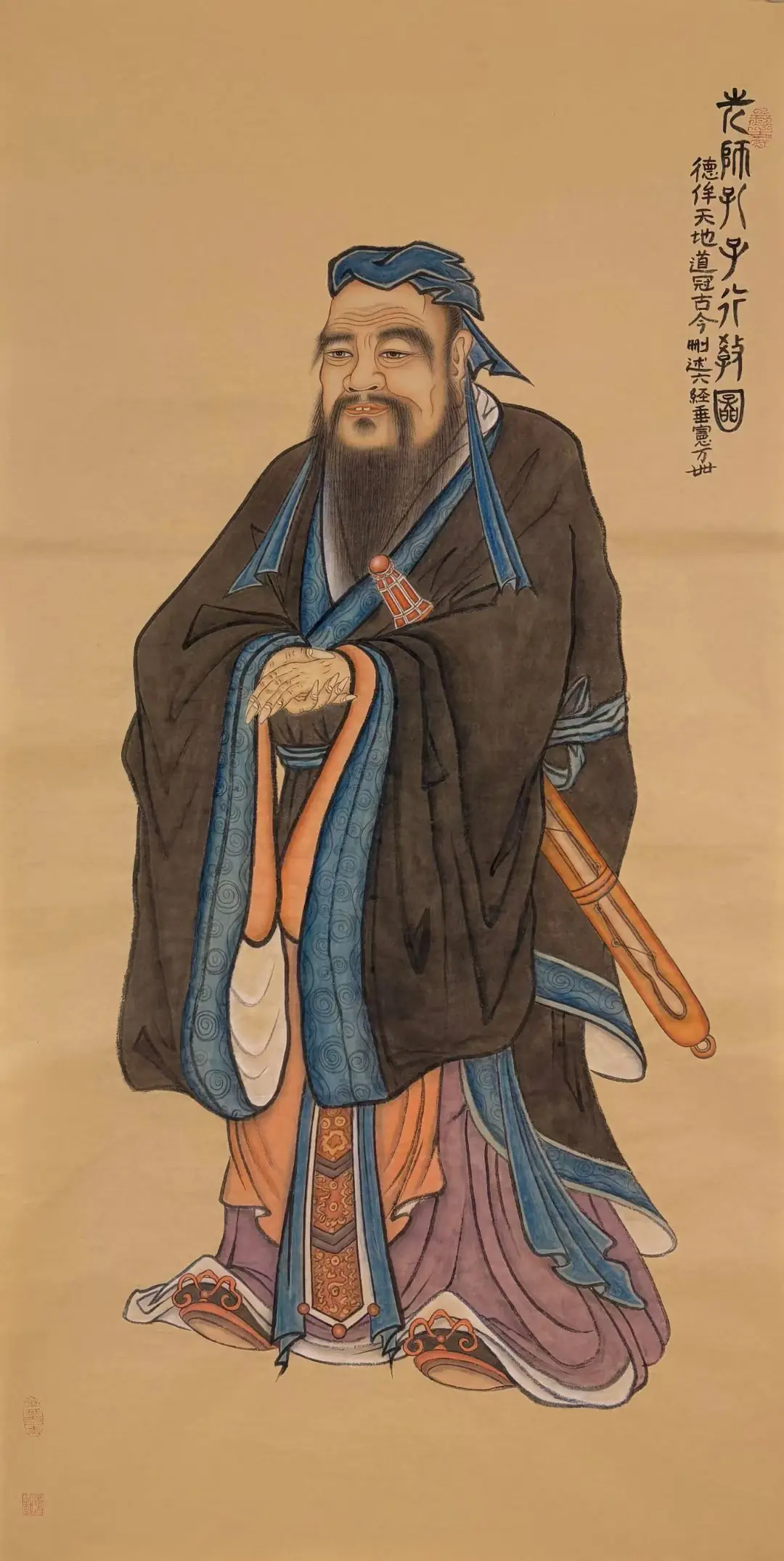
The Original Quote:
陈司败问:“昭公知礼乎?”孔子曰:“知礼。”孔子退,揖巫马期而进之,曰:“吾闻君子不党,君子亦党乎?君取于吴,为同姓,谓之吴孟子。君而知礼,孰不知礼?”巫马期以告,子曰:“丘也幸,苟有过,人必知之。”
Chén Sībài wèn: “Zhāogōng zhī lǐ hū?” Kǒngzǐ yuē: “Zhī lǐ.” Kǒngzǐ tuì, yī Wūmǎqī ér jìn zhī, yuē: “Wú wén jūnzǐ bù dǎng, jūnzǐ yì dǎng hū? Jūn qǔ yú Wú, wèi tóngxìng, wèi zhī Wú Mèngzǐ. Jūn ér zhī lǐ, shú bù zhī lǐ?” Wūmǎqī yǐ gào, zǐ yuē: “Qiū yě xìng, gǒu yǒu guò, rén bì zhī zhī.”
English Translation:
Chen Sibai asked, "Does Duke Zhao understand ritual propriety (禮, lǐ)?" Confucius replied, "He understands it." After Confucius withdrew, Chen Sibai bowed to Wuma Qi, inviting him forward, and said: "I have heard that the noble person (君子, jūnzǐ) is not partial. Is the noble person also partial? Our lord took a wife from the state of Wu, who shares his clan name; thus he calls her Wu Mengzi. If our lord understands ritual propriety, then who does not?" Wuma Qi reported this to Confucius. The Master said: "How fortunate am I, Qiu! If I have an error, others are sure to point it out to me."
Key Concepts Explained:
- Ritual Propriety (禮, Lǐ): The complex system of social norms, rites, and ceremonial conduct that maintains harmony. Here, it is tested by Duke Zhao's violation of exogamy rules—marrying a woman of the same clan name.
- Noble Person (君子, Jūnzǐ): An exemplary moral agent who cultivates virtue (德, dé) and acts without bias (不黨, bù dǎng), yet must balance truth with social deference.
- Benevolence/Humaneness (仁, Rén): The core virtue of empathetic care, which informs Confucius's indirect method of protecting his ruler's dignity without lying outright.
- Rectification of Names (正名, Zhèngmíng): The principle that words and titles must align with reality. Duke Zhao's misnaming his wife "Wu Mengzi" reveals the underlying impropriety.
- Fortunate Error (幸有過, Xìng Yǒu Guò): Confucius's humble acceptance of correction embodies the ideal of self-cultivation (修身, xiūshēn) through learning from others.
Cultural Context:
This passage from the Analects (論語, Lúnyǔ) illustrates a tension in Confucian ethics: how to uphold lǐ while showing loyalty to one's superior. Duke Zhao of Lu committed a grave ritual breach by marrying a woman from the same clan (both were of the Ji lineage). Confucius, as a minister, initially defends his ruler publicly to preserve social order—a practice known as "concealing the faults of the superior" (為尊者諱, wèi zūnzhě huì). However, when challenged, he does not insist on a falsehood but instead models jūnzǐ behavior by openly welcoming correction. This episode underscores the Confucian ideal that moral authority arises not from infallibility but from the willingness to learn and rectify errors, thereby strengthening the fabric of community through honest self-reflection.