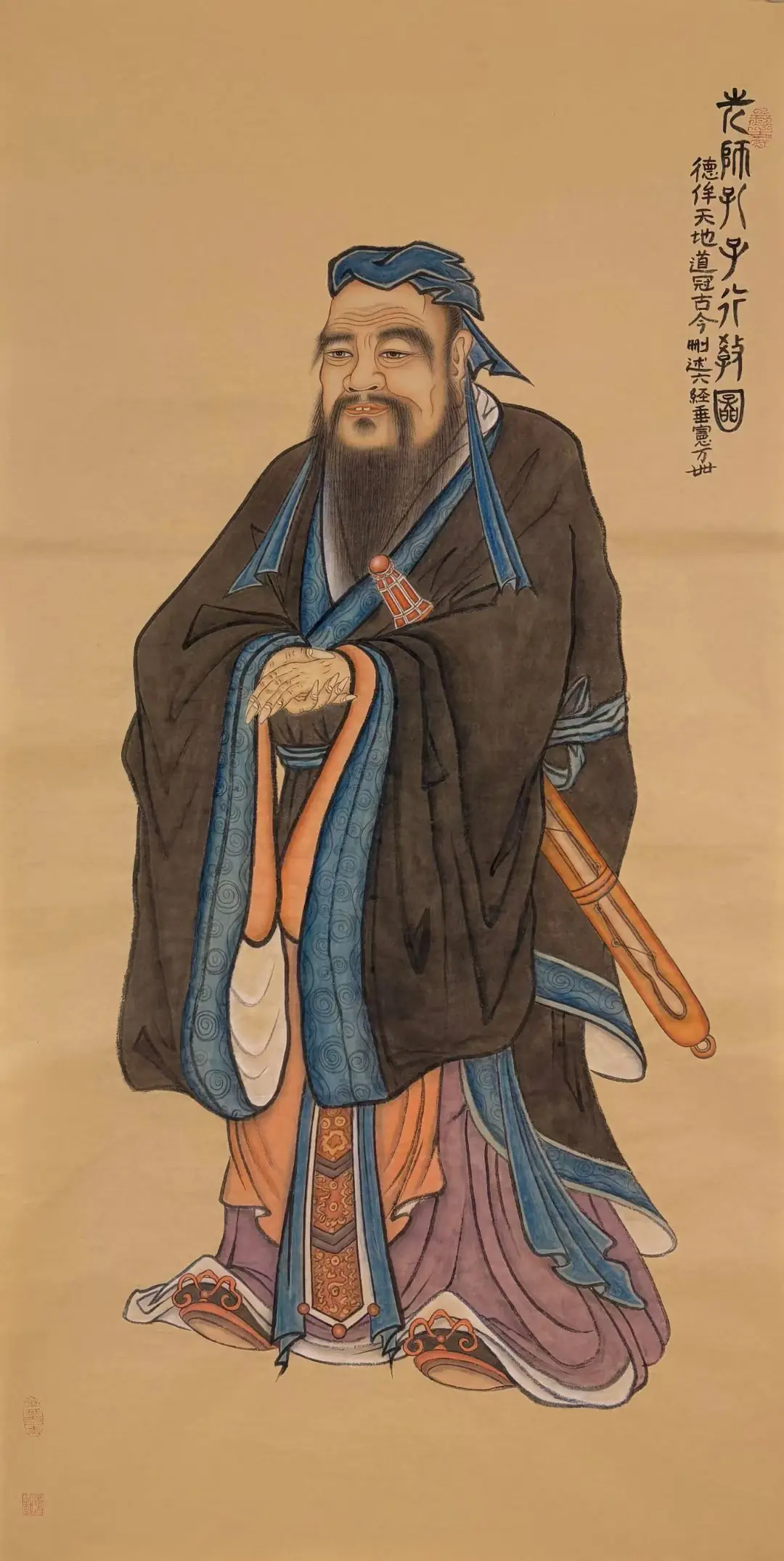
The Original Quote:
子曰:“若圣与仁,则吾岂敢?抑为之不厌,诲人不倦,则可谓云尔已矣。”公西华曰:“正唯弟子不能学也。”
Zǐ yuē: “Ruò shèng yǔ rén, zé wú qǐ gǎn? Yì wéi zhī bù yàn, huì rén bù juàn, zé kě wèi yún ěr yǐ yǐ.” Gōngxī Huá yuē: “Zhèng wéi dìzǐ bù néng xué yě.”
English Translation:
The Master said: “As for sagehood (shèng) and benevolence (rén), how dare I presume? Yet, to strive for them without satiety, and to instruct others without weariness—this, perhaps, may be said of me.” Gongxi Hua said: “It is precisely this that we, your disciples, cannot learn.”
Key Concepts Explained:
- Shèng (圣): Sagehood, the highest moral ideal in Confucianism, representing perfect virtue and wisdom, often attributed to ancient rulers like Yao and Shun. Confucius humbly denies attaining it.
- Rén (仁): Benevolence, the core Confucian virtue encompassing love for humanity, altruism, and moral excellence. It is both a personal goal and a relational practice.
- Wéi zhī bù yàn (为之不厌): Striving without satiety, emphasizing ceaseless self-cultivation and dedication to moral practice.
- Huì rén bù juàn (诲人不倦): Teaching without weariness, reflecting the Confucian commitment to educating others as a form of moral duty and social harmony.
Cultural Context:
This passage from the Analects (Lunyu) highlights Confucius’ characteristic humility and his lifelong dedication to self-improvement and education. In early Chinese thought, sainthood was reserved for mythical or historical paragons, yet Confucius redefined it as an attainable, ongoing process rather than a static state. His disciple Gongxi Hua’s remark underscores the profound difficulty of emulating such relentless effort. Historically, this teaching shaped East Asian educational ideals, where teachers are revered as moral guides, and learning is seen as a never-ending journey of personal and social refinement. The passage remains a cornerstone in understanding Confucian pedagogy and the ethical framework of self-cultivation (xiū shēn).