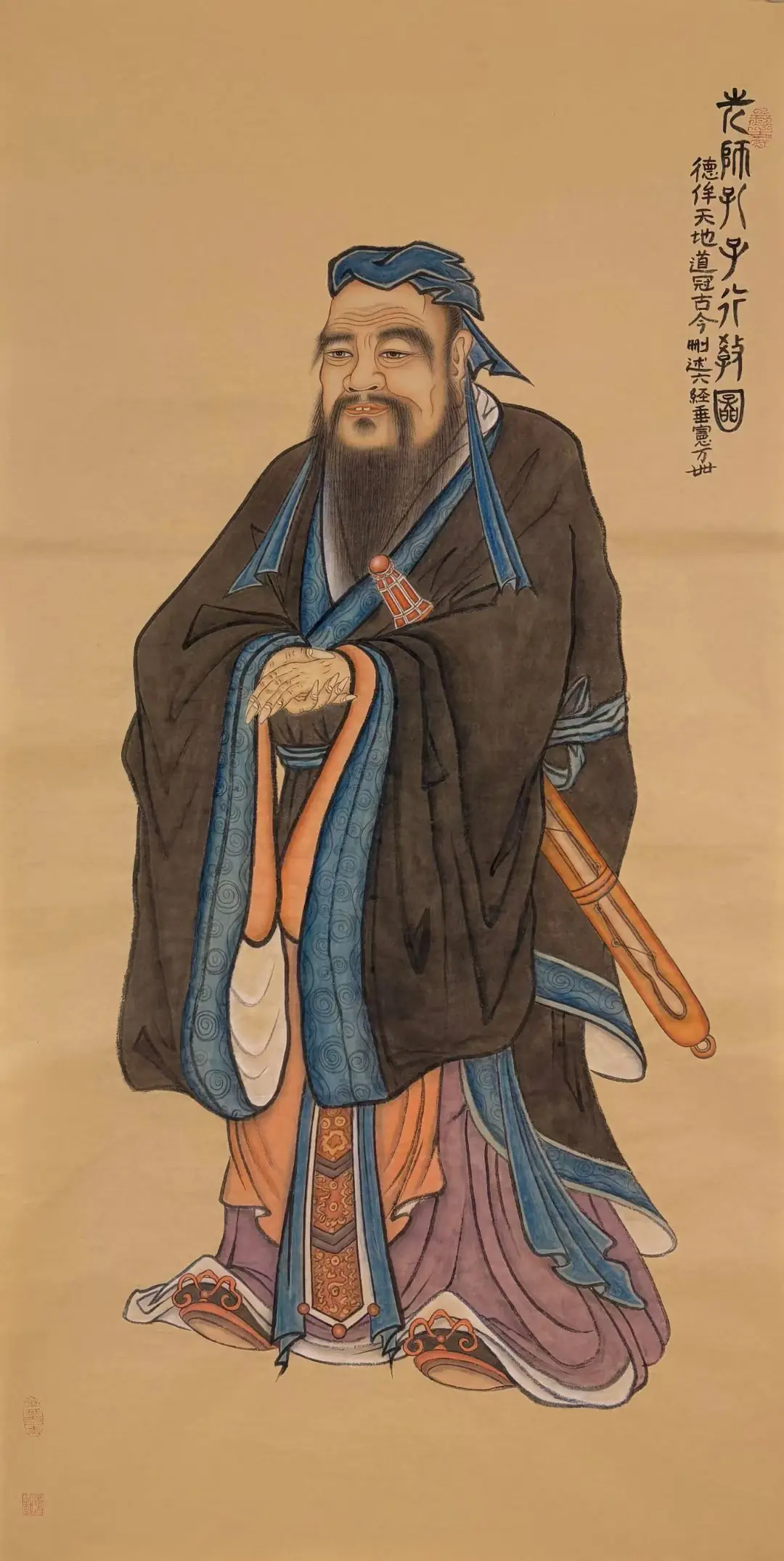
The Original Quote:
子食于有丧者之侧,未尝饱也。
Zǐ shí yú yǒu sàng zhě zhī cè, wèi cháng bǎo yě.
English Translation:
When the Master dined beside one who was in mourning, he never ate his fill. Such was the natural stirring of his heart, a sorrow that mirrored the grief of another, and a restraint that honored the solemnity of loss.
Key Concepts Explained:
- Compassion (cè yǐn zhī xīn, 恻隐之心): The innate feeling of empathy and alarm at the suffering of others. Mencius called it the "beginning of benevolence (rén, 仁)," the first sprout of virtue that distinguishes humanity.
- Benevolence (rén, 仁): The cardinal Confucian virtue, often translated as "humaneness" or "love." It is the perfect virtue of a cultivated person, rooted in genuine feeling and expressed through proper conduct.
- Ritual Propriety (lǐ, 礼): The system of norms and rites that give appropriate form to human feelings. Here, it is not empty formality but the authentic expression of sorrow through restrained action.
- Human Nature (xìng, 性): The inherent quality of being human. Confucians generally held that human nature is good, and compassion is the clearest evidence of this original goodness.
Cultural Context:
This passage from The Analects (Book 7, Chapter 9) captures a moment of spontaneous virtue in Confucius's daily life. In classical Chinese society, mourning rites were deeply sacred, governed by strict protocols that demanded emotional sincerity. Confucius's behavior—an involuntary loss of appetite—demonstrates that true ritual propriety (lǐ) is not mere outward conformity but the natural expression of an inner state. The text illustrates a core Confucian principle: the moral life begins not with grand doctrines but with the cultivation of small, genuine feelings of compassion. By feeling the grief of a stranger as his own, Confucius models how the heart can extend sympathy to all, laying the foundation for a harmonious society. This "unseen heart" of compassion is the wellspring from which all virtues flow.