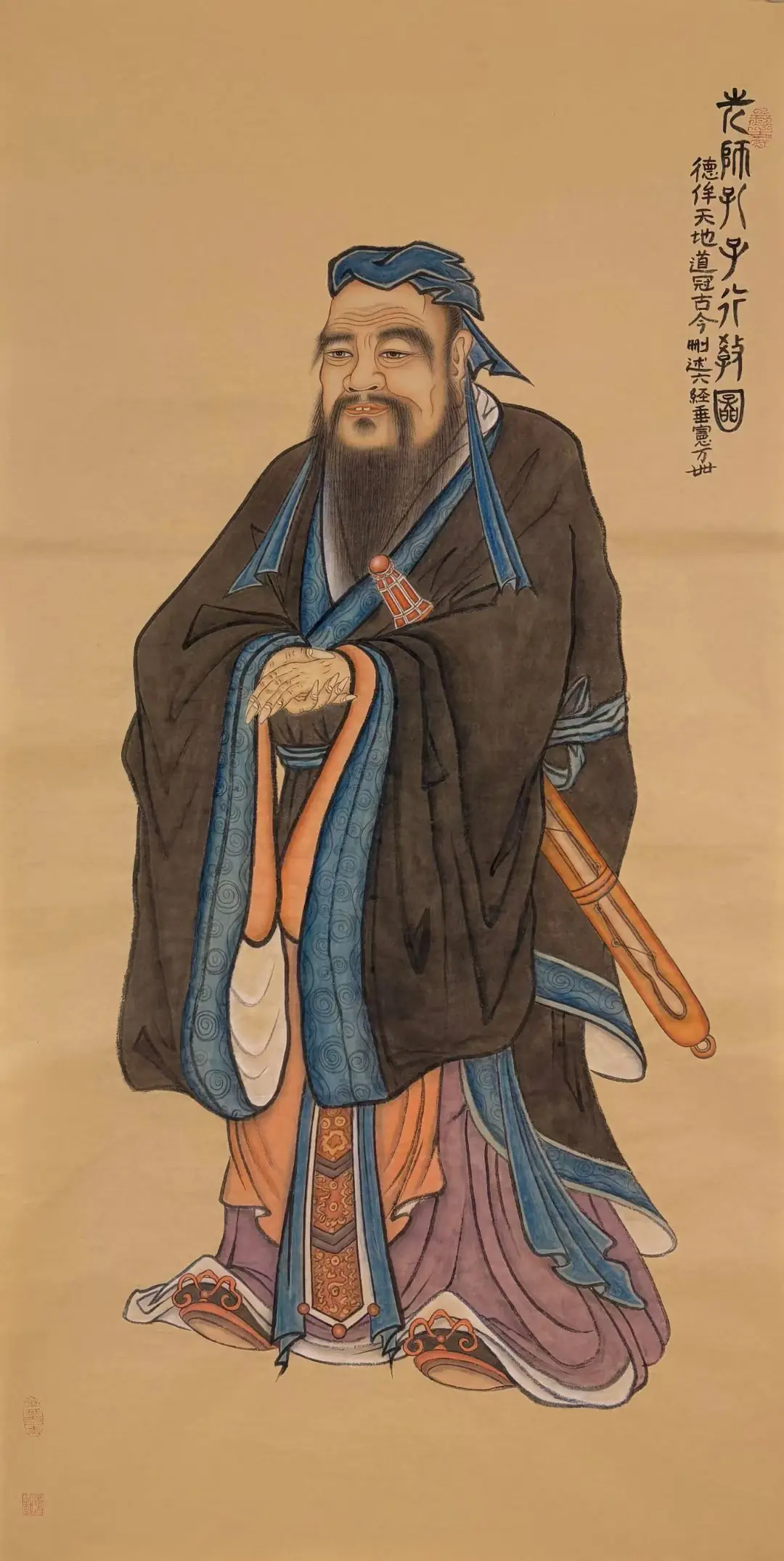
The Original Quote:
子曰:“文,莫吾犹人也。躬行君子,则吾未之有得。”
Zǐ yuē: “Wén, mò wú yóu rén yě. Gōng xíng jūnzǐ, zé wú wèi zhī yǒu dé.”
English Translation:
“In matters of learning and culture, perhaps I am like others. But to practice earnestly what I have learned and become a noble person (jūnzǐ) through embodied action—that I have not yet attained.”
Key Concepts Explained:
- 文 (Wén): Literally “pattern” or “culture,” referring here to bookish knowledge, classical texts, and scholarly refinement. It denotes the outer form of learning.
- 躬行 (Gōng Xíng): “Personal practice” or “embodied action.” This term emphasizes the Confucian ideal that virtue is not merely known but must be lived and enacted in daily life.
- 君子 (Jūnzǐ): Traditionally “prince” or “lord,” Confucius redefined it as a person of moral cultivation and integrity—the ideal human character who leads by example. It is not a title but an ongoing state of being achieved through practice.
- 得 (Dé): “To obtain” or “to attain.” Here it signifies the realization of virtue, not as a static possession but as a dynamic achievement through continuous self-cultivation.
Cultural Context:
This passage from the Analects (Lúnyǔ, 论语), likely recorded in the early Warring States period (5th–3rd century BCE), reveals Confucius’s characteristic humility and his relentless emphasis on practice over mere erudition. In an era when ritual and textual knowledge were prized by the aristocracy, Confucius redirected attention to personal moral effort. He saw himself not as a sage born with knowledge (shēng ér zhī zhī, 生而知之) but as one who “loves the ancients and diligently seeks” (hào gǔ, mǐn yǐ qiú zhī, 好古, 敏以求之). This statement warns against intellectual pride and underscores the core Confucian principle that moral cultivation (xiū shēn, 修身) begins with action, not theory. Later Confucian tradition revered Confucius as a sage (shèngrén, 圣人) beyond even the jūnzǐ ideal, but this text preserves his authentic voice: the path to virtue is never complete, and the highest wisdom lies in the daily, humble effort to practice what one knows.