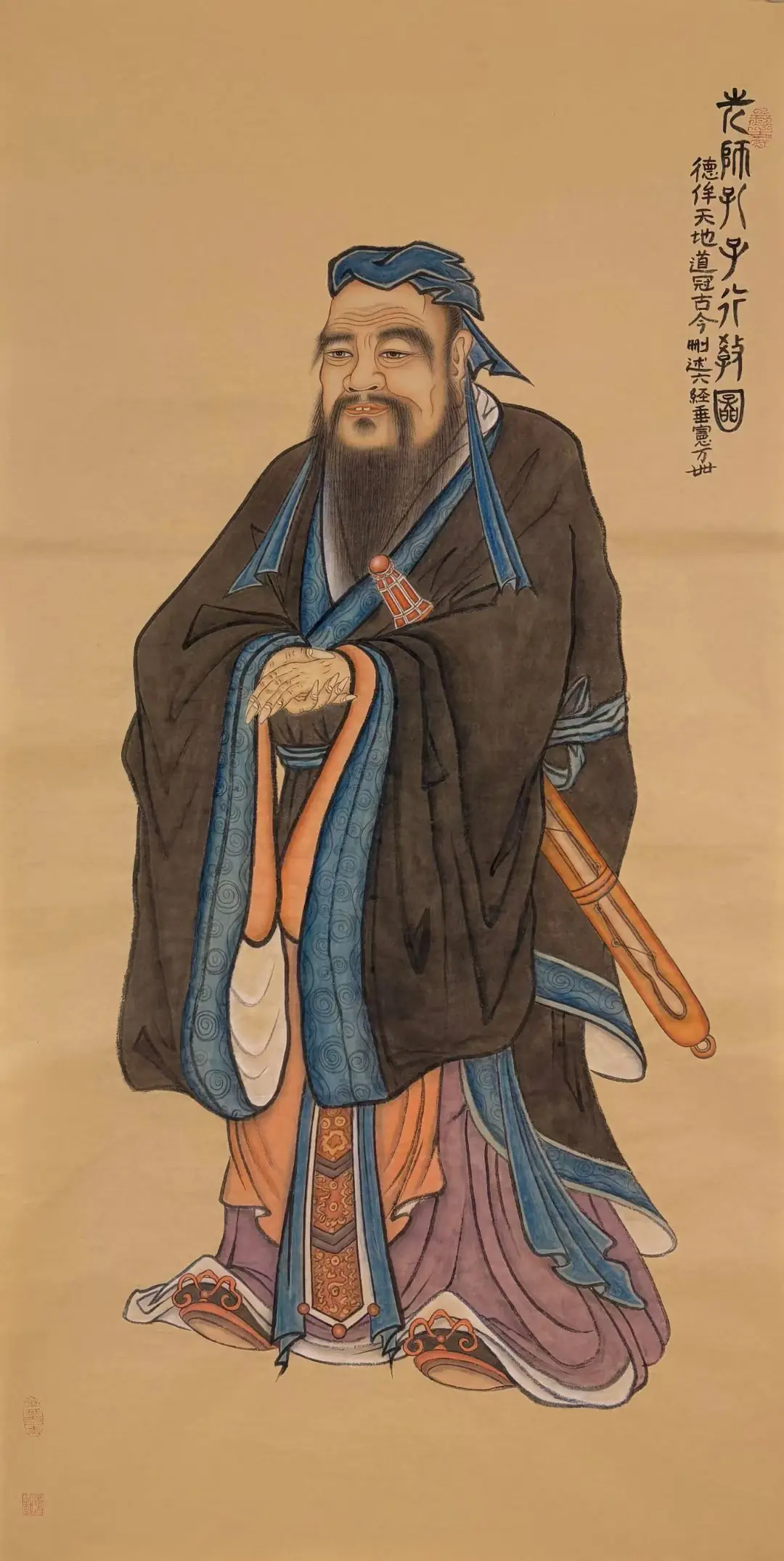
The Original Quote:
子之燕居,申申如也,夭夭如也。
Zǐ zhī yàn jū, shēn shēn rú yě, yāo yāo rú yě.
English Translation:
When the Master was at leisure, in his home, he was composed and at ease, gentle and serene.
Key Concepts Explained:
- 仁 (Rén): Often translated as "benevolence" or "humaneness," it is the core virtue of Confucianism, embodying a cultivated inner goodness that manifests in harmonious conduct, even in private.
- 礼 (Lǐ): Meaning "ritual propriety" or "rites," it extends beyond formal ceremonies to the natural expression of inner virtue in everyday actions, such as the composed demeanor described here.
- 中庸 (Zhōngyōng): The "Doctrine of the Mean," representing a state of balanced harmony and equilibrium, reflected in the Master's ability to be relaxed yet dignified without rigidity.
Cultural Context:
This passage from the Analects (Book 7, Chapter 4) challenges later stereotypes of Confucius as a stern moralist. In traditional Chinese thought, true self-cultivation (修身, xiū shēn) is not a forced performance but an internalized harmony that makes one naturally at ease—even in solitude. The terms "申申" (composed, upright) and "夭夭" (gentle, relaxed) together paint a portrait of a sage whose virtue flows effortlessly into daily life, emphasizing that authentic moral development leads to inner peace rather than artificial solemnity. This reflects the Confucian ideal of integrating personal ethics with a tranquil spirit, a lesson often overlooked in cross-cultural interpretations.