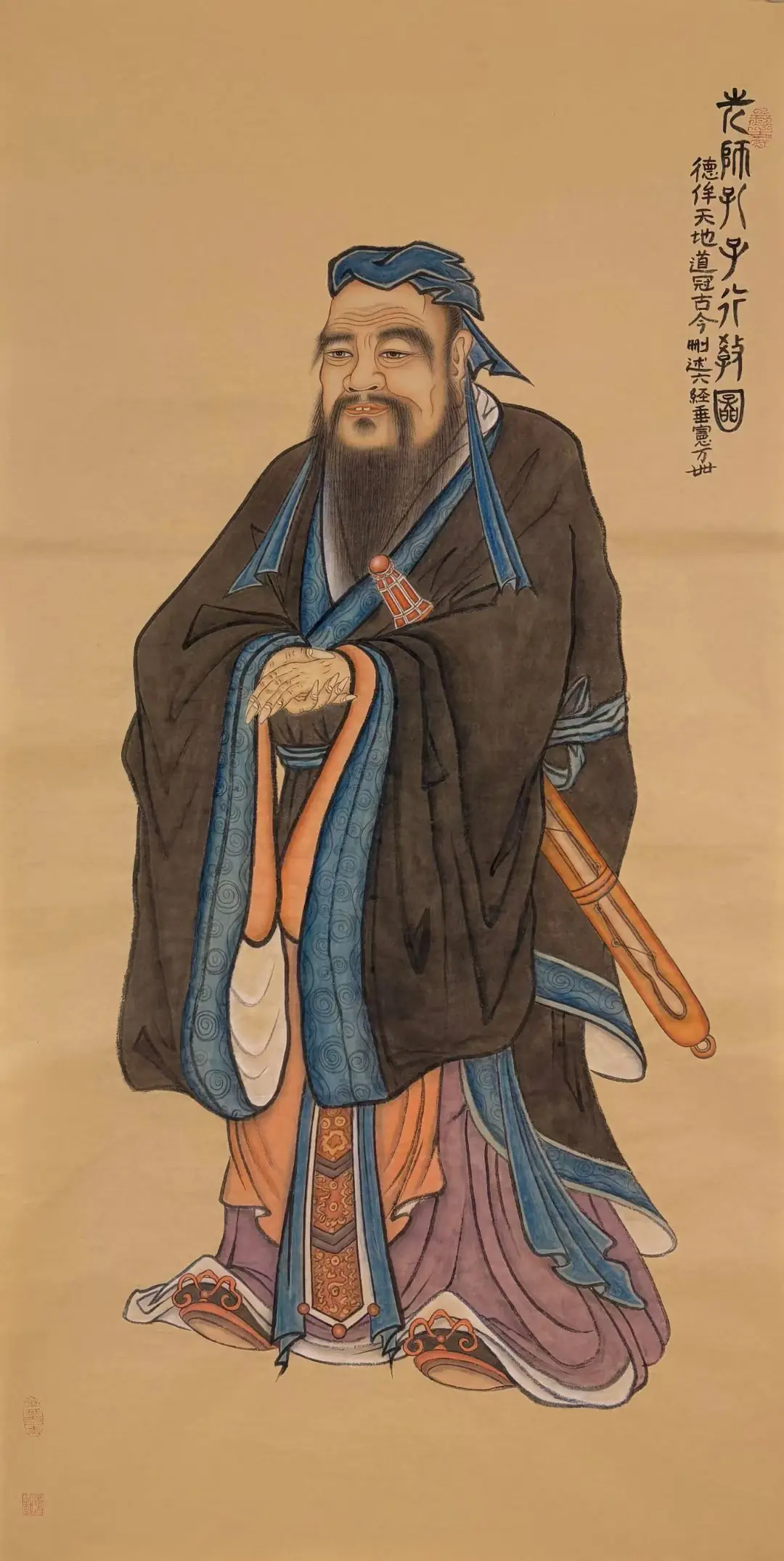
The Original Quote:
子曰:“饭疏食饮水,曲肱而枕之,乐亦在其中矣。不义而富且贵,于我如浮云。”
Zǐ yuē: “Fàn shū shí yǐn shuǐ, qū gōng ér zhěn zhī, lè yì zài qí zhōng yǐ. Bù yì ér fù qiě guì, yú wǒ rú fú yún.”
English Translation:
“To eat coarse grain, drink plain water, and rest the head upon a bent arm—even in such simplicity, joy may be found. Riches and honors gained through unrighteous means are to me but fleeting clouds.”
Key Concepts Explained:
- 仁 (Rén): The core Confucian virtue of humaneness, benevolence, or moral goodness. It is the inner ideal that guides one's actions and relationships, forming the foundation of a virtuous life.
- 义 (Yì): Righteousness or moral duty, often contrasted with personal profit. It denotes actions that are ethically proper, aligning with justice and the greater good, rather than mere advantage.
- 乐 (Lè): Joy or delight, understood here not as fleeting pleasure but as a profound contentment arising from moral integrity and alignment with the Way (道 Dào).
- 浮云 (Fú Yún): Literally "floating clouds," a metaphor for transience and insubstantiality. It symbolizes the ephemeral nature of ill-gotten wealth and status, which lack true value or permanence.
Cultural Context:
This passage from the Analects (Lúnyǔ) reflects Confucius’s teaching during the Spring and Autumn period, an era of political turmoil and social upheaval. Confucius advocated for a life centered on moral cultivation (修身 xiū shēn) rather than material gain. The concept of "安贫乐道" (ān pín lè dào)—finding joy in the Way despite poverty—was a radical ideal that challenged the aristocratic pursuit of wealth and power. For Confucius, inner virtue (仁 Rén) and righteousness (义 Yì) were the true sources of happiness, while external riches, if unethically obtained, were as transient and meaningless as drifting clouds. This teaching has profoundly influenced East Asian thought, emphasizing integrity and spiritual fulfillment over materialism.