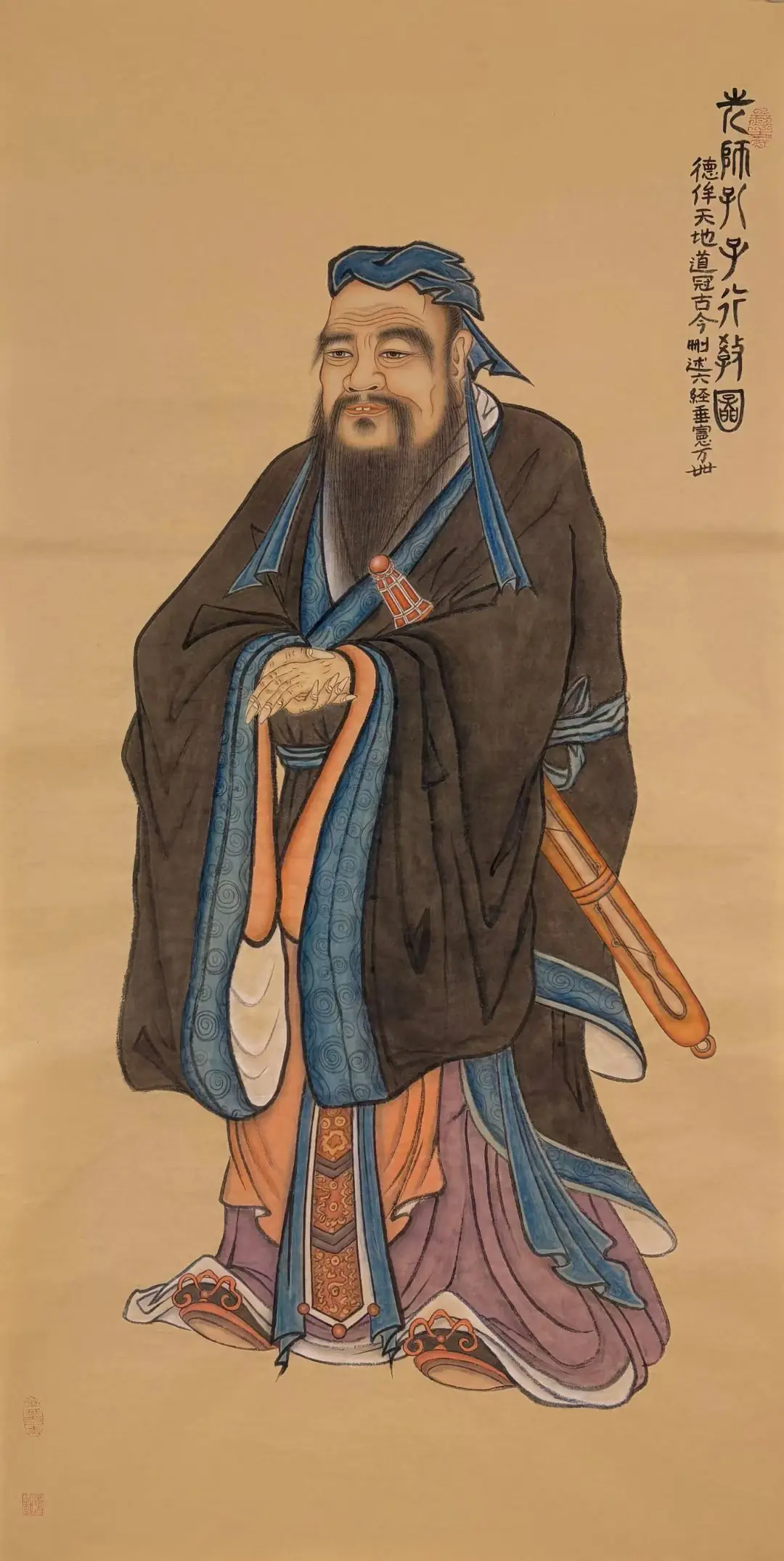
The Original Quote:
叶公问孔子于子路,子路不对。子曰:“女奚不曰:其为人也,发愤忘食,乐以忘忧,不知老之将至云尔。”
Yè Gōng wèn Kǒngzǐ yú Zǐ Lù, Zǐ Lù bù duì. Zǐ yuē: “Rǔ xī bù yuē: Qí wéi rén yě, fāfèn wàng shí, lè yǐ wàng yōu, bù zhī lǎo zhī jiāng zhì yún ěr.”
English Translation:
The Duke of She asked Zilu about Confucius, but Zilu did not answer. The Master said: “Why did you not say: He is one who in eager pursuit of knowledge forgets his food, in the joy of its attainment forgets his sorrows, and does not perceive that old age is coming upon him.”
Key Concepts Explained:
- Learning (学, xué): Not mere accumulation of facts, but a transformative process of moral and intellectual self-cultivation central to Confucian philosophy.
- Joy (乐, lè): The profound inner fulfillment derived from the pursuit of wisdom—a state where external anxieties dissolve in the pleasure of growth.
- Forgetfulness (忘, wàng): A transcendence of mundane concerns (food, sorrow, age) through total immersion in meaningful endeavor, reflecting the Daoist-Confucian ideal of effortless action.
Cultural Context:
This passage from the Analects (7.19) captures Confucius’s self-portrait as a lifelong learner. In classical Chinese culture, such dedication became the paradigm for scholars: Dong Zhongshu (179–104 BCE) famously secluded himself for three years, and later seventeen, to master the classics, emerging to write the Luxuriant Dew of the Spring and Autumn Annals. The ideal of “learning as joy” (乐学, lè xué) contrasts with mere rote study, emphasizing that authentic education fills the heart and transcends temporal limits—a timeless antidote to modern distraction and spiritual emptiness.