Pinyin: Ziheche
Aliases
Baoyi, Xianrenyi, Taiyi.
Source
The dried placenta of a healthy human parturient.
Harvesting and Processing
Collect fresh placenta from healthy parturient women, remove the amniotic membrane and umbilical cord, repeatedly rinse until the blood is completely removed, then steam or briefly boil in boiling water, and dry.
Medicinal Properties
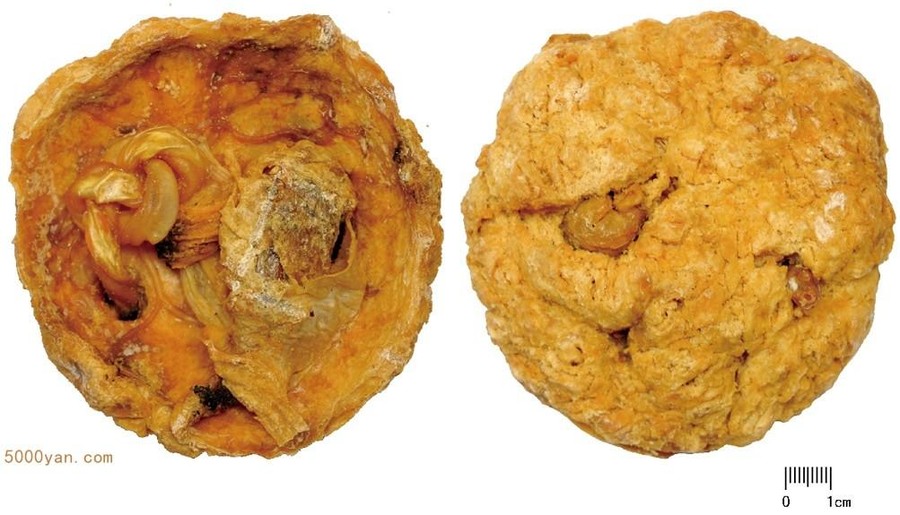
This product is round or butterfly-shaped oval, 9-15 cm in diameter, with varying thickness. Yellow or yellowish-brown, one side is uneven with irregular grooves; the other side is relatively smooth, often attached with residual umbilical cord, with fine blood vessels around it. Hard and brittle texture, with a fishy odor.
Chemical Constituents
This product contains interferon, urokinase inhibitors, and many hormones; it also contains multiple enzymes of practical value.
Pharmacology
It has hormone-like effects; enhances immune function and increases opioid-like analgesic effects; exhibits fibrinolytic inhibitory activity, prolongs in vitro recalcification time, prothrombin time, and partial thromboplastin time, demonstrating strong anticoagulant properties; also possesses antibacterial and antiviral effects; can inhibit fat deposition, prevent and treat experimental gastric ulcers, and suppress tumor growth, among other actions.
Properties and Channel Entry
Sweet and salty, warm. Enters the Lung, Liver, and Kidney channels.
Functions and Indications
Warms the Kidneys, supplements the Essence, tonifies Qi, and nourishes Blood
Dosage and Administration
Oral administration: Grind into powder, 1
Precautions and Contraindications
Those with exterior pathogens and excess patterns should avoid taking this herb; those with Spleen deficiency, Dampness encumbrance, and poor appetite should use with caution.
Prescriptions
1. For consumptive wasting, bone-steaming, and other conditions: One placenta (thoroughly cleaned, pounded into a paste), 15 g of *Poria*, 30 g of *Panax ginseng*, 60 g of dried *Dioscorea opposita*. Grind the above into powder, mix with flour paste and the placenta paste, add the three ingredients, and form into pills the size of *wutong* seeds. Take 30-50 pills on an empty stomach with rice water. For severe cough, take with *Schisandra chinensis* decoction. (*Furen Liangfang* - Heche Pill) 2. For chronic dyspnea in the elderly, cough with thin clear sputum, worsened dyspnea upon exertion, open mouth and raised shoulders, palpitations with little sleep, emaciation and weakness, pale tongue, weak *cun* and *chi* pulses: One fresh placenta (rinsed clean of blood, cut into pieces), 15 g of *Armeniaca amarum* (peeled and tipped), 30 g of *Lilium* (soaked overnight, when white foam emerges, discard the water), 30 g of *Juglans regia* (cleaned). Add four bowls of water to the above four ingredients, simmer until reduced to two bowls, add salt, sauce, and other seasonings. Divide into two doses, take once in the morning and once in the evening. (*Yanglao Fengqin Shu* - Stewed Placenta Formula) 3. For prolonged epilepsy with loss of will, Qi deficiency, and Blood weakness: Thoroughly clean the placenta and boil it until well-cooked, then eat it. (*Gangmu* citing *Liu Shi Jingyan Fang*) 4. For insufficient breast milk: One placenta, remove the membrane, wash clean, slowly stir-fry until scorched, grind into powder. Take 1.5-3 g daily after the evening meal. (*Jilin Zhongcaoyao*) 5. For red eyes and corneal opacity: Dry the placenta in the sun, burn it to ash, and apply to the inner canthus of the eye. (*Qianjin Yaofang*)