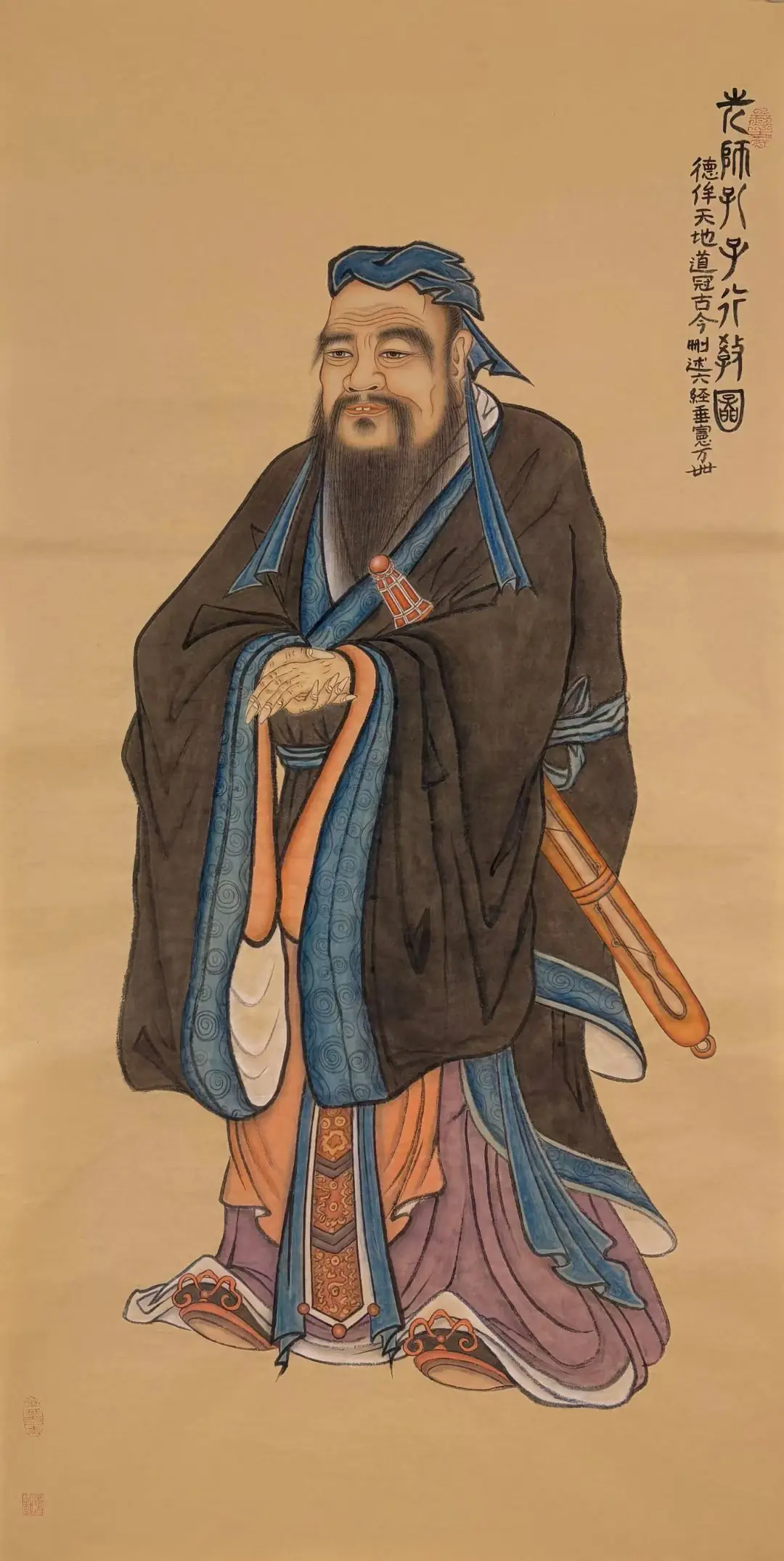
Generally speaking, "conduct" refers to behavior. Confucius said, "The exemplary person (junzi) is ashamed when his words exceed his actions." (The Analects, Book 14) Regarding human conduct, Confucius held three basic attitudes: First, he opposed excessive talk with little action, considering it shameful to speak more than one does. Second, to judge a person's character, one must not only listen to what they say but, more importantly, observe what they do. Confucius said, "At first, I listened to people's words and trusted their actions; now, I listen to their words and observe their actions." (The Analects, Book 5) He believed that judging someone solely by their words is one-sided; only by examining both words and deeds can one properly evaluate a person. Third, the correctness of conduct is determined by whether it conforms to the norms of Li (Propriety). Confucius said, "Establish yourself in Li." (The Analects, Book 8) Li serves as the foundation for conduct and the standard for judging its propriety.
When the character xing (行) is used as a verb, it often means "to do" or "to act." Zigong asked about the exemplary person. Confucius replied, "First put into practice what you intend to say, and then speak accordingly." (The Analects, Book 2) Confucius believed that as an exemplary person, there are strict boundaries regarding what to do and what not to do. From an external perspective, the junzi can only act in accordance with the norms of Li and cannot deviate from them. Confucius said, "Do not look at what is contrary to Li; do not listen to what is contrary to Li; do not speak what is contrary to Li; do not act in ways contrary to Li." (The Analects, Book 12) In all actions, one must conform to Li and not transgress its boundaries. From an internal standpoint, the junzi only does what aligns with moral principles and avoids what does not. Acting according to moral principles was Confucius's consistent position. The Analects contains many such records. For instance, regarding the moral principle of Ren (Benevolence), Confucius said, "Scholars and persons of ren will not seek to preserve their lives at the expense of harming ren; they will sacrifice their lives to fulfill ren." (The Analects, Book 15) "When pursuing ren, do not yield even to your teacher." (The Analects, Book 15) "The junzi never departs from ren, not even for the time it takes to eat a meal; in moments of urgency, he adheres to it; in times of hardship, he adheres to it." (The Analects, Book 4) Similarly, concerning Yi (Righteousness), there is the saying, "The junzi's service in office is to carry out yi." (The Analects, Book 18) "Practice yi to realize the Dao." (The Analects, Book 16) In summary, becoming a virtuous person and acting according to moral principles was Confucius's lifelong pursuit and ideal, encompassing all aspects of conduct. As a moral philosopher, Confucius's greatest influence lies in his teachings on how to be a person and how to conduct oneself.