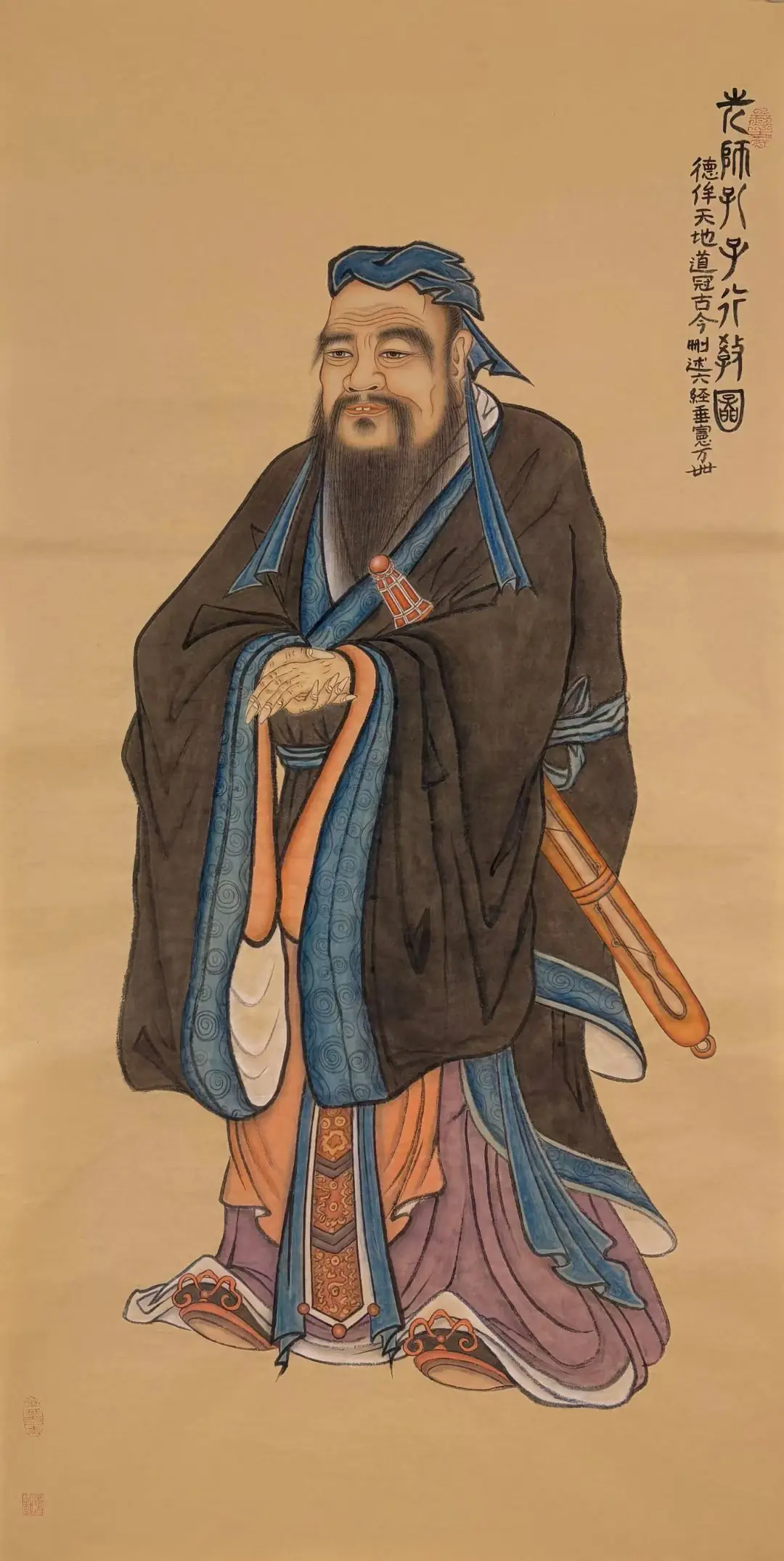
This refers to being serious and conscientious in one's work. Confucius said, "The Junzi (Exemplary Person) has nine things to contemplate," one of which is "in conducting affairs, to contemplate reverence (Jing, seriousness)" (The Analects, Book 16, Chapter 10). He also said, "In guiding a state of a thousand chariots, approach your duties with reverence (Jing, seriousness) and be trustworthy in your words; be moderate in expenditure and love the people; employ the labor of the people only at the proper seasons" (The Analects, Book 1, Chapter 5). Furthermore, he said, "In your dwelling place, be respectful; in handling affairs, be reverent (Jing, serious); in your dealings with others, be loyal (Zhong, devoted). Even if you go to the barbarian tribes, these qualities cannot be abandoned" (The Analects, Book 13, Chapter 19). "Contemplating reverence in affairs," "approaching duties with reverence," and "handling affairs with reverence" all mean to treat one's work with a serious and conscientious attitude. This was a consistent teaching of Confucius. He believed that no matter where one goes, it is essential to treat work with a serious and conscientious attitude.
Confucius's view of "Shi Si Jing" (Being Reverent in All Matters) is correct. "Shi Si Jing" should become the work ethic of every citizen, and this ethic should be passed down from generation to generation, making it a traditional virtue of the Chinese nation.
"Jing" also means to show respect and reverence toward others, to be courteous. For example, "Zi You asked about filial piety. Confucius said: 'Nowadays, filial piety is considered merely being able to support one's parents. But even dogs and horses are given that kind of care; without reverence, what difference is there?'" (The Analects, Book 2, Chapter 7). Another example: "Confucius said: 'When serving parents, gently remonstrate with them. If you see that they are not inclined to follow your advice, remain respectful and do not disobey; work hard and do not complain.'" (The Analects, Book 4, Chapter 18). Confucius believed that one must practice Xiao (Filial Piety) toward parents, and the core of filial piety is "Jing" (reverence)—even when parents do not accept one's advice, one must maintain a respectful attitude and harbor no resentment.
Furthermore, Confucius proposed respect for others as a fundamental principle of governance. For example, "Confucius then said: 'In the past, the enlightened kings of the Three Dynasties always respected their wives and children, for there was a proper Way (Dao). The wife is the host of the family, how could one not respect her? The child is the offspring of the family, how could one not respect him? The Junzi (Exemplary Person) respects all, but respecting one's own person is paramount. The body is a branch of one's parents, how could one not respect it? ... These three—one's own person, one's wife, and one's children—are models for the people. Extend respect from oneself to others, from one's children to others' children, and from one's spouse to others' spouses. When a ruler practices these three, his virtue will permeate the world. The Way of King Tai was like this, and thus the state was well-ordered.'" (Book of Rites, "The Duke Ai Asked" Chapter 27) This is Confucius's political philosophy of "extending oneself to others" (tui ji ji ren): respecting oneself means respecting the people's persons; respecting one's own wife and children means respecting the people's wives and children. This idea emphasizes respect for individuals and holds progressive significance.