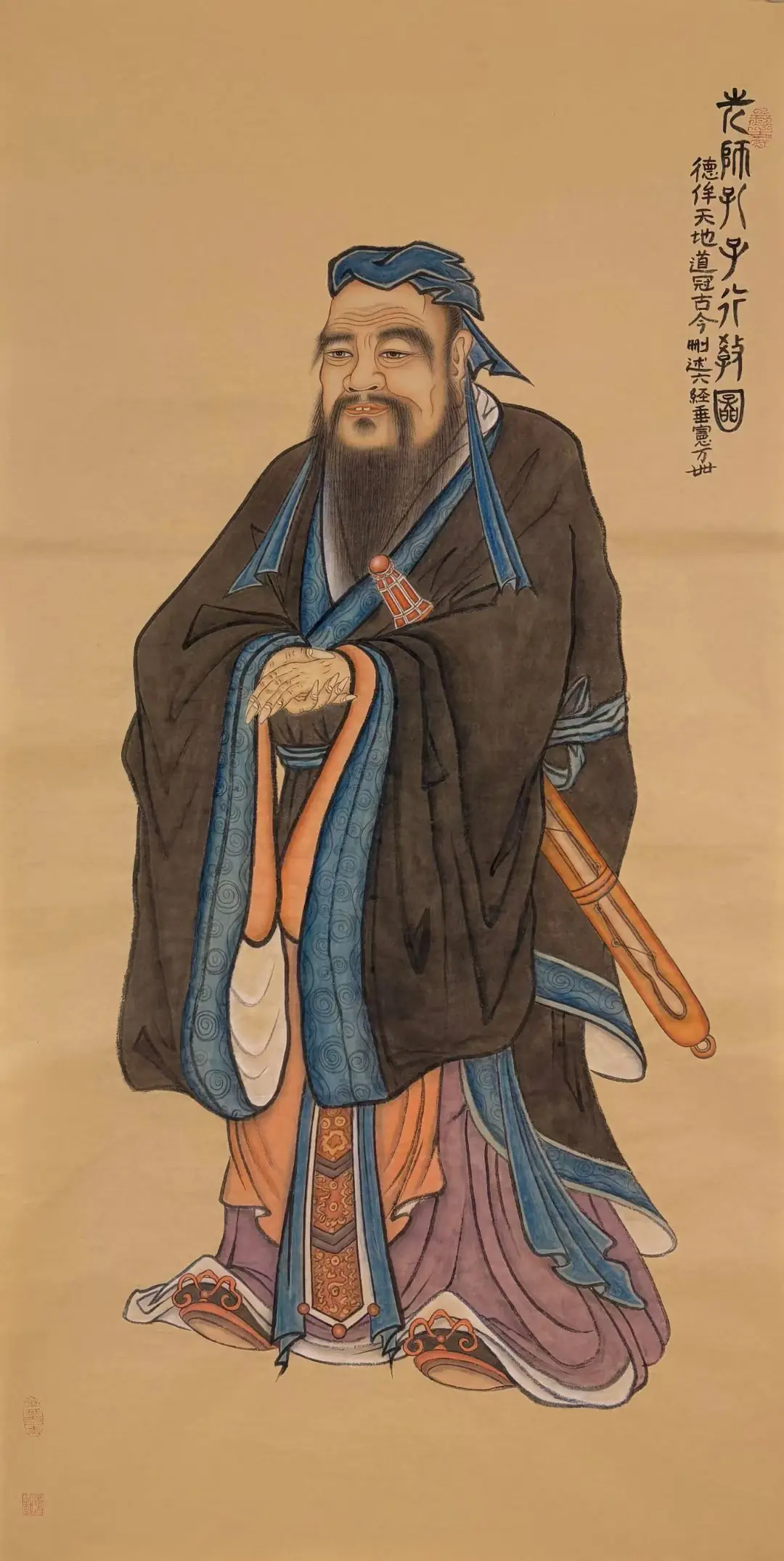
In Confucius's philosophical framework, De (Virtue) is a very important concept.
Its most important meaning refers to moral virtue. Confucius placed great emphasis on De (Virtue). "The Master said, 'Guide them with governmental policies, align them with punishments, and the people will avoid wrongdoing but have no sense of shame. Guide them with virtue, align them with Li (Propriety), and the people will have a sense of shame and will correct themselves.'" (The Analects, Book II: Wei Zheng) Using virtue to guide and Li (Propriety) to regulate is the best method for governing the people. "The Master said, 'The Junzi (Exemplary Person) cherishes virtue; the Xiaoren (Petty Person) cherishes land. The Junzi cherishes the law; the Xiaoren cherishes favors.'" (The Analects, Book IV: Li Ren) "The Master said, 'Set your will on the Dao (The Way), base yourself in virtue, rely on Ren (Benevolence), and wander in the arts.'" (The Analects, Book VII: Shu Er) All these passages speak to the importance placed on virtue. "The Master said, 'A fine horse is praised not for its strength, but for its virtue.'" (The Analects, Book XIV: Xian Wen) Even in evaluating a horse, virtue is considered more important than strength.
Confucius expressed concern about the failure to cultivate De (Virtue). He said, “To not cultivate Virtue, to not practice what is learned, to not be able to move toward Yi (Righteousness) upon hearing it, and to not be able to reform what is not good—these are my worries.” (The Analects, Book 7, Chapter 3) He also said, “I have never seen anyone who loves Virtue as much as they love physical beauty.” (The Analects, Book 9, Chapter 18)
Confucius believed that Zhongyong (the Doctrine of the Mean) is the highest expression of De (Virtue). "The Master said, 'Zhongyong (the Doctrine of the Mean) as a virtue—how supreme it is! For a long time, the common people have rarely possessed it.'" (The Analects, Book Six, Yong Ye) "The Master said, 'Tai Bo (the eldest son of the Zhou patriarch) can be said to have possessed supreme virtue. Three times he yielded the throne to others, and the people could find no words adequate to praise him.'" (The Analects, Book Eight, Tai Bo) Tai Bo repeatedly yielded the ruler's position to others, so the people could hardly find suitable words to commend him; thus Confucius praised him for possessing supreme virtue. "The Master said, 'Even when he possessed two-thirds of the realm, he still served the House of Yin with humility. The virtue of the Zhou can be said to have reached its highest point.'" (The Analects, Book Eight, Tai Bo) King Wen of Zhou had already obtained two-thirds of the realm, yet he still submitted himself to King Zhou of Yin; Confucius believed that the virtue of the Zhou dynasty had reached its highest level. The ideas reflected here are all related to the thought that "Zhongyong (the Doctrine of the Mean) as a virtue—how supreme it is."
Confucius identified certain behaviors that undermine virtue and warned people to be cautious of them. "The Master said, 'Clever words confound virtue.'" (The Analects, Chapter 15, Wei Ling Gong) "The Master said, 'The village worthy is the thief of virtue.'" (The Analects, Chapter 17, Yang Huo) "The Master said, 'To spread what one has heard on the road is to throw away virtue.'" (The Analects, Chapter 17, Yang Huo) Although the following two passages are spoken by Zi Xia (a disciple known for his focus on ritual learning) and Zi Zhang (a disciple known for his ambition), they equally reflect Confucius's thought: "Zi Xia said, 'When major matters of virtue are not transgressed, minor matters may be flexible.'" (The Analects, Chapter 19, Zi Zhang) "Zi Zhang said, 'If one holds virtue but does not expand it, and believes in the Dao (The Way) but is not steadfast, how can one be considered to exist or not?'" (The Analects, Chapter 19, Zi Zhang) Zi Xia advocates that major moral principles must be observed and not overstepped, while Zi Zhang maintains that in moral cultivation, one's conduct should be resolute and one's faith firm.
Confucius also prescribed certain practices for "Chong De" (Elevating Virtue), i.e., methods to attain moral standards. "Zi Zhang asked about elevating virtue and discerning confusion. The Master said: 'Hold loyalty and Xin (Trustworthiness) as primary, and follow Yi (Righteousness) in action — this is elevating virtue.'" (The Analects, Book Twelve, Yan Yuan) Being loyal and honest in conduct, and acting according to Yi, elevates one's morality. "The Master said: 'To work hard first and then reap the rewards — is this not elevating virtue?'" (The Analects, Book Twelve, Yan Yuan) Putting in effort before gaining reward elevates virtue.