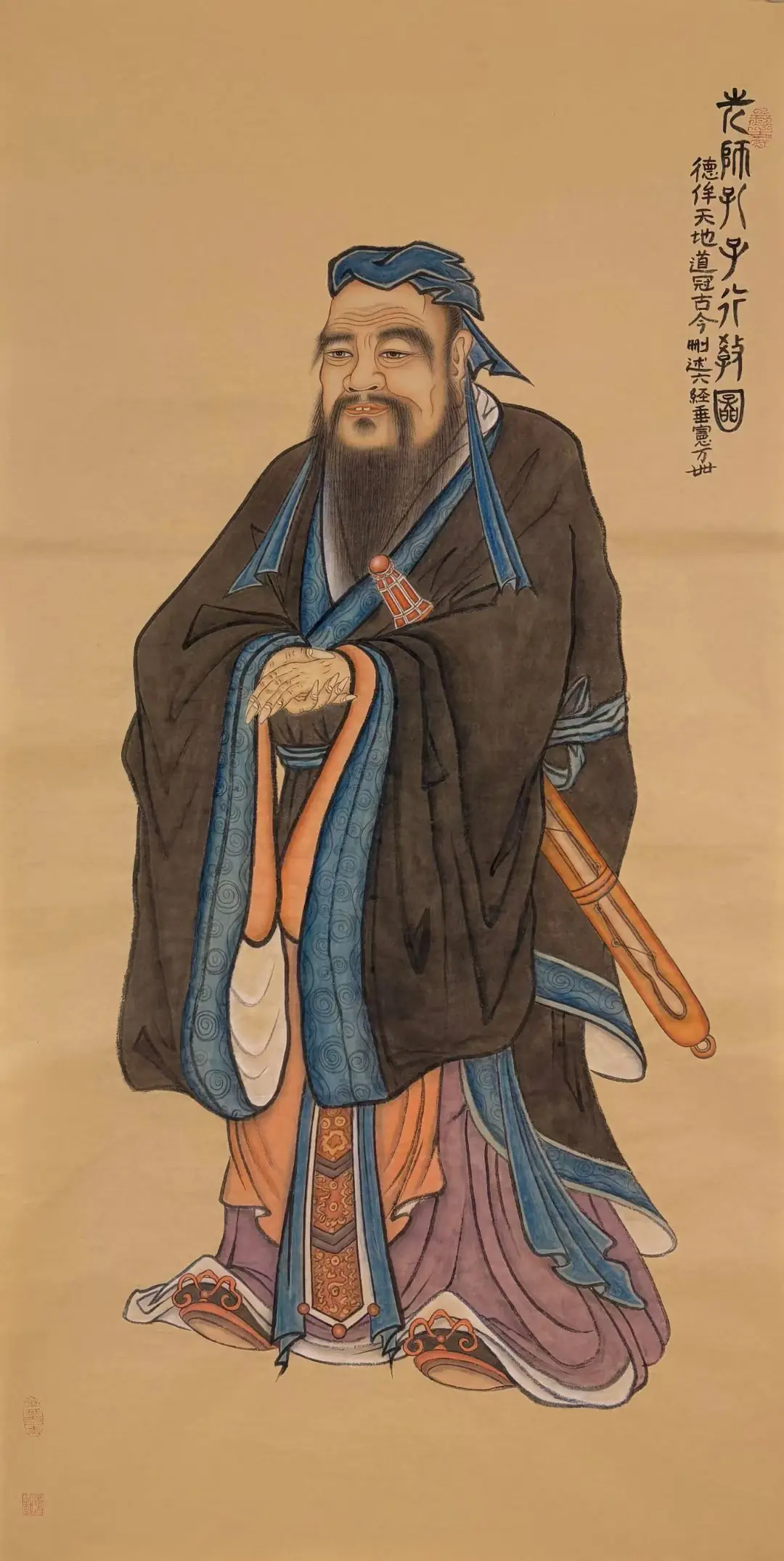
The phrase "Is it not pleasant to learn with constant perseverance and application?" comes from the first chapter of The Analects, "Xue Er": The Master said, "Is it not pleasant to learn with constant perseverance and application? Is it not delightful to have friends coming from distant quarters? Is he not a Junzi (Exemplary Person) who is not resentful when others do not know him?" It means that what has been learned should be frequently practiced, which is one of Confucius's important teaching philosophies.
Confucius had extensive teaching experience and imparted a wealth of knowledge to his students. He often discussed issues with them and resolved various difficult problems. He encouraged students to cultivate good moral character and delve deeply into their studies, proposing the idea of "learning and regularly practicing what has been learned."
Throughout his life, Confucius emphasized teaching, and his teaching emphasized learning. He taught people to learn, focusing on learning the Way of being a person (the proper way to conduct oneself). The entire _Analects_ is the knowledge of conducting oneself and dealing with worldly affairs that Confucius advocated. So where does this knowledge come from? It comes from life experience, from social practice, and is realized through doing things and interacting with others. Confucius advocated "extensive learning" (Bo Xue, broad and wide-ranging study), with the Classics of Poetry (Shijing), Book of Documents (Shangshu), rites, music, archery, and charioteering all being part of daily practice.
Confucius lived in an era of widespread conflict, where Li (ritual propriety) had collapsed and music was in disarray. He was deeply committed to restoring the ritual and musical order of the early Western Zhou period. Not only did he study the content and operational norms of the rites and music himself, but he also taught them to his students, hoping that through their collective efforts, the entire realm would return to the ideal state of the early Zhou. Therefore, he set very strict requirements for his students and taught them proper learning methods.
In oracle bone script, the character "习" (xí) is composed of "羽" (feather) above "日" (sun), with its original meaning referring to a young bird repeatedly practicing flight. Through repeated trial flights, the bird experiences, practices, and continually corrects itself, until one day it can spread its wings and soar. We must always pay attention to "timeliness" (时 shí) and "practice" (习 xí), learning at all times and in all places—meaning we should always maintain awareness, always engage in practice, always have experiences, and always be able to reflect. Beginning the process of reflection and examination is not easy, but as we gradually make progress, we will naturally find the joy of understanding, and then "is it not a pleasure" (不亦说乎)?