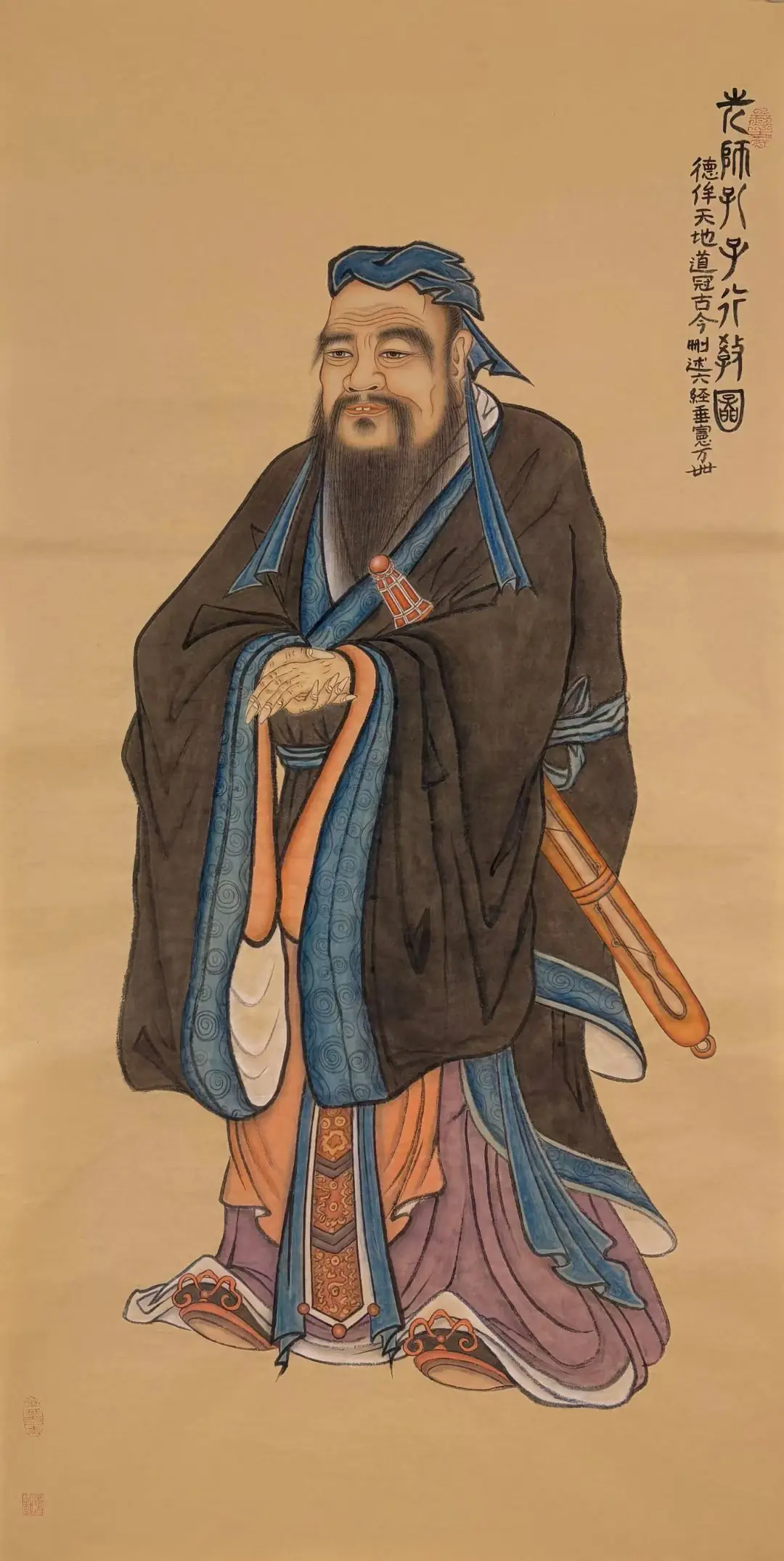
This passage comes from *The Analects*, Book II, "Wei Zheng": "The Master said, 'The Junzi (Exemplary Person) is not a vessel.'" The saying "the Junzi is not a vessel" means that the Junzi, unlike a vessel, is not limited to a single function. A vessel serves only one purpose—just as a boat travels on water and a cart on land, each restricted in its use. The Junzi, however, is not a vessel; they are not confined to a narrow mindset or realm of conduct that would make them a specific tool. Zhang Juzheng, the renowned Ming Dynasty statesman, said: "Only the Junzi possesses lofty insight and profound cultivation, with a substance that encompasses everything, so their application is all-encompassing. In great matters, they can undertake the work of governing and saving the world; in small matters, they can manage finances, grain, and military affairs. They uphold constancy and adapt to change, fitting every situation." Thus, the Junzi is a versatile talent, capable of both civil and martial pursuits, suited to all circumstances, and never becoming a fixed type of person. Therefore, Confucius valued broad learning, ensuring that one's talents and thinking were not confined to the narrowness of a single "specialty," unlike vessels that, though each has its use, cannot be interchanged.
There is a small story from the West. A traveler passed by a construction site on a scorching summer day, where three men were sweating profusely while moving bricks. He went to ask the first man, "What are you doing?" The man replied, "I am moving bricks!" He then asked the second man. This man straightened the bricks in his hands, looked at them, and said, "I am preparing to build a wall." Later, he went to ask the third man. That man put down his bricks, looked up proudly, and said, "I am building a magnificent cathedral." A few years later, the traveler passed by the same place again. Upon inquiring, he learned that the first man, who had said he was moving bricks, was still moving bricks at the construction site; the second, who said he was building a wall, was now building walls for others; but the third man had become a renowned local architect. Although all three were doing the same work back then, the first man undoubtedly regarded himself as a tool for moving bricks, merely moving them mechanically. The second man also had a standard professional mindset, knowing he was building a wall but not caring about the overall picture. This wall was a partial product of the entire building; he only focused his vision on this one wall, his task simply to finish building it. This is what Confucius called the realm of a "Qi" (vessel/utensil)—as an existence of a vessel he was qualified, but he had no higher pursuit. The third man, however, did not confine his vision to the immediate task of moving bricks in front of him. From every brick and every drop of sweat before his eyes, he thought of building a sanctuary and a cathedral. He did not limit himself to being a tool that could move bricks, but instead became learned, acquired knowledge from many sources, and cultivated various skills. Therefore, his achievement was the greatest among the three.