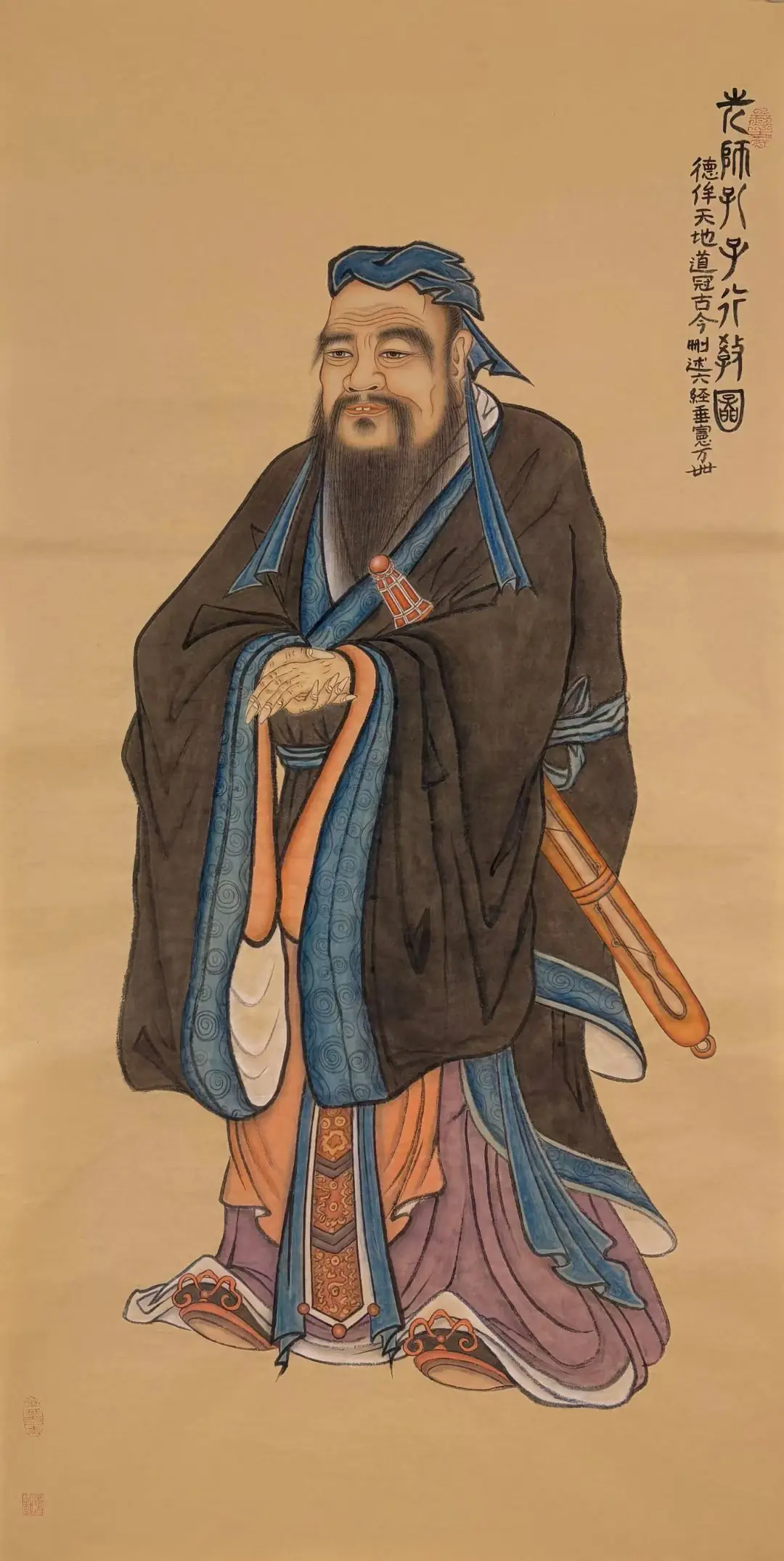
This passage comes from Chapter 1 of The Analects, "Xue Er" (Learning): "The Master said, 'If the Junzi (Exemplary Person) is not dignified, he will not be awe-inspiring; if he learns, he will not be obstinate. Make Zhong (Loyalty) and Xin (Trustworthiness) your main principles. Do not befriend those who are not as good as you. When you make mistakes, do not be afraid to correct them.'" In "If the Junzi is not dignified, he will not be awe-inspiring," the character "重" (zhong) means dignified; "威" (wei) means awe-inspiring or authority. "If the Junzi is not dignified, he will not be awe-inspiring" means that if the exemplary person is not dignified, he will lack authority.
A Junzi (Exemplary Person) should possess three forms of gravity: gravity in speech, gravity in conduct, and gravity in appearance. When speech is grave, it follows proper standards; when conduct is grave, it embodies virtue; when appearance is grave, it commands respect. Gravity in speech means valuing one's own words, not speaking recklessly or boasting. A person who is mindful of their speech will adhere to proper standards when speaking. Gravity in conduct means being careful with one's actions, ensuring every move and gesture follows norms, whether acting or resting. Gravity in appearance means attending to one's external demeanor, whether going out or staying home, always checking that one's clothing and appearance are proper.
The ancients cultivated both appearance and inner nature, emphasizing the harmonious unity of external and internal beauty. On this point, Cai Wenji, a female poet of the late Han Dynasty, elaborated more delicately: "When wiping the mirror to clean the face, one should think the mind must be pure; when applying rouge, one should think the mind must be examined; when adding powder, one should think the mind must be clear; when oiling the hair, one should think the mind must be gentle; when using a comb, one should think the mind must be orderly; when tying a bun, one should think the mind must be upright; when arranging the sideburns, one should think the mind must be neat."
As a Junzi (Exemplary Person) with an ideal personality, one should outwardly present an image of dignity, generosity, authority, and depth, making others feel steady and reliable—"worthy of being entrusted with an orphaned child of six feet tall, or the command of a hundred-li territory." If a person lacks self-respect and dignity, others will not value or respect them. Conversely, one who consistently pays careful attention to their words, actions, and outward demeanor will naturally develop an awe-inspiring presence over time; a person with such dignified bearing is often someone others respect and trust.