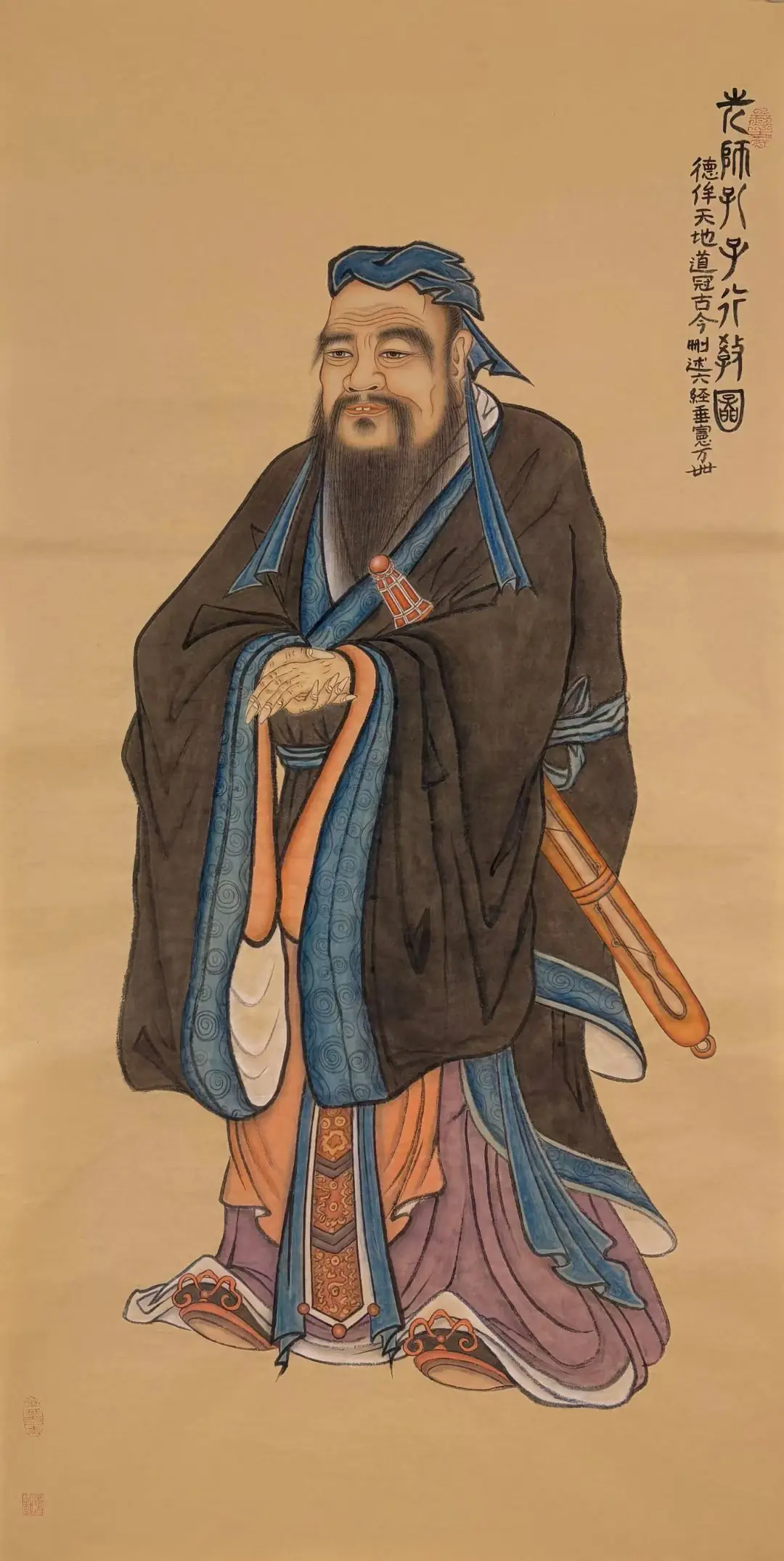
This passage comes from The Analects, Book 13 (Zilu): "The Master said: 'The Junzi (Exemplary Person) is dignified but not arrogant; the Xiaoren (Petty Person) is arrogant but not dignified.'" The capacities of the Junzi and the Xiaoren can be distinguished in different circumstances. When the Xiaoren is poor, his ambition falters, but once successful, he often displays an arrogant, self-important, and overbearing attitude, preoccupied with petty quarrels, sneaky schemes, and vengeful plots. In contrast, when the Junzi is poor, he can remain content in poverty and delight in the Dao (The Way), finding ease and composure even with simple meals and a humble dwelling, his mind unenslaved by external things. Even in wealth and honor, the Junzi treats them with equanimity, remaining broad-minded, open-hearted, bright, and cheerful, never arrogant in demeanor.
When a person's mind is calm and peaceful, their appearance and demeanor will appear composed and serene. During the Edo period in Japan, there was a famous tea master who was appreciated by a noble for hisextraordinary tea-making skills and had been following that noble. One day, the noble told him he was going to the capital on business and wanted the tea master to accompany him. At that time, Japanese society was unstable, with warriors and ronin (masterless samurai) running rampant. The tea master worried about accidents, so the noble told him to wear samurai attire, carry a samurai sword, and pretend to be a samurai.
After arriving in the capital, the host went out on business, leaving the tea master to wander the city alone. At this moment, a samurai approached with a frivolous demeanor, looking down on the tea master and saying, "Are you also a samurai? Let us have a match of swordsmanship." The tea master quickly explained that he was not a samurai. The samurai replied, "If you are not a samurai, why are you wearing the noble garments of one? Either duel with me, or die by my sword." With no other choice, the tea master reluctantly agreed to a time and place for the match.
The tea master thought it over but could find no solution, so he went straight to the most famous martial arts school in the capital to seek an audience with the grand master. He said to the grand master, "Please teach me the most dignified way for a warrior to die." The grand master was surprised, as everyone else came to him to learn the Way (Dao) of the sword. The tea master then explained the whole situation. The grand master said, "Since you are a tea master, first make me a cup of tea, and then I will teach you a dignified way to die." Thinking this might be his last time making tea, the tea master performed the task with great care. He calmly sorted the tea leaves, focused on heating mountain spring water over a small stove, gently placed the leaves in, rinsed them, filtered them, and poured the tea out little by little... Finally, he presented a cup of fragrant, mellow tea to the grand master with both hands. The grand master tasted the tea and exclaimed, "This is truly the best tea I have ever drunk! You no longer need to die. Just face that warrior with the same composed mindset you had while making this tea."
At the appointed time, the tea master arrived at the dueling ground. Seeing him, the arrogant samurai immediately drew his sword and said, "Let us settle this." But the tea master, unhurried, calmly removed his hat with both hands and placed it neatly aside; then he slowly took off his loose outer robe, folded it with great care, and pressed it under the hat; he then took out a sash, tightened the cuffs of his inner garment, and bound his trouser legs. Throughout the entire process, the tea master remained composed and at ease. The more the samurai watched, the more nervous he became, his heart growing uncertain, unable to gauge the tea master's skill. Finally, the tea master finished adjusting his attire, drew his sword with an expression of utmost reverence, swung it into the air, and held it there. At this point, the samurai was already intimidated by the tea master's calm and steady demeanor. He threw down his own sword, bowed in admiration, and said, "You are truly the most accomplished swordsman I have ever seen!"
Although the tea master did not know swordsmanship, he was able to make the samurai submit—this was due to the spiritual courage revealed in that situation and his calm, composed demeanor. This is precisely the Junzi (Exemplary Person) quality that Confucius described as being dignified but not arrogant, which enabled the tea master to remain free from worry and fear even in adversity, thereby effortlessly overcoming that arrogant and rude samurai.