Pinyin: Baomazipi
Aliases
Bai Ding Xiang, Bang Bang Mu, He Hua Ding Xiang
Source
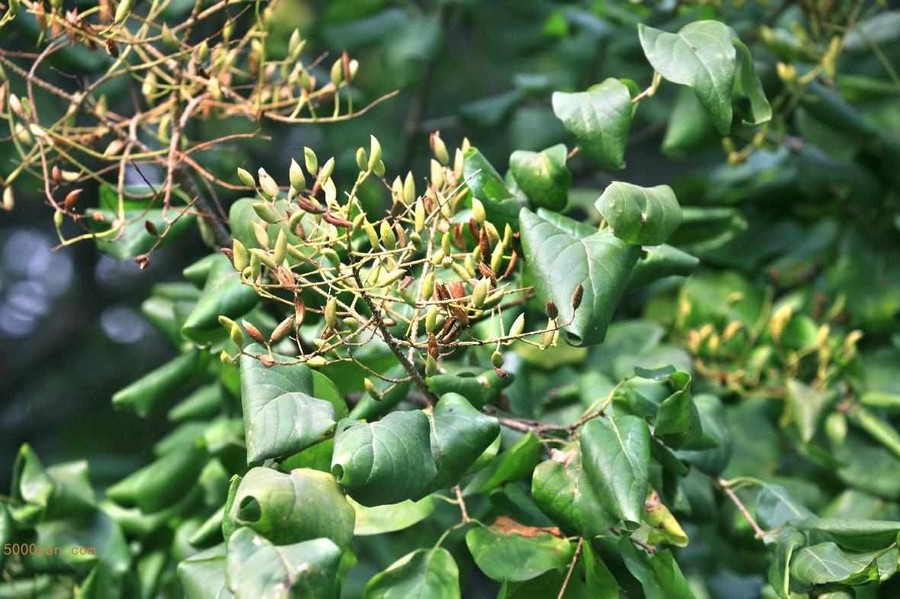
Plant of the Oleaceae family, Syringa reticulata (Blume) H. Hara var. amurensis (Rupr.) J. S. Pringle.Syringa reticulata(Bl.) Hara var.mandshuricaDried stem bark or branch bark of (Maxim.) Hara.
Botanical Description
Deciduous small tree, 4-10 m tall. Bark purplish gray-brown with fine fissures. Current year branches green or slightly purple-tinged, sparsely lenticellate. Leaves simple, opposite; petiole 1-2.5 cm long, glabrous; leaf blade thick-papery, broadly ovate, ovate to elliptic-ovate, or oblong-lanceolate, 2.5-13 cm long, 1-6 cm wide, apex short-caudate to caudate-acuminate or acute, base often rounded. Panicles composed of 1 to multiple lateral buds on the same branch; rachis lenticellate; pedicel 0-2 mm long; calyx 1.5-2 mm long, calyx teeth obtuse, apiculate or truncate; corolla white, rotate, 4-5 mm in diameter, corolla tube ca. 1.5 mm long, lobes ovate, 2-3 mm long, apex acute; filaments slender, stamens nearly twice as long as corolla lobes, anthers yellow. Capsule oblong-ellipsoid, 1.5-2 cm long, apex often obtuse, or acute, apiculate, smooth or with minute lenticels. Flowering June to July, fruiting August to October.
Habitat and Distribution
Growing at altitudes of 100-1200 m on hillside thickets, forest edges, or in mixed coniferous and broad-leaved forests, also cultivated. Distributed in Heilongjiang, Jilin, Liaoning, Inner Mongolia, Hebei, Shaanxi, Ningxia, Gansu and other regions.
Harvesting and Processing
Harvested and dried in spring and autumn.
Medicinal Properties
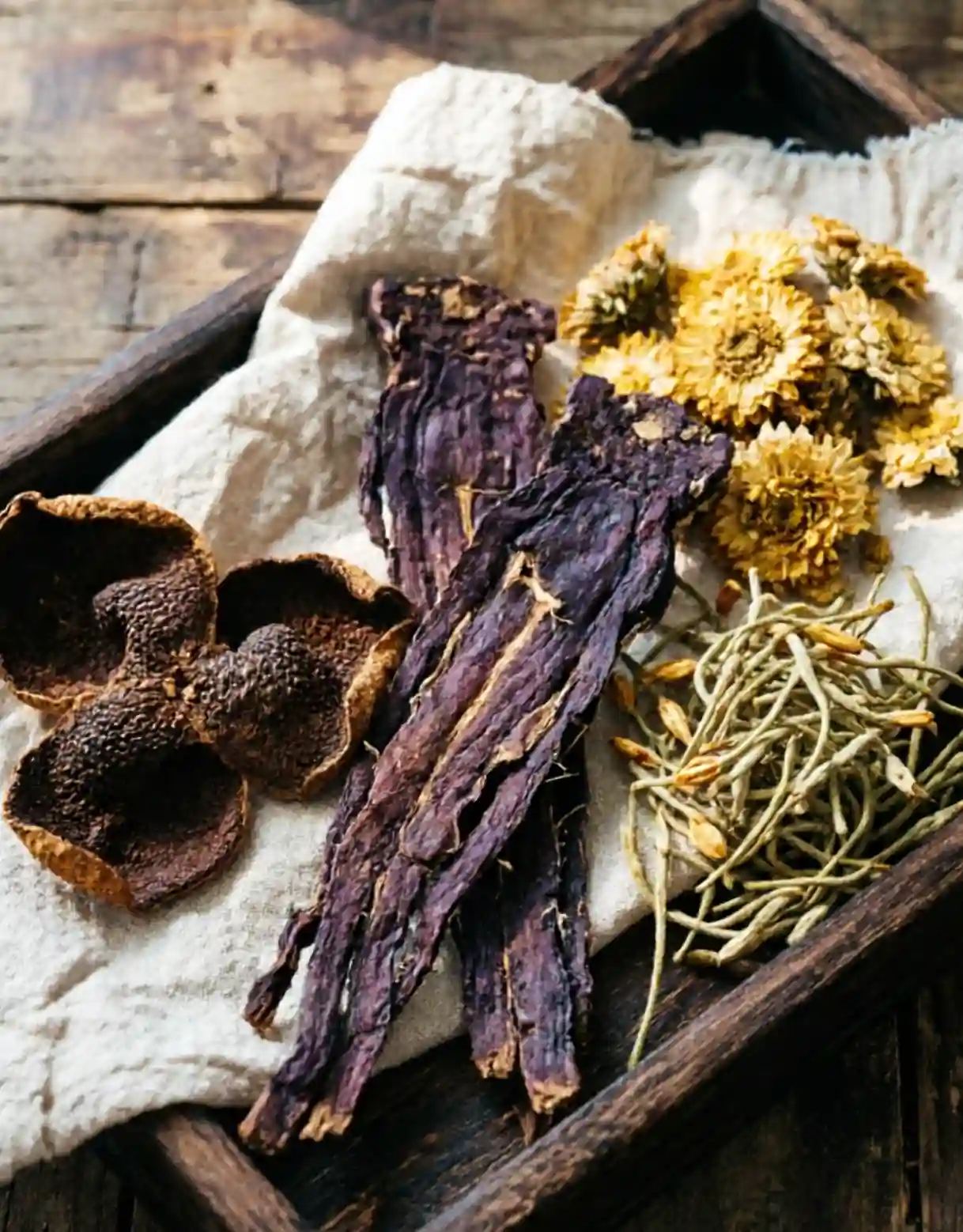
This product is in a grooved or rolled shape, of varying lengths, 2-4 mm thick. The outer surface is dark grayish-brown; young bark is smooth and glossy, while old bark is rough with transverse striations; transverse lenticels are elliptical and dark yellow; the outer bark is thin and tough, can be torn off transversely, revealing a dark yellowish-green color underneath. The inner surface is light yellowish-brown. The texture is brittle, easily broken, with an uneven fracture surface. Odor: faintly aromatic; Taste: bitter.
Chemical Constituents
This product mainly contains syringin, scopoletin, 3,4-dihydroxy-β- Hydroxyethylbenzene, methyl syringate and other components.
Pharmacology
Has antitussive, expectorant, and antiasthmatic effects; can reduce hypertrophic hyperplasia of bronchial epithelial cells below the tertiary level.
Properties and Channel Entry
Bitter, slightly cold. Enters the Lung channel.
Functions and Indications
Clears the Lungs and dispels Phlegm, stops cough and calms wheezing. Used for cough with copious sputum.
Dosage and Administration
Oral: decoct in water, 15-30 g; or made into pills or powder.
Prescriptions
1. For bronchitis and asthma: Baomadingxiang (Syringa reticulata var. amurensis) 60 g, decoct in water until the liquid turns tea-colored, add white sugar 15 g. Decoct 3 times consecutively, take once each evening; or Baomadingxiang 1500 g, Gancao (Glycyrrhiza uralensis) 90 g, both cut into pieces, add 500 ml of water, decoct to 300 ml, take 10 ml each time, 3 times daily. (From "Selected Chinese Herbal Medicines from Shaanxi, Gansu, Ningxia, and Qinghai") 2. For chronic bronchitis: Baomazi (Syringa reticulata var. amurensis) 15 g, Xiaobo (Berberis spp.) 15 g, Songluo (Usnea spp.) 6 g. Decoct in water and take orally. (From "National Compendium of Chinese Herbal Medicines") 3. For cardiac edema: Baomazi (Syringa reticulata var. amurensis) 30 g. Cut into pieces, decoct in water, take twice daily. (From "Jilin Chinese Herbal Medicine")