Pinyin: Qingfengteng
Aliases
Dafengteng, Chuifengsan, Heifangji, Paifengteng, Qingfangji.
Source
This product is derived from the plant *Sinomenium acutum* of the Menispermaceae family.Sinomenium acutumDried vine stem of (Thunb.) Rehd et Wils.
Botanical Description
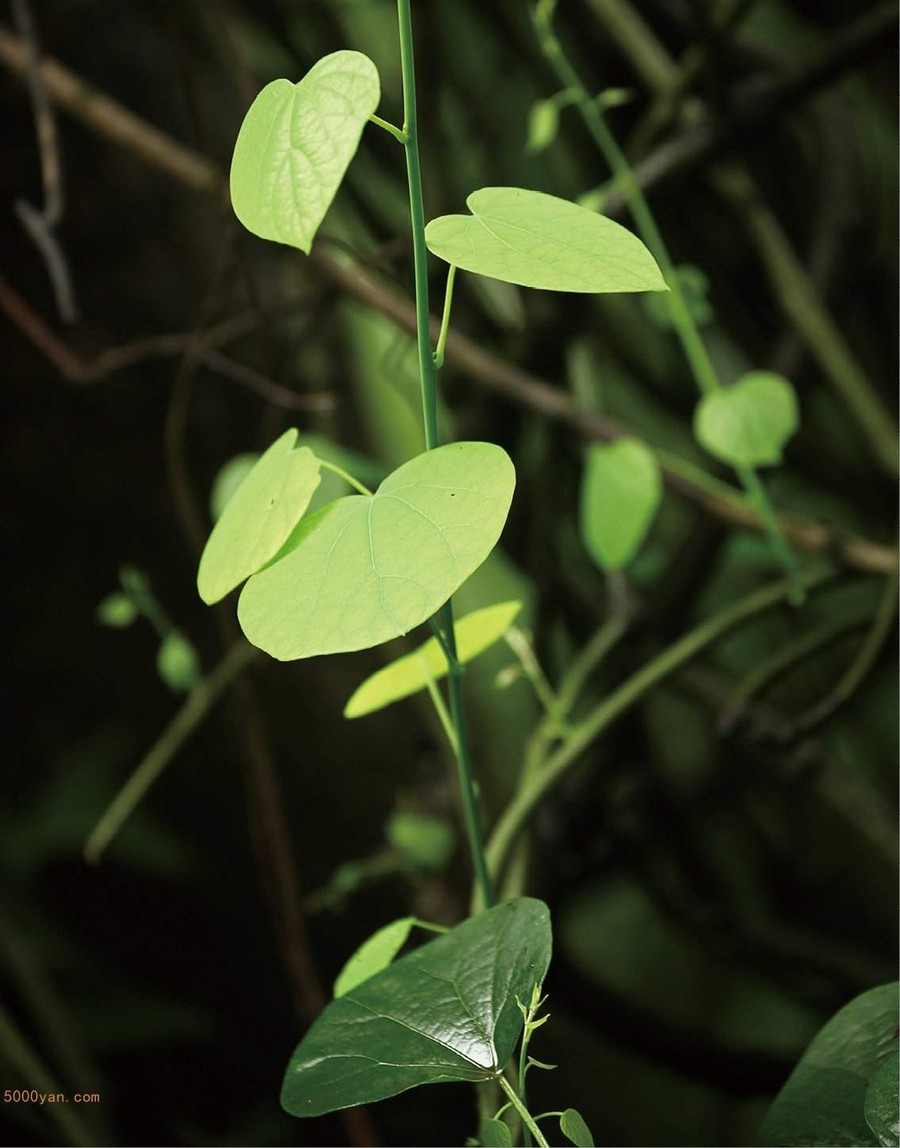
Woody lianas, can reach up to 20 m in length; old stems gray, branches cylindrical. Leaves leathery to papery, cordate-orbicular to broadly ovate, 6-15 cm long or slightly longer, apex acuminate or shortly acute, base often cordate, sometimes nearly truncate or subrounded, margin entire, angled to 5-9-lobed, young leaves tomentose, old leaves often glabrous on both surfaces; palmate veins 5, rarely 7; petiole 5-15 cm long. Panicles usually not exceeding 20 cm long, bracts linear-lanceolate. Male flowers with 2 small bracts, closely appressed to the calyx; sepals pubescent abaxially, outer ones oblong to narrowly oblong, inner ones subovate, subequal to outer ones in length; petals slightly fleshy; female flowers with filiform staminodes; carpels glabrous. Drupes red to dark purple. Flowering in summer, fruiting in late autumn.
Habitat and Distribution
Born in forests. Distributed in the Yangtze River basin and provinces and regions south of it.
Harvesting and Processing
Harvested in late autumn to early winter, tied into bundles or cut into long segments, and dried in the sun.
Medicinal Properties
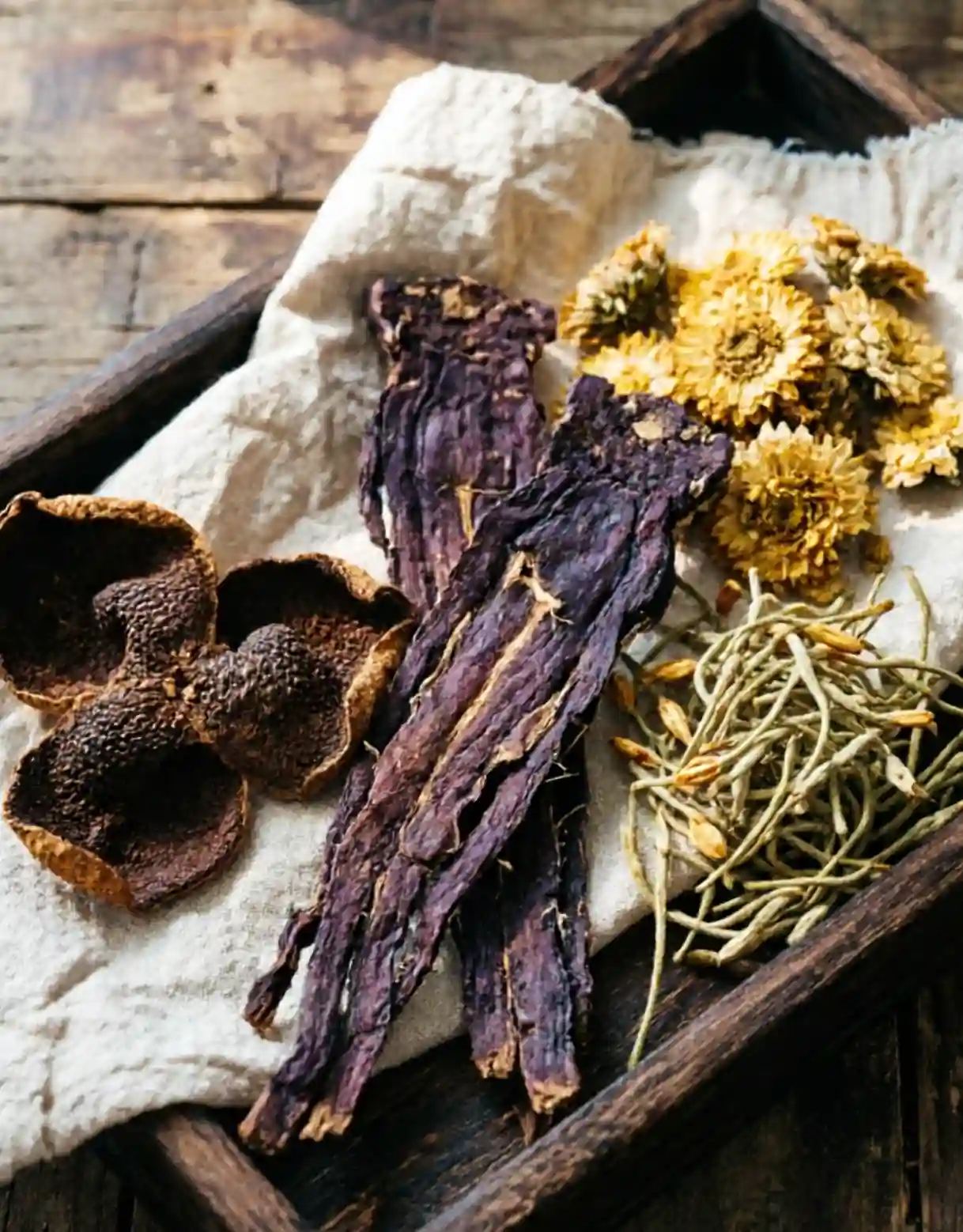
This product is long cylindrical, often slightly curved, 20-70 cm or longer in length, 0.5-2 cm in diameter. The surface is greenish-brown to brown, some grayish-brown, with fine longitudinal wrinkles and lenticels. Nodes are slightly swollen with branches. Light in weight, hard and brittle, easy to break. The fracture is uneven, grayish-yellow or pale grayish-brown, with a narrow bark, radial arrangement of xylem rays, and a pale yellowish-white or yellowish-brown pith. Odor: faint. Taste: bitter.
Chemical Constituents
This product primarily contains acutumine and stepharine.N-Contains components such as noracutumidine, bisindoline, sinomenine, racemic syringaresinol, acetyloleanolic acid, and others.
Pharmacology
Analgesic, sedative, antitussive, anti-inflammatory, antihypertensive, immunosuppressive, antiarrhythmic, anti-myocardial ischemia, protects against reperfusion injury, blocks ganglionic and neuromuscular transmission, releases histamine, reduces myocardial contractility, inhibits epinephrine-induced automaticity; has a stimulating effect on the gastrointestinal tract, but also produces mild gastrointestinal adverse effects.
Properties and Channel Entry
Bitter, acrid, and neutral in nature; enters the Liver and Spleen channels.
Functions and Indications
Expels Wind and Dampness, unblocks the channels and collaterals, and promotes urination. Used for Wind-Dampness Bi pain (rheumatic pain), joint swelling, numbness, and itching.
Dosage and Administration
Oral: decoct in water, 6-12 g. External: decoct in water for fumigation and washing.
Precautions and Contraindications
Side effects such as itching, rash, dizziness, headache, skin flushing, abdominal pain, chills and fever, allergic purpura, thrombocytopenia, and leukopenia may occur, and caution should be exercised during use.
Prescriptions
1. For rheumatic pain: *Caulis Sinomenii* and *Caulis Sargentodoxae*, 15 g each. Decoct in water, add appropriate amount of wine and take; or *Caulis Sinomenii* 30-60 g, for upper limb pain add *Ramulus Cinnamomi* 3 g, for lower limb pain add *Radix Achyranthis Bidentatae* 6 g. For generalized pain, use all three herbs together, decoct in water, add appropriate amount of yellow rice wine, and take after dinner. (*Zhejiang Flora of Medicinal Plants*) 2. For joint pain: *Caulis Sinomenii* 15 g, *Caulis Sargentodoxae* 15 g. Decoct in water and take once daily. Use wine as a guide. (*Shaanxi Chinese Herbal Medicine*)