Pinyin: Fanxieye
Aliases
Xieye, Paozhuye
Source
Fabaceae plant Senna alexandrina (Cassia angustifolia)Cassia angustifoliaDried leaflets of Vahl.
Botanical Description
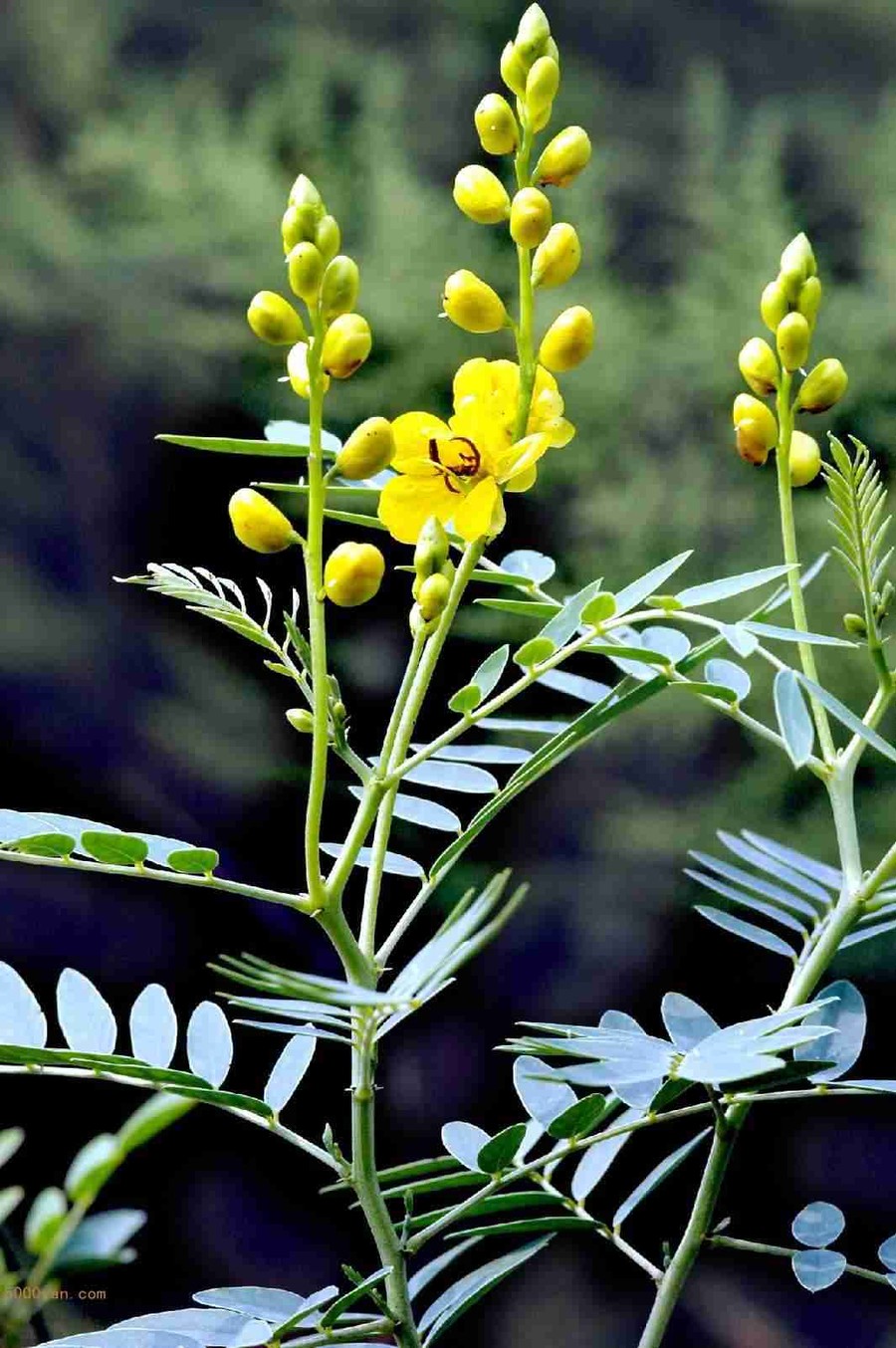
Herbaceous subshrub, approximately 1 m tall. Stipules ovate-lanceolate, 2-4 mm long; even-pinnate compound leaves, alternate; with short petioles; leaflets 5-8 pairs, leaf blade ovate-lanceolate to linear-lanceolate, 2-4 cm long, 0.7-1.2 mm wide, apex acute, base slightly asymmetrical, glabrous or nearly glabrous. Racemes axillary or terminal; sepals 5, oblong-ovate, slightly unequal; petals 5, yellow, obovate, the lower two larger; stamens 10, anthers somewhat quadrangular, base sagittate, 4-loculed; pistil curved like a sickle, ovary stipitate, apex with a tiny, inconspicuous point, sparsely hairy. Legume rectangular, flattened, 4-6 cm long, 1-1.7 cm wide, hairy when young; seeds 4-7, seed coat brownish-green, with a fine linear funicle, verrucose-wrinkled. Flowering period September to December, fruiting period March of the following year.
Habitat and Distribution
Wild or cultivated, distributed in tropical Africa. In China, it is introduced and cultivated in Taiwan, Guangxi, and Yunnan.
Harvesting and Processing
During the peak growing season, select a sunny day to harvest the leaves, promptly spread them out for sun-drying, turn them frequently, and do not pile them too thickly during drying to prevent the leaves from turning yellow; dry until completely dry. Alternatively, dry at a temperature of 40-50°C. Grade the leaves according to size and quality, then bundle and pack.
Medicinal Properties
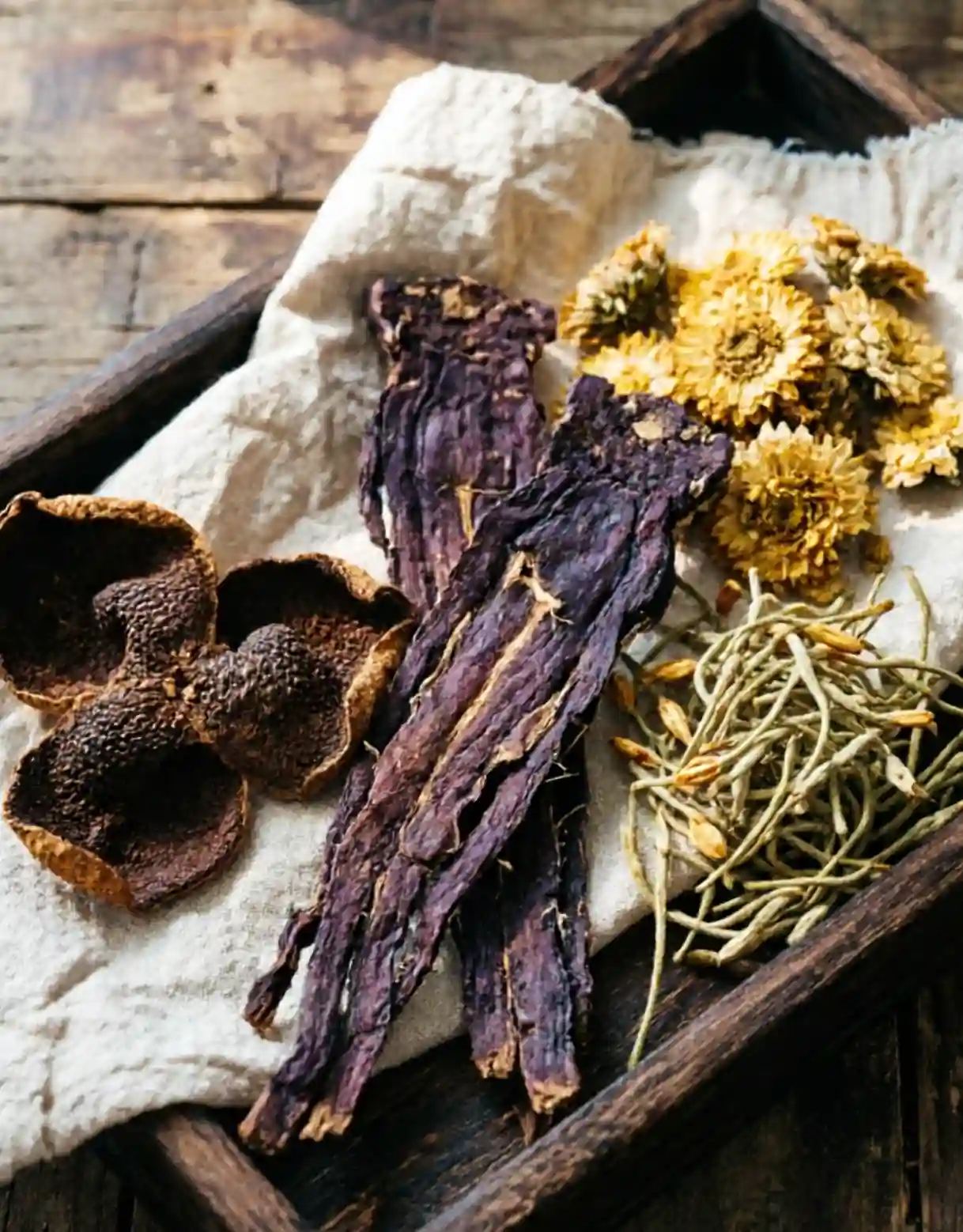
Leaves are oblong-ovate or ovate-lanceolate in shape, 1.5-5 cm long, 0.4-2 cm wide, with an acute apex, a slightly asymmetrical base, and entire margins. The upper surface is yellowish-green, the lower surface is light yellowish-green, glabrous or nearly glabrous, with slightly raised veins. Texture is leathery. Odor is faint and distinctive; taste is slightly bitter, with a slight stickiness.
Chemical Constituents
This product contains sennoside A, sennoside B, sennoside C, sennoside D, aloe emodin, chrysophanol, physcion, D, linolenic acid, linalool, and other constituents.
Pharmacology
Has significant purgative effects; hemostatic; inhibits multiple bacteria, Candida albicans, and certain pathogenic skin fungi. It can restore reduced intestinal mucosal histamine levels to normal, block impulse transmission at the neuromuscular junction, and prevent acetylcholine from binding to M receptors, thereby causing muscle relaxation.
Properties and Channel Entry
Sweet, bitter, cold. Enters the Large Intestine channel.
Functions and Indications
Drains Heat, moves stagnation, unblocks the bowels, and promotes urination. Used for Heat-induced accumulation and stagnation, constipation with abdominal pain, and edema with abdominal distension.
Dosage and Administration
Oral: decoct in water, 3-6 g, added toward the end; or steep as tea; or grind into powder, 1.5-3 g.
Precautions and Contraindications
Contraindicated in cases of physical weakness, during pregnancy, menstruation, and lactation. Excessive dosage may easily cause abdominal pain, nausea, and vomiting.
Prescriptions
1. For weak stomach with indigestion, constipation, abdominal distension, and chest tightness: Fanxieye (Senna leaf) 3 g, Sheng Dahuang (Raw Rhubarb) 2 g, Jupi (Tangerine peel) 3 g, Huanglian (Coptis) 1.5 g, Dingxiang (Clove) 2 g, Shengjiang (Fresh Ginger) 3 g. Steep in 100 ml of boiling water for 2 hours, remove the residue, filter, and take in 3 divided doses daily. (Modern Practical Chinese Medicine)