Pinyin: Shanzhaye
Aliases
Chizaozi Ye
Source
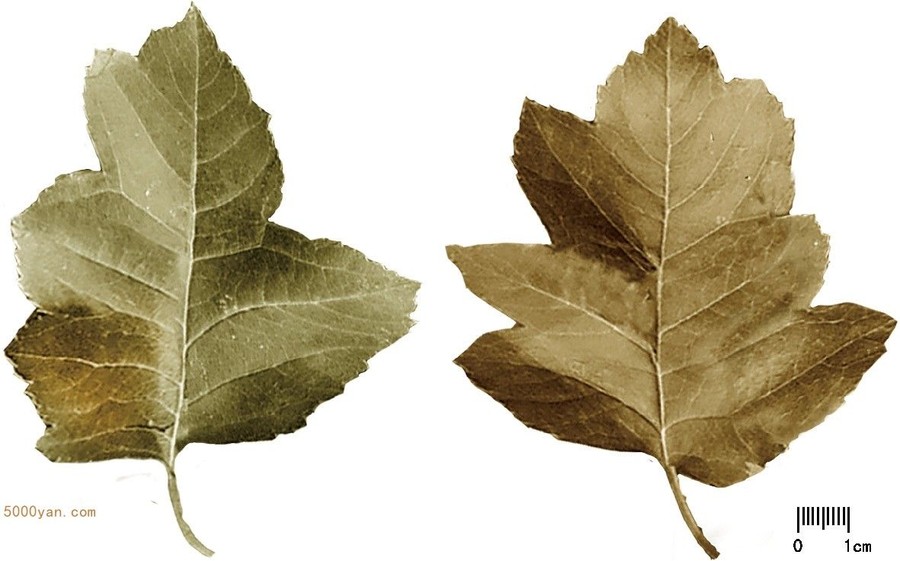
Rosaceae plant Crataegus pinnatifida var. majorCrataegus pinnatifidavar.Var.majorN.E.Br. or ShanzhaCrataegus pinnatifidaDried leaf of *Bge*.
Botanical Description
See entry under "Shanzha" (Hawthorn).
Harvesting and Processing
Harvested in summer and autumn, dried in the shade.
Medicinal Properties
This product is mostly broken; when intact and spread out, it is broadly ovate, 6-12 cm long, 5-8 cm wide, green to brownish-yellow, apex acuminate, base broadly cuneate, with 2-6 pinnatifid lobes, margin with sharp double serrations; petiole 2-6 cm long, stipules ovate to ovate-lanceolate. Odor: faint; Taste: astringent and slightly bitter.
Chemical Constituents
This product contains quercetin, hyperoside, vitexin rhamnoside, 2α3.β19α- Trihydroxyursolic acid, ursolic acid, crataeguside A, crataeguside B, crataeguside C, crataeguside D, and other constituents.
Pharmacology
Has anticoagulant and lipid-lowering effects.
Properties and Channel Entry
Sour, neutral. Enters the Liver channel.
Functions and Indications
Activates Blood and resolves stasis, regulates Qi and unblocks the vessels, transforms turbidity and reduces lipids. Used for Qi stagnation and Blood stasis, chest Bi (obstruction) and heart pain, chest tightness and suffocation, palpitations and forgetfulness, dizziness and tinnitus, and hyperlipidemia.
Dosage and Administration
Oral: decoct 3-10 g for decoction; or steep as tea. External: apply an appropriate amount, decoct for washing.
Prescriptions
1. For hypertension: Shanzhaye (Hawthorn leaf), decoct in water and drink as tea. (Shaanxi Chinese Herbal Medicine)