Pinyin: Shidagonglao
Aliases
Tuhuangbai, Tuhuanglian, Bajiaoci, Cihuangbai, Huangtianzhu.
Source
Berberidaceae plant *Mahonia bealei* (Fort.) Carr.Mahonia bealeiDried leaves of (Fort.) Carr.
Botanical Description
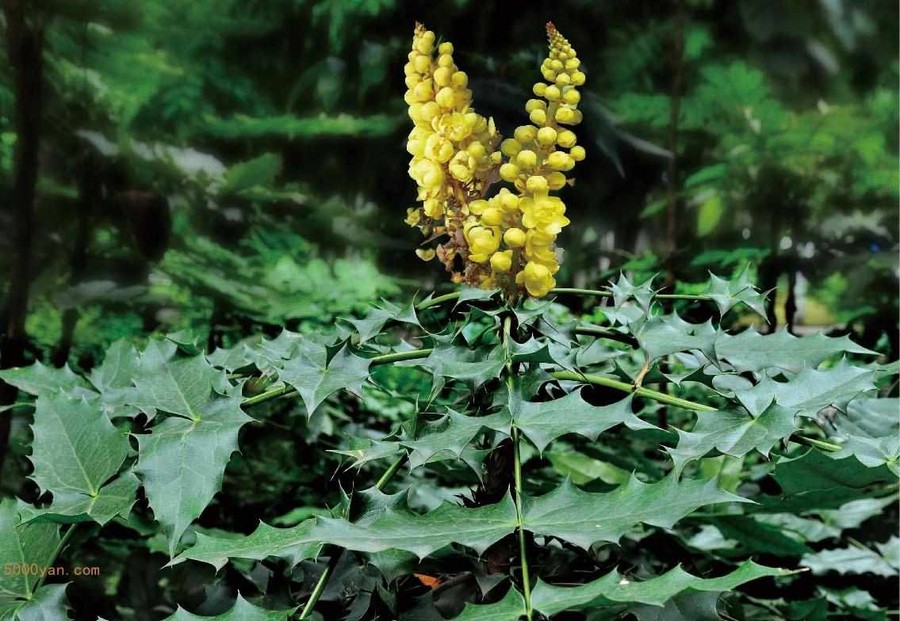
Evergreen shrub, 1-4 m tall. Stem surface yellowish-brown or brown, rough, with yellow cross-section. Leaves alternate, thickly leathery; petiolate, with base expanded and clasping the stem; odd-pinnately compound, 25-40 cm long, with 7-15 leaflets; lateral leaflets sessile, broadly ovate, unequal in size, 4-12 cm long, 2.5-4.5 cm wide; terminal leaflet larger, petiolulate, apex acuminate, base broadly cuneate to suborbicular, margin revolute with 2-8 large spinose teeth on each side, upper surface dark green and glossy, lower surface yellowish-green. Raceme terminal, erect, 6.5-10 cm long, 6-9 clustered together; bracteole 1; sepals 9, in three whorls; flowers yellowish-brown, petals 6, oblong, apex shallowly 2-lobed, base with 2 nectaries; stamens 6; pistil 1. Berry ovoid, about 5 mm in diameter, bluish-black when ripe, covered with white powder. Flowering period August to October, fruiting period October to December.
Habitat and Distribution
Growing in thickets on sunny mountain slopes, also cultivated. Distributed in Shaanxi, Anhui, Zhejiang, Jiangxi, Fujian, Henan, Hunan, Guangdong, and other regions.
Harvesting and Processing
Can be harvested year-round. Dry in the sun and set aside for later use.
Medicinal Properties
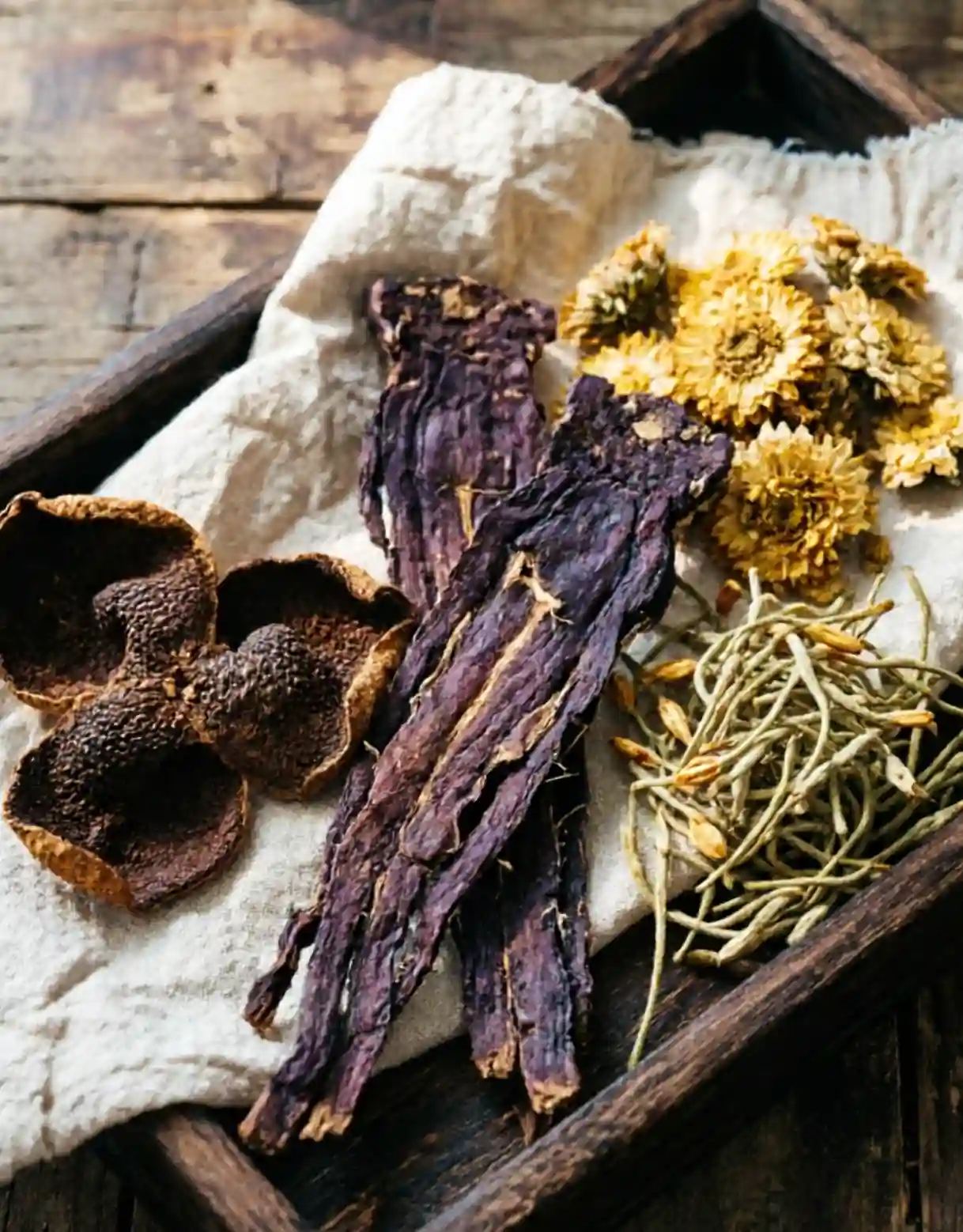
This specimen has pinnately compound leaves with 7-15 leaflets, opposite, sessile, mostly slightly wrinkled, leathery, broadly ovate, with revolute margins and 3-5 spines on each side, with leaf veins prominently raised on the abaxial surface, the adaxial surface green to gray-green, and the abaxial surface yellow-green. The rachis is cylindrical, approximately 5 mm in diameter, swollen at the attachment points of leaflets with annular rings. Odor: faint; Taste: bitter.
Chemical Constituents
This product contains berberine and other constituents.
Pharmacology
A 10% decoction of the stems and leaves of Mahonia fortunei (Shidalaogong) exhibits inhibitory effects on Staphylococcus aureus and Salmonella typhi.
Properties and Channel Entry
Bitter, cold.
Functions and Indications
Tonifies Lung Qi, reduces tidal fever, and benefits the Liver and Kidneys. Used for tidal fever in pulmonary tuberculosis, cough, hemoptysis, weakness in the lower back and knees, dizziness, tinnitus, enteritis with diarrhea, jaundice hepatitis, and red, swollen, painful eyes.
Dosage and Administration
Internal use: 8-15 g in decoction. External use: appropriate amount.
Prescriptions
For conjunctivitis: Shi Da Gong Lao Ye (Mahonia leaf) 200 g, add distilled water 1000 mL, boil, filter, and sterilize under high pressure. Use as eye drops, several times daily.