Pinyin: Songhuafen
Aliases
Songhua, Songhuang, Songfen.
Source
Plant source: Pinaceae family, *Pinus massoniana* Lamb.Pinus massoniana1. Lamb., YousongPinus tabuliformisDried pollen of *Pinus massoniana* Lamb., *P. tabuliformis* Carr., or other plants of the same genus.
Botanical Description
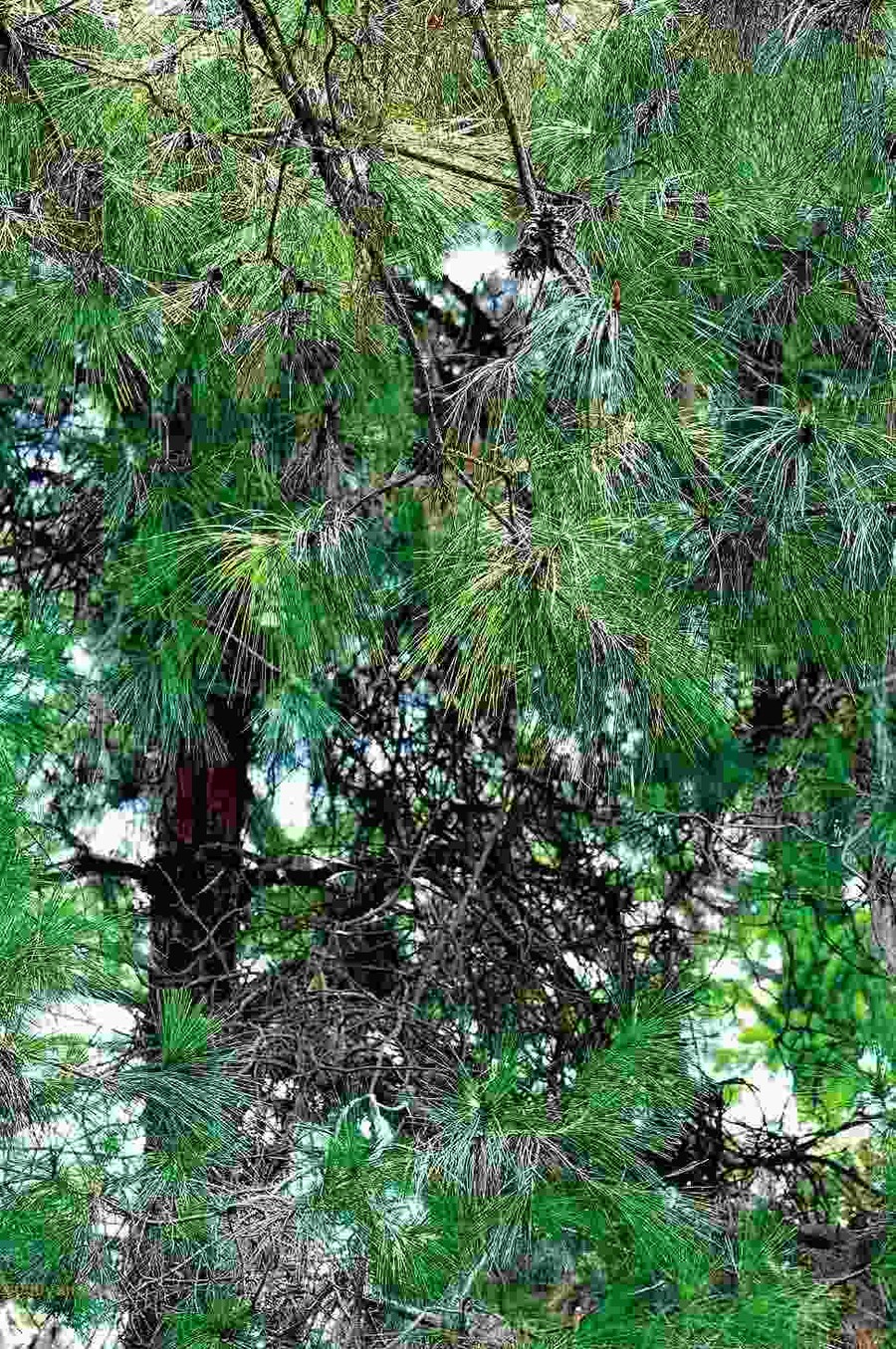
1. Masson's pine: Tree, up to 45 m tall, breast-height girth 1.5 m. Bark reddish-brown, lower part grayish-brown, irregularly splitting into long blocks. Branchlets often whorled, pale yellowish-brown, without white powder, glabrous; winter buds ovoid-cylindrical, brown, apex acute, bud scale margins fimbriate, apex acute or with a long pointed tip. Leaves needle-like, in bundles of 2, rarely 3, 12-30 cm long, slender and soft, leaf margins with fine serrations, resin ducts 4-8, marginal on the back, or also 2 marginal on the ventral side; leaf sheath initially brown, gradually turning grayish-black, persistent. Male cones pale reddish-brown, cylindrical, curved and pendulous, 1-1.5 cm long, clustered in axils of bracts at the base of new branches, spicate; female cones solitary or 2-4 clustered at the apex of new branches, pale purplish-red. Cones ovoid or conical-ovoid, 4-7 cm long, 2.5-4 cm in diameter, with a short peduncle, pendulous, turning chestnut-brown when mature; middle cone scales nearly oblong-obovate, about 3 cm long; apophysis rhombic, slightly raised or flat, umbo slightly depressed, spineless. Seeds long-ovoid, 4-6 mm long, including wing 2-2.7 cm long. Flowering period April to May, fruiting period October to December of the following year.
2. Oil Pine: Tree, up to 25 m tall, with a girth at breast height of up to 1 m or more. Bark gray-brown, irregularly scaly and split, fissures red-brown. Branches whorled, branchlets stout, light orange-yellow or gray-yellow; winter buds broadly elliptical, apex acute, red-brown. Leaves needle-shaped, in bundles of 2, dark green, stiff and hard, 10-15 cm long, about 1.5 mm in diameter, margins finely serrated, with stomatal lines on both surfaces; leaf sheaths initially light brown, gradually turning dark gray. Male cones cylindrical, 1.2-1.8 cm long, forming spike-like clusters on new branches; female cones broadly ovoid, 7 mm long, purple, borne on the current year's new branches. Cones ovoid or round-ovoid, 4-9 cm long, with a short stalk, curved downward, light yellow or light brownish-yellow when ripe, persisting for several years; central seed scales nearly oblong-obovate, 1.6-2 cm long, apophyses thick, raised or slightly raised, flat-rhombic or rhombic-polygonal, transverse keel distinct, umbo raised with a sharp spine. Seeds ovoid or long-ovoid, light brown, mottled, including wing 1.5-1.8 cm long. Flowering period April to May, fruit ripening in October of the following year.
Habitat and Distribution
Masson's pine grows in mountainous areas below 500 m elevation and is distributed in Shaanxi, Jiangsu, Anhui, Zhejiang, Jiangxi, Fujian, Taiwan, Henan, Hubei, Hunan, Guangdong, Guangxi, Sichuan, Guizhou, Yunnan, and other regions. Chinese red pine grows in mountainous areas at elevations of 100-2600 m and is distributed in Northeast China, North China, Northwest China, as well as Henan, Shandong, Jiangsu, and other regions.
Harvesting and Processing
Harvest the flower spikes when the flowers first open in spring, sun-dry them, collect the pollen, and remove impurities.
Medicinal Properties
This product is a fine, light yellow powder. It is light in weight, easily airborne, and feels smooth and slippery when rubbed between the fingers. Odor: faint; Taste: bland.
Chemical Constituents
This product (from Masson Pine pollen) contains oils and is rich in trace elements, with relatively high levels of potassium, magnesium, sulfur, manganese, zinc, and iron.
Pharmacology
Pine pollen contains selenium, an element that inhibits tumor cells.
Properties and Channel Entry
Sweet, warm. Enters the Liver and Spleen channels.
Functions and Indications
Converges to stop bleeding, dries Dampness and closes sores. Used for traumatic bleeding, eczema, impetigo, skin erosion, and persistent purulent discharge.
Dosage and Administration
Internal: decoct 3-9 g for oral administration; or take infused. External: apply an appropriate amount, dry sprinkle or mix for topical application.
Precautions and Contraindications
Patients with blood deficiency or internal heat should use with caution.
Prescriptions
1. For epigastric pain: Songhuafen (Pine Pollen) 3 g, taken with wine. (Guangxi Selected Herbal Medicines) 2. For eczema: Songhuafen (Pine Pollen), Huangbai (Phellodendron Bark), Kushen (Sophora Root) 60 g each, Qingdai (Natural Indigo) 15 g, Songxiang (Pine Resin) 30 g. First grind the first four ingredients into a fine powder, then melt the pine resin and mix with sesame oil to blend the powder. Apply to the affected area once daily. (Hubei Chinese Herbal Medicine Records) 3. For neonatal diaper rash and infant summer sweat rash: Apply Songhuafen (Pine Pollen) externally, keeping the local area dry. (Zhejiang Medicinal Plant Flora) 4. For traumatic bleeding and impetigo: Apply an appropriate amount of Songhuafen (Pine Pollen) directly to the affected area. (Sichuan Chinese Herbal Medicine Records, 1982) 5. For hemoptysis, hematemesis, and bloody stools: Songhuafen (Pine Pollen) 6 g, taken in 3 divided doses with cold boiled water. (Sichuan Chinese Herbal Medicine Records, 1982) 6. For alcohol toxicity causing headache, dizziness, throat congestion, or watery diarrhea occurring dozens of times daily with mental and physical exhaustion: Songhua (Pine Pollen, roasted) 30 g, Chenpi (Tangerine Peel) 15 g, Chuan Huanglian (Coptis Root) 9 g, Gancao (Licorice Root) 6 g. Lightly stir-fry all ingredients, grind into powder, and mix evenly with the pine pollen. Take 6 g each morning and evening with plain boiled water. Recovery occurs within two days. (Ben Cao Hui Yan) 7. For epidemic toxic dysentery: Songhua (Pine Pollen) 6 g, decocted with mint leaves in water, add one spoonful of honey and take. (Hui Zhi Tang Jing Yan Fang) 8. For chronic diarrhea with fever in children: Roasted Songhua (Pine Pollen) 3 g, roasted Hongqu (Red Yeast Rice) 6 g. Grind together and take with white sugar water. (Xian Xi Dan Fang Xuan)