Pinyin: Xiaoji
Aliases
Cijicai, Cijiaocai, Ciercao
Source
1. For pneumonia: Renshen 6 g, decoct in water and take orally.Cirsium setosumDried aerial parts of (Willd.) MB.
Botanical Description
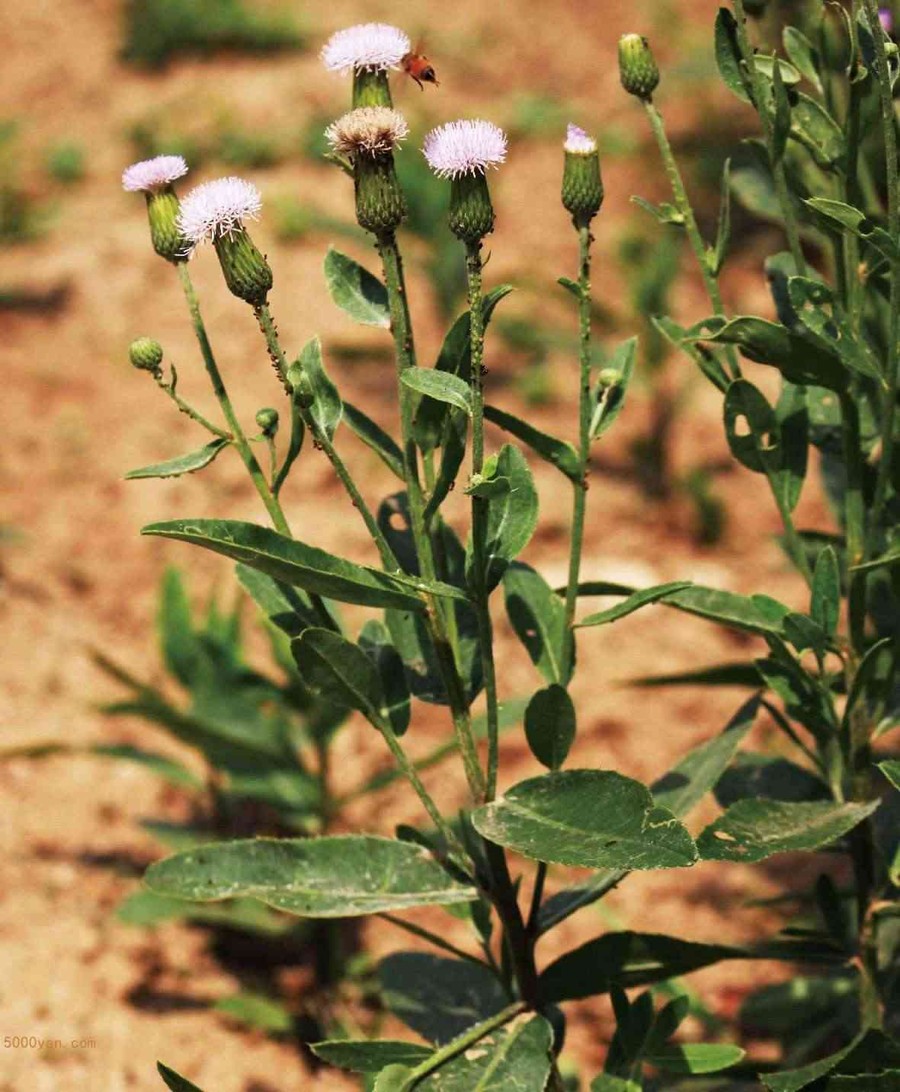
Perennial herb. Rhizome long. Stem erect, 30-80 cm tall, glabrous or with cobweb-like hairs. Basal leaves wither at flowering; lower and middle leaves elliptic or elliptic-lanceolate, 7-15 cm long, 1.5-10 cm wide, apex obtuse or rounded, base cuneate, usually petiolate, upper stem leaves gradually smaller, leaf margin with fine spines or spinose teeth, both surfaces concolorous, glabrous. Capitulum solitary at stem apex, dioecious; involucre bracts in 6 layers, outer ones very short, long elliptic-lanceolate, inner ones lanceolate, apex long-acuminate, spiny; male corolla 17-20 mm long, lobes 9-10 mm long; anthers purplish red; female corolla purplish red, about 26 mm long, lobes about 5 mm long. Achene elliptic or long-ovoid, slightly compressed; pappus plumose. Flowering May-June, fruiting May-July.
Habitat and Distribution
It grows on hillsides, riverbanks, wastelands, or fields. Distributed throughout China except Guangdong, Guangxi, Yunnan, and Tibet.
Harvesting and Processing
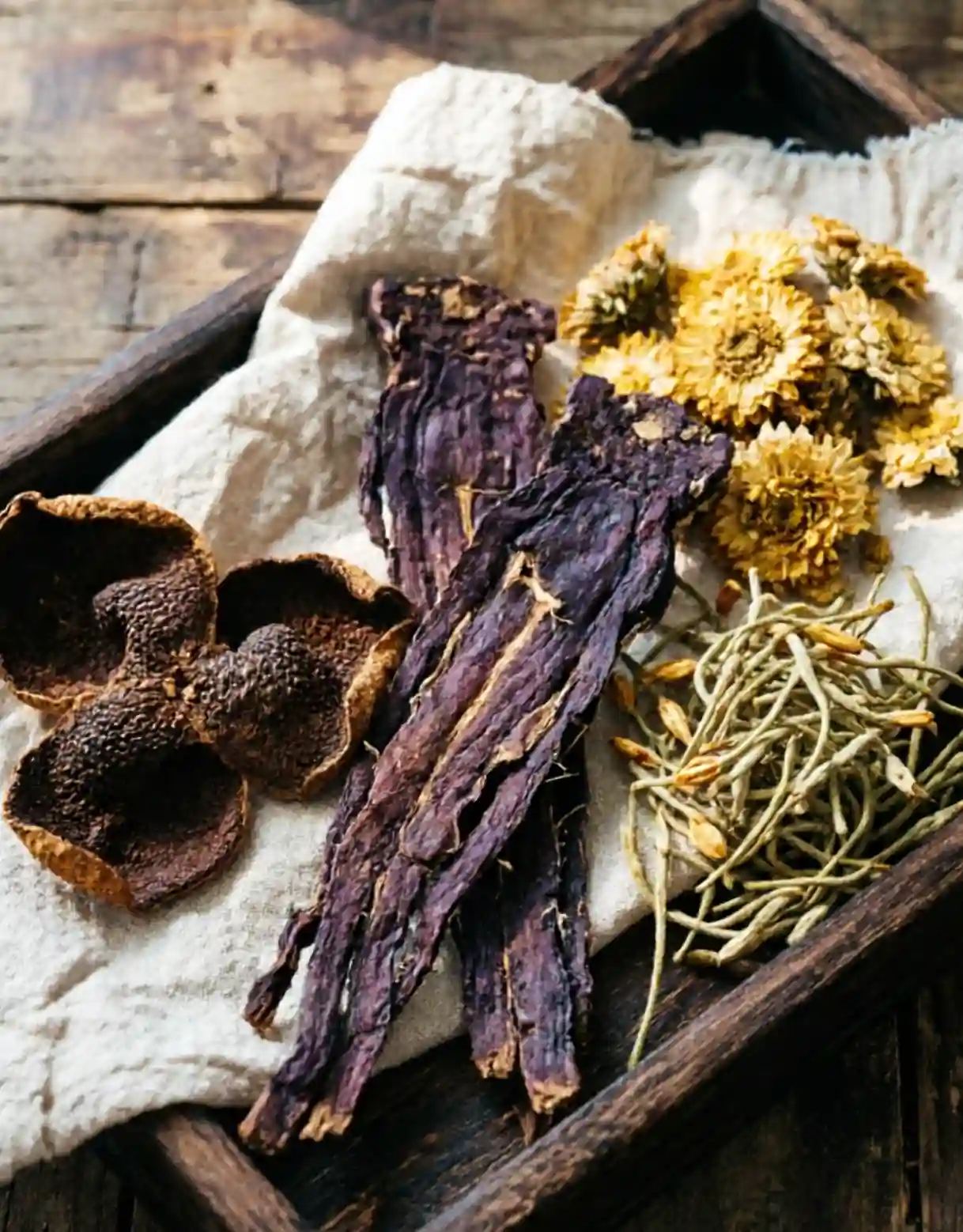
Harvested in summer and autumn when in flower, remove impurities, and dry in the sun.
Chemical Constituents
This product contains fragrin.β- β-sitosterol, taraxasterol,j- Contains dandelion sterol acetate, chlorogenic acid, protocatechuic acid and other components.
Pharmacology
It can enhance the contractile force and frequency of atrial muscle and contract the aorta; it has hemostatic and antibacterial effects.
Properties and Channel Entry
Sweet, bitter, cool. Enters the Heart and Liver channels.
Functions and Indications
Cool Blood to stop bleeding, disperse stasis, resolve toxicity, and reduce abscesses
Dosage and Administration
Oral: decoct in water, 5-10 g; fresh product may be used at 30-60 g, or pounded for juice
Precautions and Contraindications
Contraindicated in cases of hemorrhage due to deficiency-cold and in those with Spleen and Stomach deficiency-cold.
Prescriptions
1. For sudden hematemesis and bloody diarrhea: Xiaojixiao (Herba Cirsii) leaves, pound to extract juice, take warm. (From Meishi Collected Prescriptions) 2. For hematemesis: Xiaojixiao (Herba Cirsii), Daji (Radix Cirsii Japonici), Cebaive (Cacumen Platycladi) each 9 g, Xianhecao (Herba Agrimoniae) and Jiao Zhizi (Fructus Gardeniae Praeparatus) each 12 g. Decoct in water and take orally. (From Commonly Used Chinese Herbal Medicine Atlas) 3. For persistent vulvar pruritus in women: Xiaojixiao (Herba Cirsii), any amount, boil in water to make a decoction, wash with warm solution, use three times daily. (From Effective Prescriptions for Women) 4. For nasal congestion and obstructed breathing: Xiaojixiao (Herba Cirsii) one handful. Boil with three sheng of water to obtain one sheng, take in two divided doses. (From Important Prescriptions Worth a Thousand Gold) 5. For hypertension: Xiaojixiao (Herba Cirsii) and Xiakucao (Spica Prunellae) each 15 g. Decoct in water and drink as tea. (From Anhui Chinese Herbal Medicine) 6. For acute nephritis, urinary tract infection, painful urination with edema: Xiaojixiao (Herba Cirsii) 15 g, Shengdi (Radix Rehmanniae) 9 g, Maogen (Rhizoma Imperatae) 60 g. Decoct in water and take orally. (From Tianjin Chinese Herbal Medicine) 7. For infectious hepatitis with hepatomegaly: Fresh Xiaojixiao (Herba Cirsii) root 60 g. Decoct in water and take orally, with 10 days as one course of treatment. (From Commonly Used Chinese Herbal Medicine Atlas)