Pinyin: Jishiteng
Aliases
Jishiteng, Chouteng, Qingfengteng.
Source
Plant of the Rubiaceae family, Paederia foetida.Paederia scandensThe dried whole plant and root of (Lour.) Merr.
Botanical Description
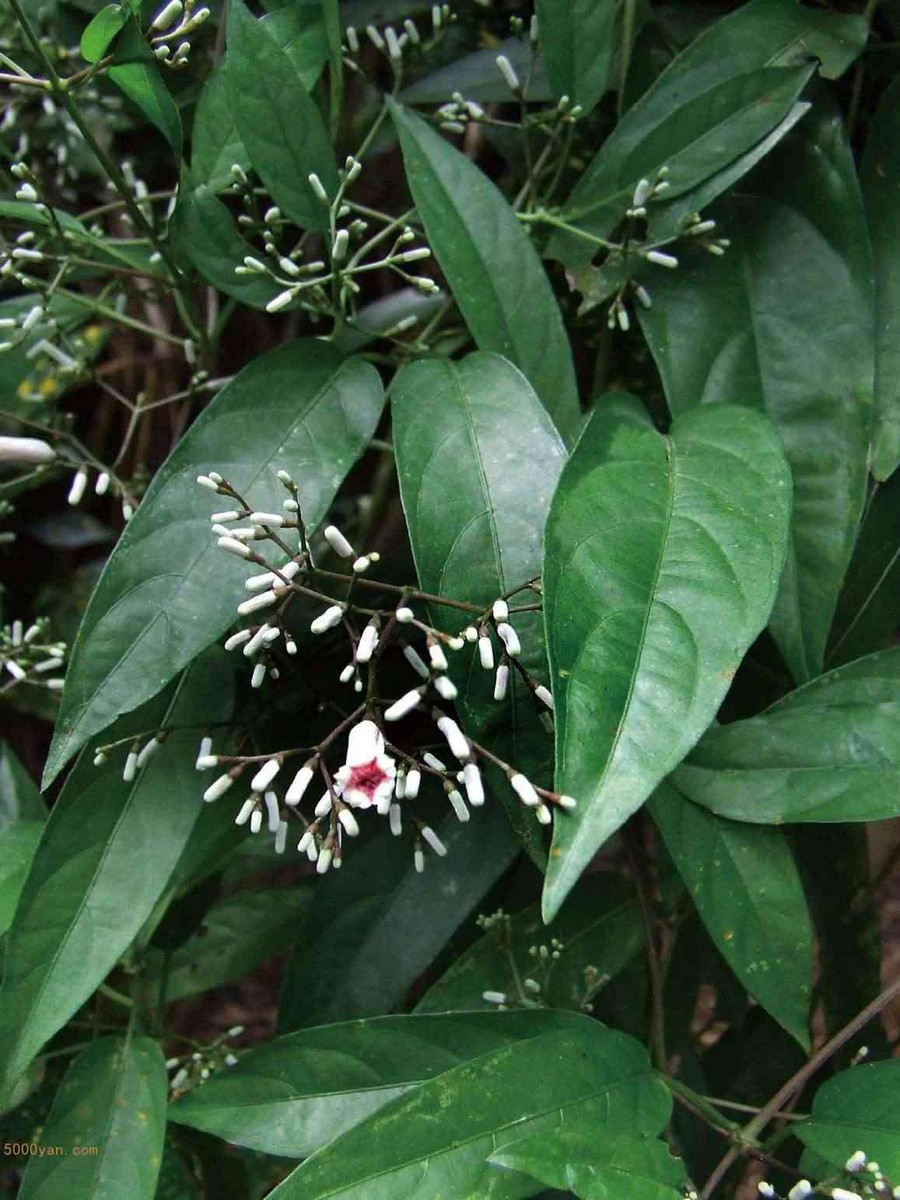
Perennial herbaceous vine, 3-5 m long. Base woody, much branched. Leaves opposite; petiole 1.5-7 cm long; stipules triangular, 2-3 mm long, caducous; leaf blade ovate, elliptic, oblong to lanceolate, 5-15 cm long, 1-6 cm wide, apex acute to acuminate, base broadly cuneate, both surfaces glabrous or sparsely pubescent beneath; leaves papery, with a foul odor when fresh. Panicles terminal, leafy, large, or axillary, lax with few flowers; flowers purple, nearly sessile; calyx narrowly campanulate; corolla tube 7-10 mm long, apex 5-lobed, valvate, red-purple inside, powdery-pubescent; stamens 5; ovary inferior, 2-locular. Berry globose, 5-7 mm in diameter, shiny when mature, straw-yellow. Flowering July-August, fruiting September-October.
Habitat and Distribution
Born by streams, riversides, roadsides, and in shrub forests, often climbing on other plants or rocks. Widely distributed in the Yangtze River basin and areas south of it.
Harvesting and Processing
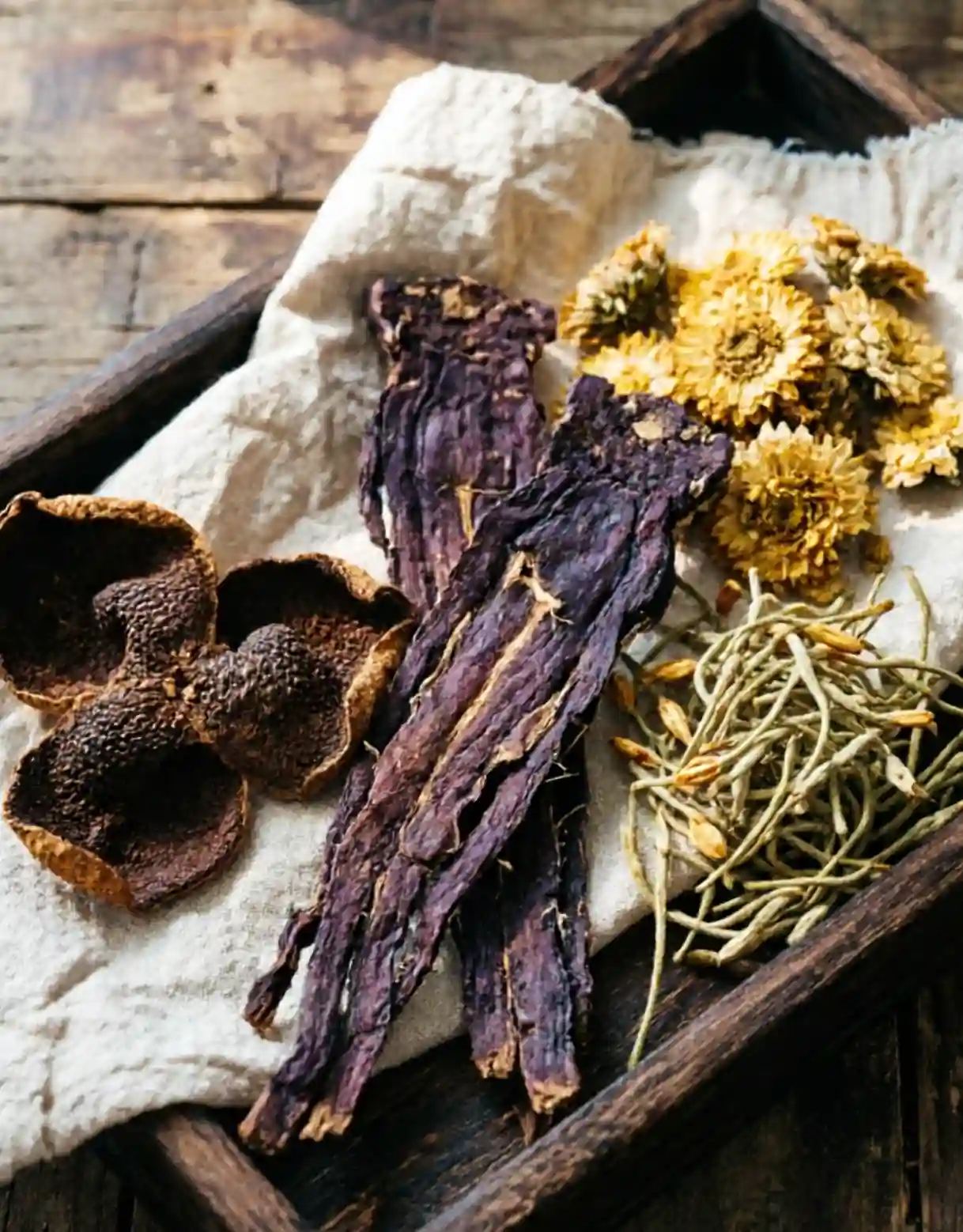
Starting from the 9th to 10th month after planting, except for those retained for seed, the above-ground parts can be harvested annually. Sun-dry or air-dry them to obtain the product. Alternatively, dig up the roots in autumn, wash clean, slice, and sun-dry.
Pharmacology
Has sedative, analgesic, anticonvulsant, and antibacterial effects; can inhibit intestinal muscle contraction, and can antagonize intestinal spasms induced by acetylcholine; has anti-histamine-induced intestinal spasm effect, but is ineffective against barium chloride-induced intestinal spasms.
Properties and Channel Entry
Sweet, slightly bitter, neutral.
Functions and Indications
Expels Wind and eliminates Dampness, promotes digestion and transforms accumulations, resolves toxicity and reduces swelling, activates Blood and alleviates pain. Indications: rheumatic Bi pain (painful joints), food accumulation with abdominal distension, infantile Gan accumulation (malnutrition), diarrhea, dysentery, heat stroke, jaundice, hepatitis, hepatosplenomegaly, cough, scrofula (tuberculous lymphadenitis), intestinal abscess, unnamed toxic swellings, damp beriberi with swelling and erosion, scalds and burns, eczema, dermatitis, traumatic injuries, snakebite and scorpion sting.
Dosage and Administration
Oral: decoct in water, 10-15 g, large dose 30-60 g; or steep in wine. External: appropriate amount, mash for compress; or decoct in water for washing.
Prescriptions
1. For rheumatic joint pain: Jishiteng (Paederia foetida) and Luoshiteng (Trachelospermum jasminoides) each 30 g. Decoct in water and take orally. (Fujian Materia Medica) 2. For food accumulation and diarrhea: Jishiteng 30 g. Decoct in water and take orally. (Fujian Chinese Herbal Medicine) 3. For chronic bronchitis: Jishiteng 30 g, Baibu (Stemona sessilifolia) 15 g, Pipaye (Eriobotrya japonica leaf) 10 g. Decoct in water, add a little salt, and take orally. (National Compilation of Chinese Herbal Medicine) 4. For herpes zoster, heat-induced boils and toxic swellings, traumatic swelling and pain, and venomous snake bites: Mash fresh young leaves of Jishiteng and apply externally to the affected area. (Anhui Chinese Herbal Medicine) 5. For traumatic injuries: Jishiteng root and vine 30 g. Decoct in wine and water and take orally. (Fujian Chinese Herbal Medicine)