Pinyin: Ximing
Aliases
Daji, Huayeji, Laogucao, Subaijiang.
Source
Brassicaceae plant Thlaspi arvenseThlaspi arvenseThe dried aerial parts of L.
Botanical Description
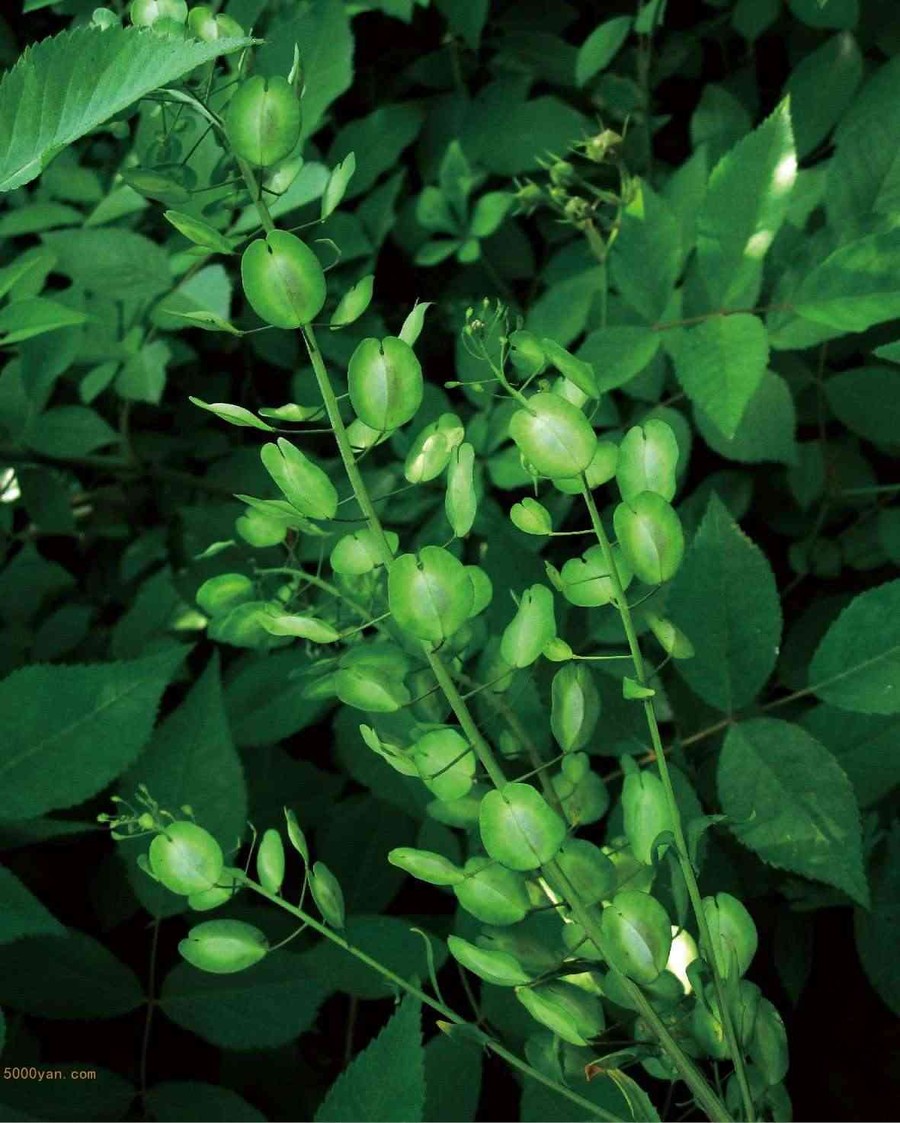
Annual herb, 9-60 cm tall, glabrous. Stem erect, unbranched or branched, angular. Basal leaves with petioles 1-3 cm long; leaf blades obovate-oblong, 3-5 cm long, 1-1.5 cm wide, apex rounded or acute, base clasping, sagittate on both sides, margin sparsely toothed. Racemes terminal; flowers white; sepals 4, erect, ovate, apex rounded; petals oblong-obovate, 2-4 mm long, apex rounded or slightly emarginate; stamens 6, free; pistil 1, ovary 2-locular, stigma capitate, nearly 2-lobed, style short or long. Silicles suborbicular or broadly obovate, 8-16 mm long, flat, surrounded by broad wings, apex deeply notched. Seeds 5-10, ovate, about 1.5 mm long, slightly flattened, brownish, with granular ring-like striations on the surface. Flowering and fruiting period: May to July.
Habitat and Distribution
It grows on flat roadsides, ditches, or near villages. Distributed throughout almost the entire country.
Harvesting and Processing
Harvested when the fruit ripens in summer, remove impurities and dry.
Chemical Constituents
This product primarily contains sinigrin, glucosinolates, volatile oil (mustard oil), protein, sucrose, lecithin, myrosinase, and other components.
Pharmacology
Has bactericidal effects; can be used in the treatment of gout to increase the excretion of uric acid.
Properties and Channel Entry
Acrid, slightly cold. Enters the Liver, Stomach, and Large Intestine channels.
Functions and Indications
Clears the Liver, brightens the eyes, harmonizes the Middle Burner, and promotes urination to eliminate Dampness; resolves toxicity and reduces swelling. Used for red, swollen, and painful eyes, epigastric and abdominal distension and pain, hypochondriac pain, intestinal abscess, edema, leukorrhea, and furuncles, carbuncles, and abscesses.
Dosage and Administration
Oral: decoct in water, 10-30 g, double the amount for fresh product.
Prescriptions
① For nephritis: 30-60 g of fresh whole plant of Thlaspi arvense (pennycress), decoct in water and take orally. (Fujian Chinese Herbal Medicine) ② For postpartum endometritis: 15 g of dried whole plant of Thlaspi arvense, decoct in water, mix with brown sugar and take. (Fujian Chinese Herbal Medicine) ③ For postpartum blood stasis pain: 15 g of Thlaspi arvense, decoct in water, then add 10 g of Shixiao San (Wulingzhi and Puhuang) and take. (Fujian Materia Medica)