Pinyin: Changchunhua
Aliases
Ririxin, Sishihua, Wusemei
Source
Plant of the Apocynaceae family, *Catharanthus roseus* (L.) G. Don.Catharathus roseusDried whole plant of (L.) G. Don.
Botanical Description
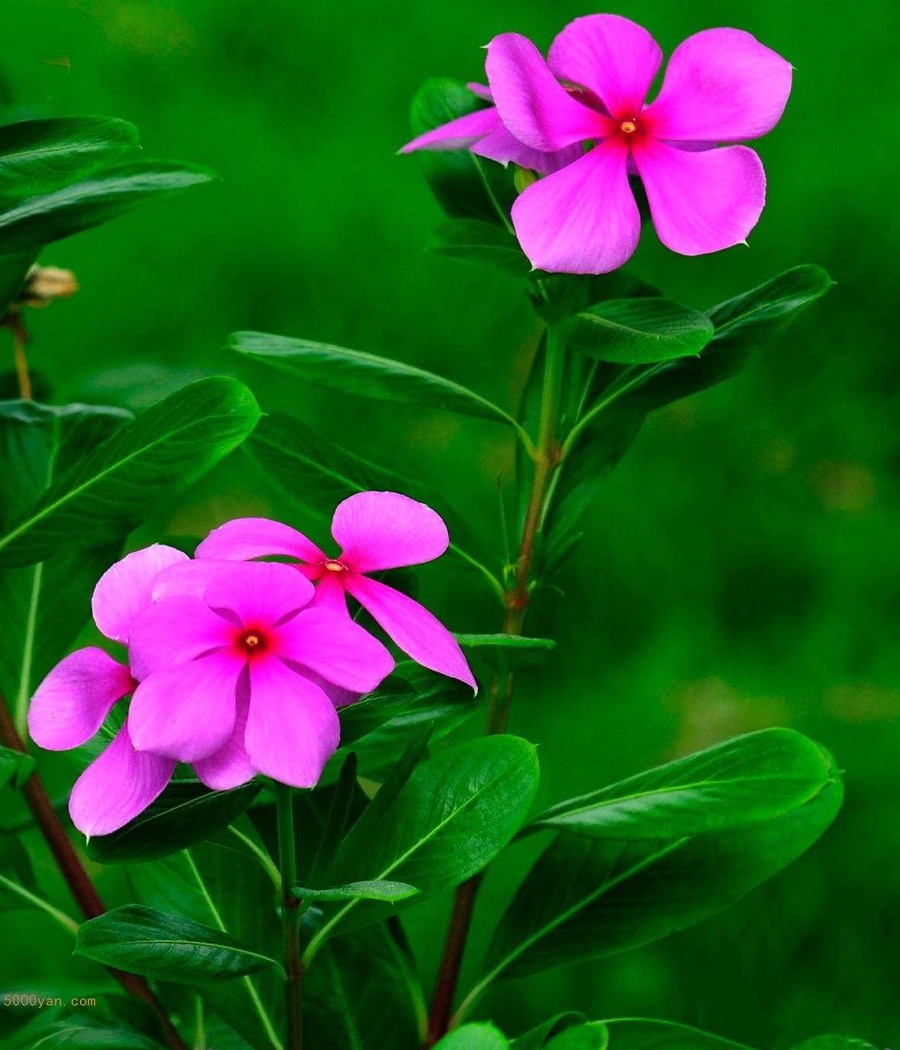
Subshrub or perennial herb, up to 60 cm tall. Stems nearly quadrangular, striated; internodes 1-3.5 cm long. Leaves opposite, membranous, obovate-oblong, 3-4 cm long, 1.5-2.5 cm wide, apex obtuse-rounded with a short mucronate tip, base broadly cuneate and tapering into the petiole. Cymes axillary or terminal, with 2-3 flowers; flowers 5-merous; sepals lanceolate or subulate-acuminate, about 3 mm long; corolla red, salverform, tube cylindrical, 2-6 mm long, throat constricted, lobes broadly obovate, about 1.5 cm long and wide; stamens inserted on the upper half of the corolla tube, anthers hidden within the throat, separate from the style; disc composed of 2 ligulate glands, opposite to and longer than the carpels; ovary of 2 distinct carpels, style filiform, stigma capitate. Follicles 2, erect, parallel or slightly divergent, 2-5 cm long, about 3 mm in diameter, outer pericarp thick and papery. Seeds black, oblong-cylindrical, truncate at both ends, with granular tuberculate protuberances. Flowering and fruiting nearly year-round.
Habitat and Distribution
It is cultivated in eastern, central, southern, and southwestern China.
Harvesting and Processing
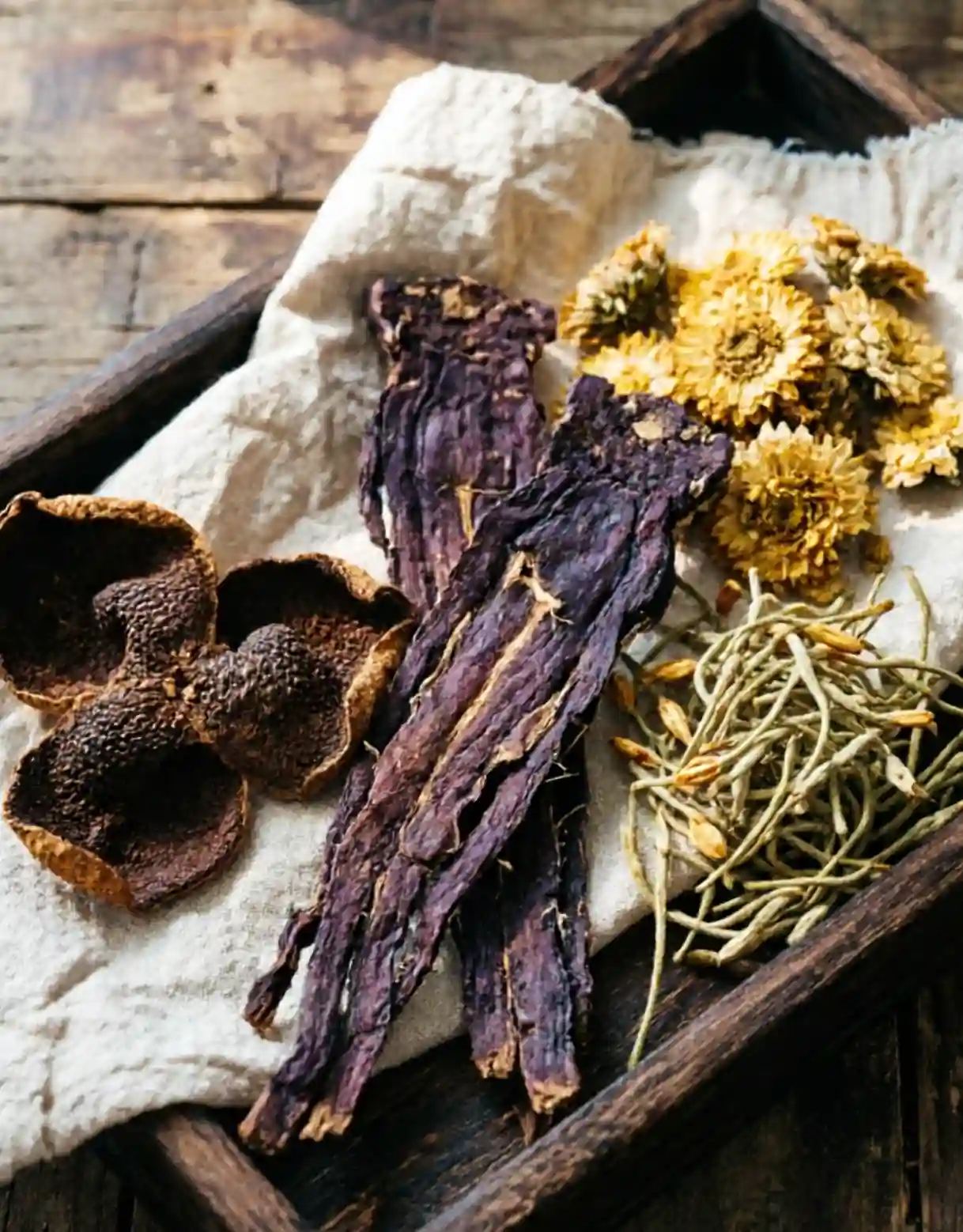
Harvest from late September to early October of the same year, select a sunny day to harvest the above-ground parts, first cut off the lignified hard stems at the base of the plant, then cut into 6 cm long segments, and sun-dry.
Chemical Constituents
This product contains vinblastine, vincristine, leurosine, vincamine, leurosidine, and tetrahydroalstonine among other components.
Pharmacology
It has anti-tumor effects; however, its clinical application can lead to the development of drug-resistant tumor cells, thereby limiting its chemotherapeutic efficacy. It also lowers blood pressure and dilates blood vessels, reduces blood glucose and blood lipids, decreases the average fertility rate in sexually mature mice while significantly increasing the number of stillborn offspring, significantly delays the reproductive time in sexually immature mice, and exhibits a strong diuretic effect.
Properties and Channel Entry
Bitter, cold, toxic.
Functions and Indications
Detoxifies and combats cancer, clears Heat and calms the Liver. Indicated for various types of cancer, hypertension, abscesses, sores, and scalds.
Dosage and Administration
Oral: decoct 5-10 g; or prepare the extract as an injection for intravenous administration. External use: apply an appropriate amount, mash and apply; or grind into powder and mix for application.
Precautions and Contraindications
Changchunhua is used for cancer, primarily administered intravenously as an extract.
Prescriptions
1. For acute lymphoblastic leukemia: *Catharanthus roseus* 15 g. Decoct in water for oral administration. (*Anticancer Herbal Medicine*) 2. For hypertension: a. *Catharanthus roseus* whole plant 6-9 g. Decoct in water for oral administration. (*Guangxi Herbal Medicine Selection*) b. *Catharanthus roseus* 6 g, *Prunella vulgaris*, *Siegesbeckia orientalis*, and *Oroxylum indicum* each 9 g. Decoct in water for oral administration. (*Qingdao Chinese Herbal Medicine Manual*) 3. For sores, swelling, toxin, and burns/scalds: Appropriate amount of fresh *Catharanthus roseus* leaves. Macerate and apply externally. (*Guangxi Herbal Medicine Selection*)