Pinyin: Jigucao
Aliases
Huangtoucao, Jianiuganzi, Zhuyaocao, Huangshicao.
Source
Leguminosae plant *Abrus cantoniensis* HanceAbrus cantoniensisThe dried whole plant of Wikstroemia indica (L.) C.A. Mey.
Botanical Description
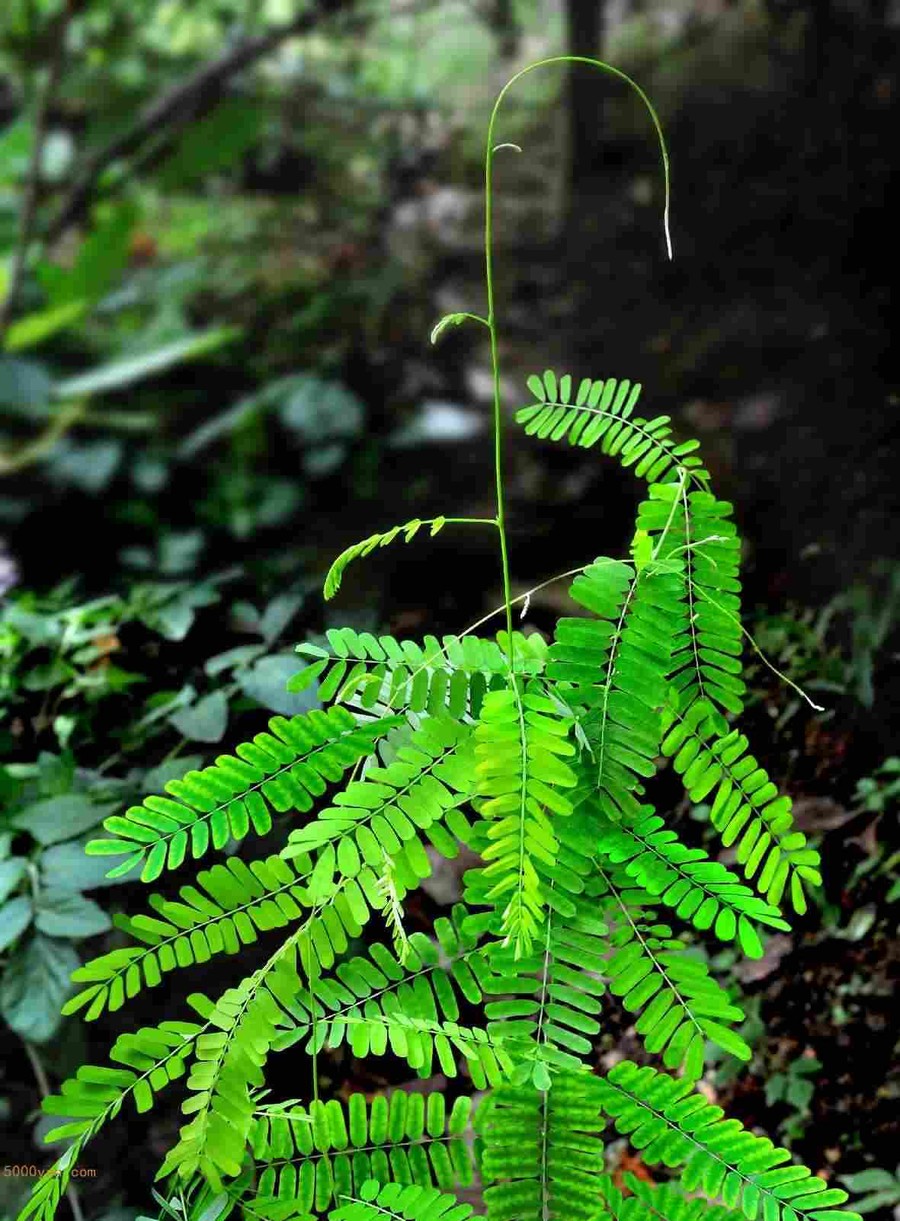
Climbing shrub, up to 1 m tall; branchlets and petioles covered with coarse hairs. Main root robust, up to 60 cm long. Stems slender, deep reddish-purple, young parts densely covered with yellowish-brown hairs. Even-pinnately compound leaves; leaflets 7-12 pairs, obovate or oblong, 5-12 mm long, 3-5 mm wide, apex truncate with a small mucronate tip, base shallowly cordate, upper surface sparsely covered with coarse hairs, lower surface with appressed coarse hairs, veinlets prominent on both sides; stipules paired. Racemes short, axillary; flowers about 6 mm long; calyx campanulate; corolla prominent, light red; stamens 9, united into a tube, closely appressed to the standard petal, upper part free; ovary nearly sessile, style short. Legumes oblong, flat, sparsely hairy, containing 4-5 seeds. Seeds oblong, flat, brownish-black, strophiole conspicuous, waxy yellow, with a central hole, margin a oblong ring, hilum brown, needle-like, close to the legume margin. Flowering period August, fruiting period September-October.
Habitat and Distribution
It grows in mountainous areas or at the edges of thickets in open fields. Distributed in Guangdong, Guangxi, and other regions.
Harvesting and Processing
It can be harvested year-round, remove sediment and soil, and dry.
Chemical Constituents
This product contains abrus sapogenol, soya sapogenol, pueraria sapogenol, sophoradiol, cantoniensistriol, glycyrrhetinic acid, glabrolide. The roots contain chrysophanol and physcion.
Pharmacology
Can affect intestinal smooth muscle function, enhance swimming endurance in mice, and has a protective effect against carbon tetrachloride-induced liver injury.
Properties and Channel Entry
Sweet, slightly bitter, and cool. Enters the Liver and Stomach channels.
Functions and Indications
Promotes urination to reduce jaundice, clears Heat and resolves toxicity, soothes the Liver and alleviates pain. Used for Damp-Heat jaundice, discomfort in the hypochondrium, distension and pain in the stomach and epigastrium, and swelling and pain from breast abscess.
Dosage and Administration
Oral: 15-30 g in decoction; or made into pills or powder. External use: appropriate amount, fresh product mashed for application.
Precautions and Contraindications
The seeds of this species are toxic; when using, the pods must be removed to prevent poisoning.
Prescriptions
1. For jaundice: Jigucao (Abrus cantoniensis) 60 g, red dates 7-8 pieces. Decoct in water and take orally. (from "Lingnan Herbal Records") 2. For externally-contracted Wind-Heat: Jigucao 60 g. Decoct in water, take in 2 divided doses daily. (from "Guangxi Folk Commonly Used Chinese Herbal Medicine Manual") 3. For snake bite: Jigucao (without woody core) 30 g. Decoct in water and drink. (from "Lingnan Herbal Records")