Pinyin: Mabiancao
Aliases
Longyacao, Tuixuecao, Baimabian.
Source
Plant of the Verbenaceae family *Verbena officinalis* L.Verbena officinalisL. of the dried aerial parts.
Botanical Description
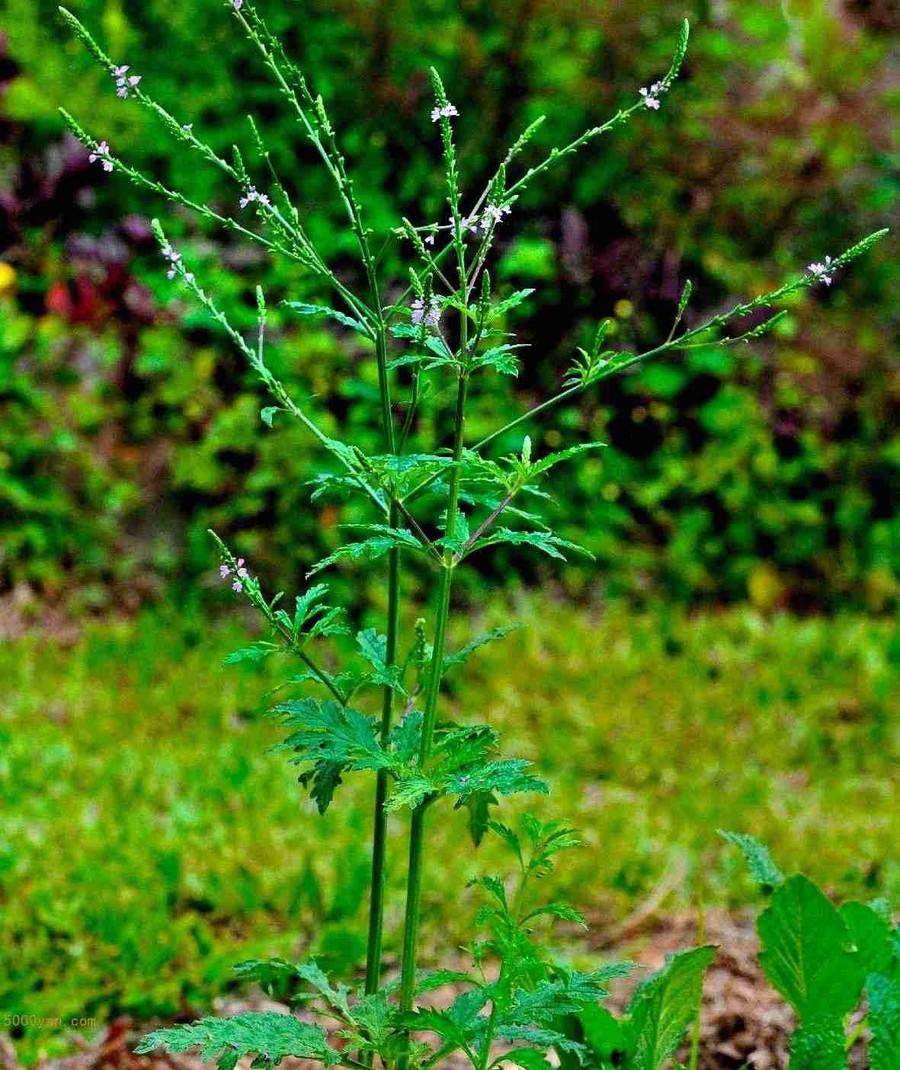
Perennial herb, plant height 30-120 cm. Stem quadrangular, nodes and branches with stiff hairs. Leaves opposite; leaf blade ovate, obovate to oblong-lanceolate, 2-8 cm long, 1-5 cm wide; basal leaves usually with coarse serrations and sinuations; stem leaves mostly 3-parted, lobes with irregular serrations, both surfaces with stiff hairs. Spike terminal and axillary, slender; up to 25 cm long, flowers small, initially dense, becoming sparse in fruit; each flower with 1 bract, with coarse hairs; calyx tubular, membranous, 5-ridged, with 5 teeth; corolla pale purple to blue, corolla tube straight or curved, apex 5-lobed, lobes oblong; stamens 4, inserted at middle of corolla tube, filaments short. Fruit oblong, about 2 mm long, enclosed by persistent calyx, splitting into 4 pyrenes when mature. Flowering June to August, fruiting July to September.
Habitat and Distribution
It grows on hillsides, roadsides, stream banks, or forest edges. It is distributed in Central and Southern China, Southwest China, and in Shanxi, Shaanxi, Gansu, Xinjiang, Jiangsu, Anhui, Zhejiang, Jiangxi, and Fujian.
Harvesting and Processing
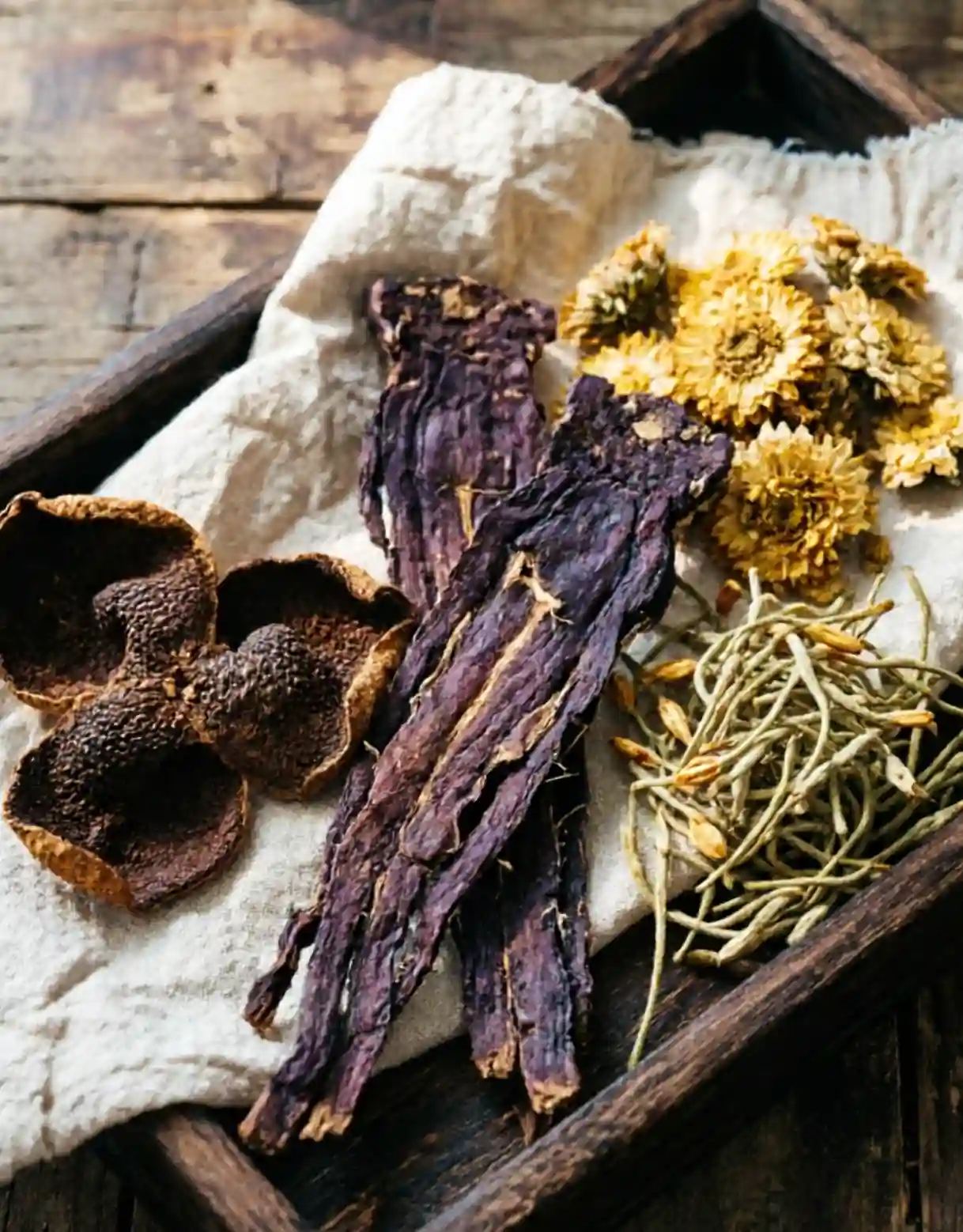
Harvested and cut during flowering from June to August, remove impurities and sun-dry.
Chemical Constituents
This product contains oleanolic acid, ursolic acid, aucubin, lupeol, hastatoside, verbenalin, and verbascoside among other components.
Pharmacology
Anti-inflammatory and analgesic; antitussive; stimulates the uterus; small doses excite sympathetic nerve endings while large doses inhibit them; promotes lactation in mammals. Exhibits parasympathomimetic effects.
Properties and Channel Entry
Bitter, cool. Enters the Liver and Spleen channels.
Functions and Indications
Activates blood and disperses stasis, resolves toxicity, promotes urination, reduces jaundice, and interrupts malaria. Used for abdominal masses and accumulations, dysmenorrhea and amenorrhea, throat obstruction, abscesses and swellings, edema, jaundice, and malaria.
Dosage and Administration
Oral: decoct 15-30 g (fresh 30-60 g); or made into pills or powder. External: apply appropriate amount, mashed; or decoct and wash.
Precautions and Contraindications
Caution should be exercised in pregnant women.
Prescriptions
1. For infectious hepatitis and cirrhotic ascites: *Verbena officinalis*, *Plantago asiatica*, and *Gallus gallus domesticus* endothelium corneum gigeriae galli 15 g each. Decoction for oral administration. (Selected Chinese Herbal Medicines from Shaanxi, Gansu, Ningxia, and Qinghai) 2. For acute cholecystitis: *Verbena officinalis* and *Euphorbia humifusa* 15 g each, *Natrii Sulfas Exsiccatus* 9 g. Decoction for oral administration. For severe pain, add *Bidens pilosa* 30 g. (Fujian Materia Medica) 3. For enteritis, dysentery, urinary tract infection, and hematuria: Fresh *Verbena officinalis* 30-60 g, decoction for oral administration. (Selected Chinese Herbal Medicines from Shaanxi, Gansu, Ningxia, and Qinghai) 4. For dysmenorrhea: *Verbena officinalis*, *Cyperus rotundus*, and *Leonurus japonicus* 15 g each. Decoction for oral administration. (Fujian Materia Medica) 5. For breast abscess and swelling: *Verbena officinalis* one handful, wine one bowl, *Zingiber officinale* one piece. Grind and extract juice for oral administration; apply the residue topically. (Weisheng Yijian Fang) 6. For acute and chronic eczema: Fresh whole plant of *Verbena officinalis* 90 g. Wash and place in a ceramic vessel (avoid metal containers), add 500 ml of water, and bring to a boil. After cooling, wash the affected area externally, several times daily. [Jiangxi Journal of Traditional Chinese Medicine, 1981, (3): 56]