Pinyin: Shicao
Aliases
Shi, Wugongcao, Feitian Wugong.
Source
Asteraceae family plant Achillea.Achillea alpinaL. of the dried aerial parts.
Botanical Description
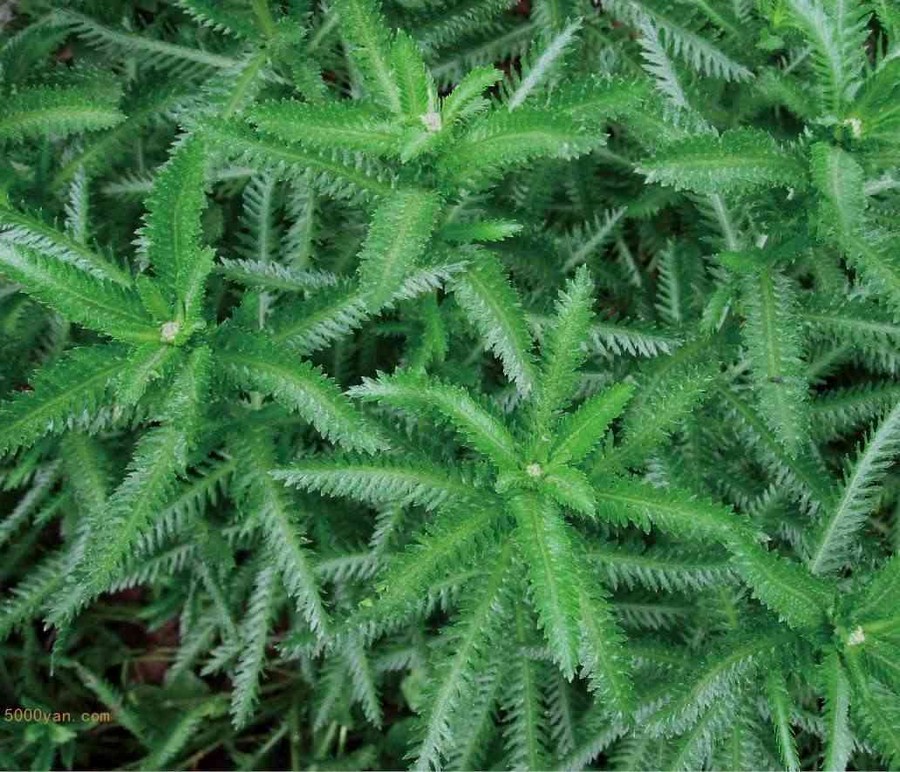
Perennial herb, 50-100 cm tall. With short rhizome. Stem erect, ribbed, branched in upper part. Leaves alternate; sessile; leaf blade long linear-lanceolate, 6-10 cm long, 7-15 mm wide, pectinate-pinnatifid or lobed, lobes linear, sparsely arranged, semi-amplexicaul, both surfaces pubescent, denser on lower surface, glandular or nearly eglandular, lower leaves often withering at flowering, upper leaves gradually smaller. Numerous capitula, 5-6 mm in diameter, arranged in corymbs; involucre campanulate, bracts ovate, 3-seriate, imbricate, green, herbaceous, with midrib, margins membranous, sparsely pubescent; marginal ray florets, female, 5-11, white, corolla oblong, apex 3-lobed; central tubular florets, bisexual, white, anthers yellow, exserted. Achenes flattened, broadly oblanceolate, with pale marginal ribs. Flowering July-September, fruiting September-October.
Habitat and Distribution
Grows on sunny slopes, grasslands, forest edges, roadsides, and among shrubs. Distributed in Northeast China, North China, Ningxia, Gansu, Henan, and other regions. Widely cultivated in various areas.
Harvesting and Processing
Harvested and cut during summer and autumn when in bloom, remove impurities and dry in the shade.
Chemical Constituents
This product mainly contains succinic acid, fumaric acid,α- Furan carboxylic acid, aconitic acid, and other components.
Pharmacology
Has sedative, antipyretic, and analgesic effects; antibacterial and anti-inflammatory.
Properties and Channel Entry
Bitter, sour, neutral. Enters the Lung, Spleen, and Bladder channels.
Functions and Indications
Detoxifies and promotes diuresis, activates blood circulation and alleviates pain
Dosage and Administration
Oral: decoct in water, 10-15 g; grind into powder, 1-3 g per dose. External use: appropriate amount, decoct in water for washing.
Precautions and Contraindications
Caution should be exercised in pregnant women.
Prescriptions
1. Treats cold with fever and headache: 15 g of yarrow, decoct in water for oral administration; or 12 g of yarrow and 6 g of chrysanthemum, decoct in water for oral administration. ("Shanxi Chinese Herbal Medicine") 2. Treats chronic headache due to Wind pathogen: Mash yarrow into a paste, squeeze out the juice, and drip into the ear canal. ("Guizhou Herbal Medicine") 3. Treats toothache due to Wind-Fire: Mash yarrow into a paste and rub it on both temples. If pain persists, also place leaves on the painful area. ("Guizhou Herbal Medicine") 4. Treats rheumatic pain: 30-60 g of yarrow. Decoct in water and use the liquid for fumigation and washing. ("Inner Mongolia Chinese Herbal Medicine") 5. Treats amenorrhea with abdominal pain: 10-15 g of yarrow leaves. Decoct in water for oral administration. ("Hunan Materia Medica") 6. Treats traumatic injuries: 30 g of whole yarrow plant. Soak in wine and apply topically. ("Guiyang Folk Herbal Medicine") 7. Treats hemorrhoidal bleeding: 9 g of yarrow and 12 g of Patrinia. Decoct in water for oral administration. ("Shanxi Chinese Herbal Medicine") 8. Treats swelling and toxicity: 10-15 g of yarrow leaves. Decoct in water for oral administration. ("Hunan Materia Medica")