Pinyin: Fupenzi
Aliases
Wupaozi, Xiaotuopan, Shanpao, Lepaozi
Source
Rubus chingii Hu (Rosaceae family, East China Raspberry)Rubus chingiiDried fruit of Hu.
Botanical Description
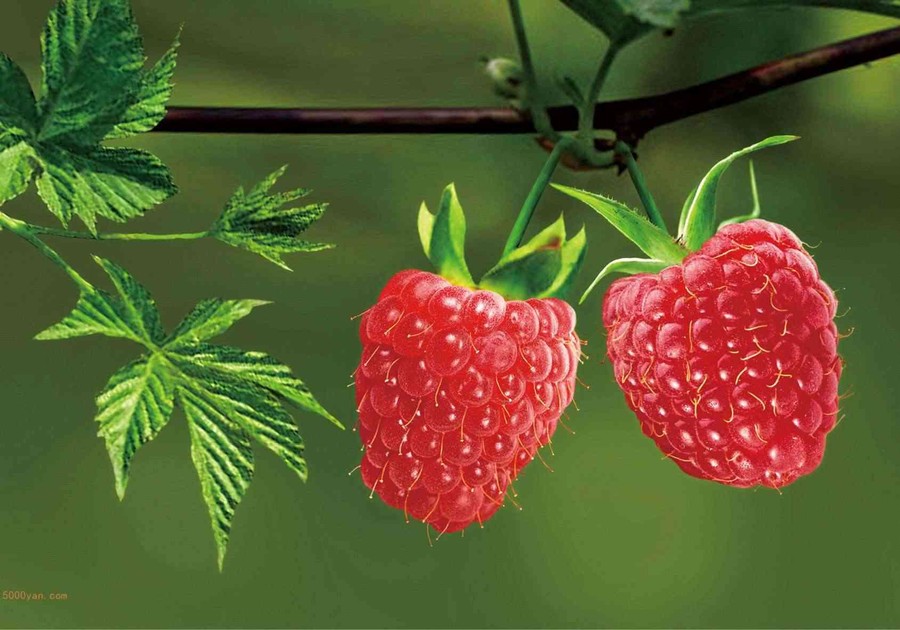
Deciduous shrub, 2-3 m tall. Young branches green with white powder and a few recurved spines. Leaves simple, alternate; petiole 3-4.5 cm long; stipules linear-lanceolate; leaf blade suborbicular, 5-9 cm in diameter, palmately 5-lobed, middle lobe rhomboid-ovate, base subcordate, margin doubly serrate, both surfaces with white short pubescence on veins; basal veins 5. Flowers bisexual, solitary at apex of short branch; calyx 5, persistent, ovate-oblong, calyx lobes pubescent on both sides; petals 5, white, elliptic or ovate-oblong, apex obtuse; diameter 2.5-3.5 cm; pedicel 2-3.5 cm long; stamens numerous, filaments broad and flat; anthers versatile, 2-locular; pistils numerous, pubescent, inserted on raised receptacle. Aggregate fruit globose, 1.5-2 cm in diameter, red, pendulous; drupelets densely covered with gray-white pubescence. Flowering March-April, fruiting May-August.
Habitat and Distribution
It grows in low to middle altitude areas, commonly found in sunny or shady spots on slopes and along roadsides among shrubs. Distributed in Jiangsu, Anhui, Zhejiang, Jiangxi, Fujian, and Guangxi.
Harvesting and Processing
Harvested in early summer when the fruit turns from green to yellowish-green, remove stems and leaves, briefly blanch in boiling water or steam slightly, remove, and dry.
Medicinal Properties
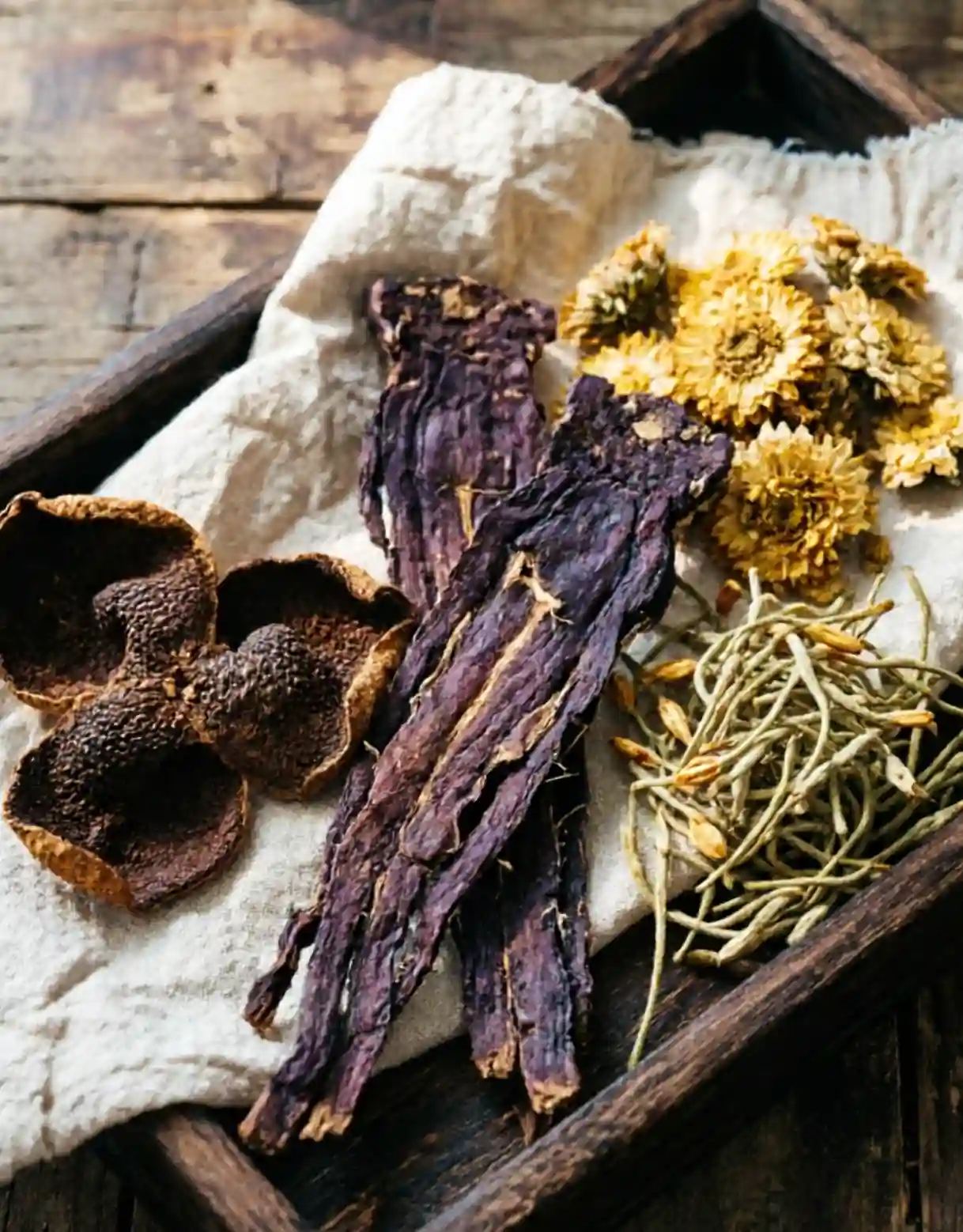
This product is an aggregate fruit composed of numerous small drupes clustered together, conical or flat-conical in shape, 0.6-1.3 cm in height and 0.5-1.2 cm in diameter. The surface is yellow-green or pale brown, with a blunt and rounded apex and a concave center at the base. The persistent calyx is brown, with a fruit stalk scar below. The small fruits are easily peeled off; each small fruit is crescent-shaped, densely covered with gray-white fine hairs on the back, has distinct reticulate veins on both sides, and a protruding ridge line on the abdomen. Light in weight, hard in texture. Odor: faint; Taste: slightly sour and astringent.
Chemical Constituents
This product contains goshonoside F1, goshonoside F2, goshonoside F3, goshonoside F4, goshonoside F5, goshonic acid,β- Contains components such as sitosterol.
Pharmacology
Antibacterial; exhibits estrogen-like effects.
Properties and Channel Entry
Sweet, sour, warm. Enters the Liver, Kidney, and Bladder channels.
Functions and Indications
Tonifies the Kidney, consolidates essence, reduces urination, nourishes the Liver, and brightens the eyes. Used for seminal emission, frequent spermatorrhea, enuresis, frequent urination, impotence, premature ejaculation, and blurred vision.
Dosage and Administration
Internal use: decoction 5-10 g; or made into pills or powder; can also be steeped in wine or made into paste.
Precautions and Contraindications
Contraindicated in cases of Yin deficiency with fire hyperactivity and short, reddish urine.
Prescriptions
1. For diabetes insipidus with urinary incontinence in elderly and debilitated patients: Fupenzi (Rubus chingii) 9 g, Shanyao (Dioscorea opposita) 6 g, Yizhiren (Alpinia oxyphylla) 6 g, Wumei (Mume fructus) 6 g, Zhigancao (Glycyrrhiza uralensis, honey-fried) 4.5 g. Decoct and take orally. (From "Anhui Chinese Herbal Medicine"). 2. For impotence: Fupenzi, soaked in wine, baked and ground into powder. Take 9 g daily with wine. (From "Binhu Ji Jian Fang"). 3. For pediatric enuresis due to kidney deficiency: Fupenzi 30 g, add 2 bowls of water, simmer over low heat until reduced to 1 bowl, strain to remove residue, then use the decoction to cook 60-90 g of lean pork over low heat without seasoning. Consume both the meat and the soup. Take once daily; generally heals after 2-3 doses. [From "Journal of Traditional Chinese Medicine", 1983, 24(5):377].