Pinyin: Zhijuzi
Aliases
Mumi, Shumi, Miquju, Huan Yang Teng
Source
1Hovenia acerbaThe dried mature seeds of Lindl., and the fruit with inflorescence axis is also used.
Botanical Description
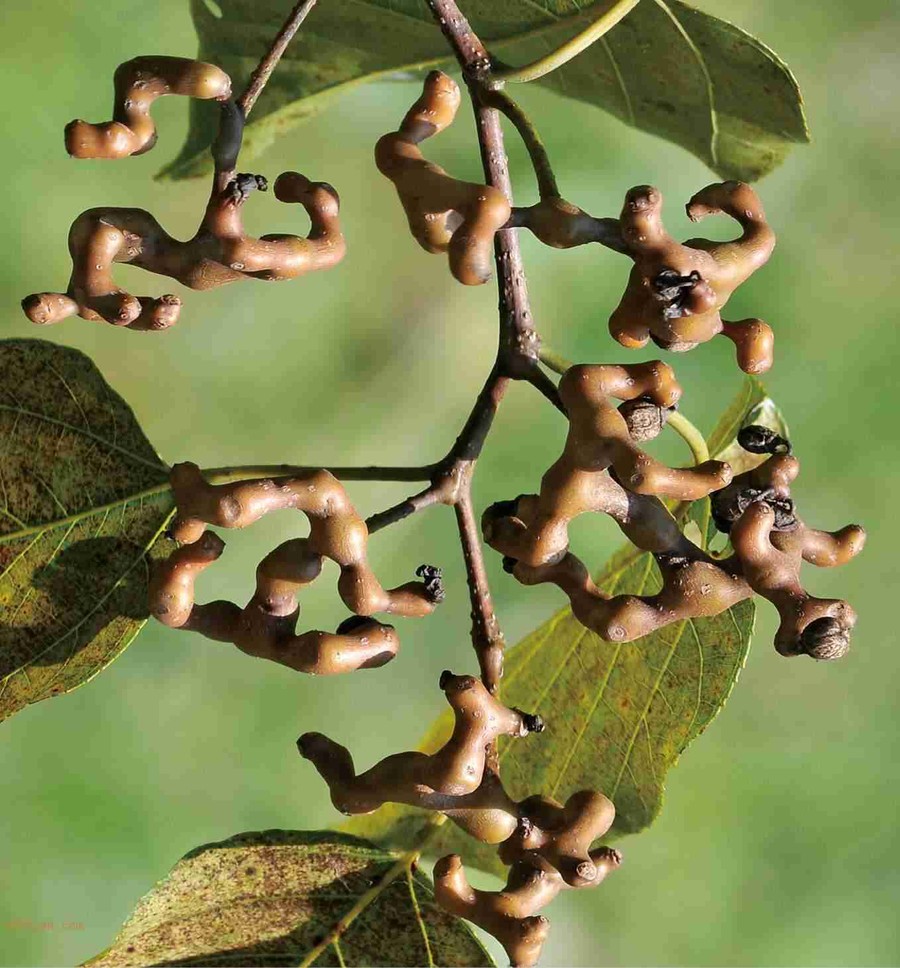
Deciduous tree, up to 10 m tall. Bark gray-brown, shallowly longitudinally fissured, not peeling. Branchlets reddish-brown, sparsely covered with rust-colored fine hairs when young; winter buds ovoid, bud scales 2, large and early deciduous. Leaves alternate; petiole 2-5 cm long, reddish-brown, with fine glandular dots; leaf blade ovate or ovate-orbicular, 8-16 cm long, 6-11 cm wide, apex acuminate, base rounded or cordate, margin with fine sharp serrations, upper surface glabrous, lower surface with fine hairs on veins and in vein axils; three-veined, pale red, lateral veins 3-5 pairs. Dichasial cyme terminal or axillary, symmetrical, peduncle about 6.5 cm long, pedicel about 3 mm long; flowers polygamous, about 7 mm in diameter; sepals 5, ovate-triangular; petals 5, obovate, yellowish-green; male flowers with stamens and a central rudimentary pistil; bisexual flowers with 5 stamens, ovary superior, embedded in the disc, conical, 3-locular, each locule with 1 ovule, stigma half-divided or deeply divided. Fruit subglobose, gray-brown, glabrous, 6-8 mm in diameter; fruit stalk fleshy, thickened, twisted, 3-5 mm in diameter, reddish-brown, with yellow lenticels, sweet and edible when mature. Seed compressed-orbicular, dark brown, lustrous. Flowering May-June, fruiting September-October.
Habitat and Distribution
Hovenia dulcis grows on sunny slopes, valleys, and roadsides at altitudes below 2100 m, and is also commonly cultivated in gardens. It is distributed in North China, East China, Central-South China, Southwest China, and Shaanxi and Gansu provinces.
Harvesting and Processing
Harvest the fruit together with the fleshy inflorescence axis when the fruit ripens from October to November, dry in the sun, and remove the seeds.
Medicinal Properties
Seeds flat and round, slightly raised on the dorsal side, relatively flat on the ventral side, 3-5 mm in diameter, 1-1.5 mm thick. Surface reddish-brown, brownish-black, or greenish-brown, glossy, with scattered pits visible under magnification, a punctate pale hilum at the sunken base, a slightly concave chalaza at the apex, and a longitudinal raised raphe on the ventral side. Seed coat hard, endosperm white, cotyledons pale yellow, thick, all rich in oil. Odor: faint; Taste: slightly astringent.
Chemical Constituents
This product mainly contains loline,β- Carboline, hovenoside C, hovenoside D, hovenoside G, hovenoside G', hovenoside H, frangulanine, hovenine A, hovenic acid and other constituents.
Pharmacology
Inhibits the central nervous system; lowers blood pressure; resists lipid peroxidation; enhances overall physical performance.
Properties and Channel Entry
Sweet, neutral. Enters the Stomach channel.
Functions and Indications
Relieves alcohol toxicity, stops thirst, alleviates restlessness, stops vomiting, and promotes urination and defecation. Mainly indicated for alcohol intoxication, restlessness and thirst, vomiting, and difficulty in urination and defecation.
Dosage and Administration
Take orally; decoct in water, 6-15 g; or steep in wine for oral administration.
Precautions and Contraindications
Contraindicated in patients with Spleen and Stomach deficiency cold.
Prescriptions
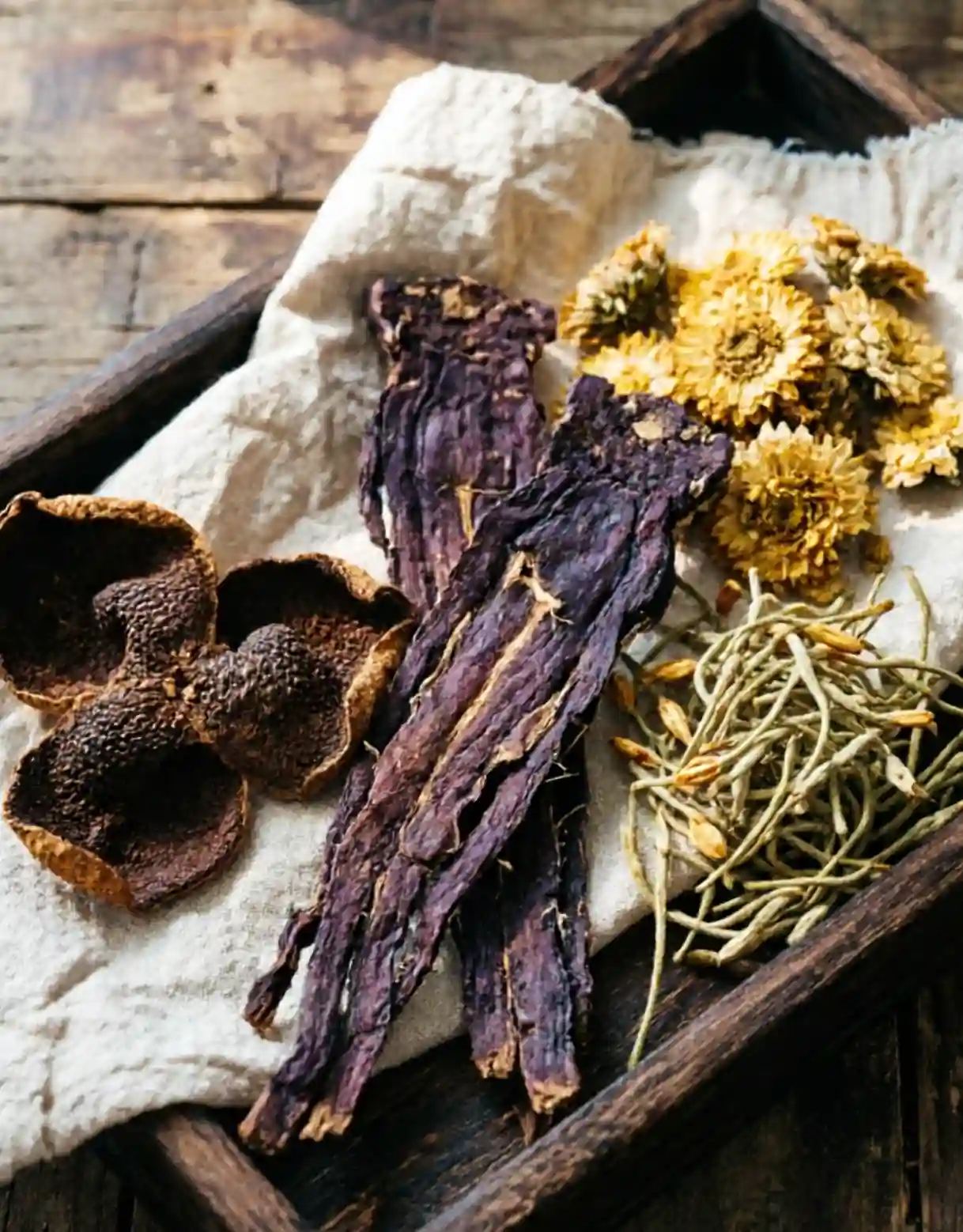
1. For alcohol intoxication: Zhijuzi (Hovenia dulcis fruit) 30 g, decoct in water and take cold. Or Zhijuzi 12 g (crushed), Gehua (Pueraria lobata flower) 9 g, decoct in water and take cold. (Anhui Chinese Herbal Medicine) 2. For summer-heat injury with vexation, thirst, dizziness, and scanty urine: Zhijuzi and Zhuye (Lophatherum gracile) 9 g each. Decoct in water and take orally. (Huashan Materia Medica) 3. For rheumatic paralysis: Zhijuzi 150 g, Ziwei shupi (Lagerstroemia indica bark) 15 g. Soak in 1000 ml of liquor, take 15-30 ml each morning and evening. (Guizhou Herbal Medicine) 4. For rheumatic numbness: Zhijuzi 120 g, Baijiu (white liquor) 500 g, soak for 3-5 days, take 1 small cup each time, twice daily. (Anhui Chinese Herbal Medicine) 5. For febrile disease with vexation, thirst, and difficult urination: Zhijuzi and Zhimu (Anemarrhena asphodeloides) 9 g each, Jinyinhua (Lonicera japonica flower) 24 g, Dengxincao (Juncus effusus stem pith) 3 g. Decoct in water and take orally. (Qingdao Chinese Herbal Medicine Handbook)